Replacing Artificial Grass with a Real Lawn
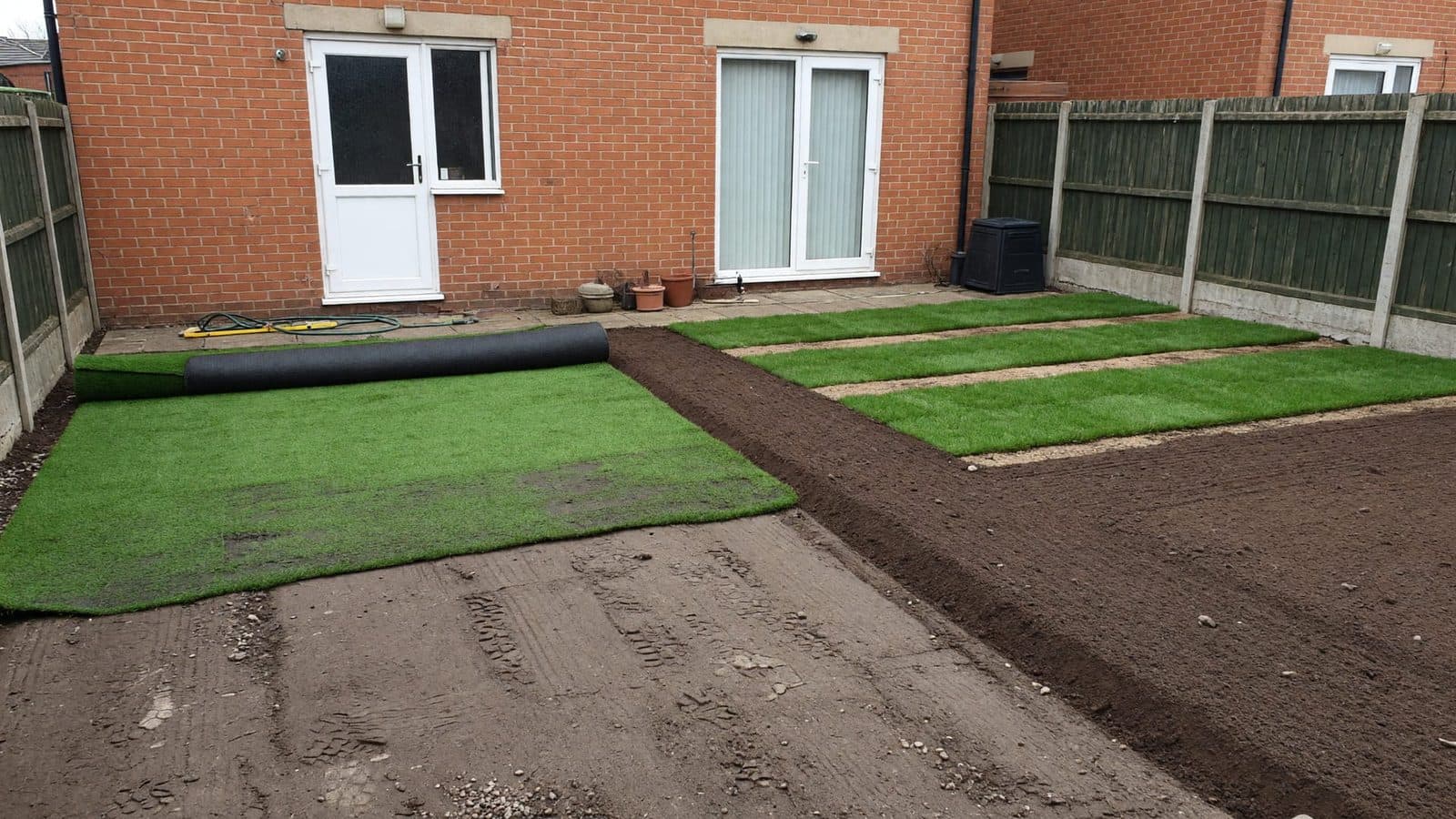
Plenty of gardens had artificial grass put down as a low-maintenance answer and now want it gone. The brief is usually short: lift the astro, put real grass back, maybe add a bit of screening. The plastic comes up like a carpet. What sits under it does not behave like soil.
You can put a real lawn back. You rarely do it by rolling turf onto the old base and hoping.
Why the old base is the problem
A typical artificial lawn is built as a hard surface: membrane, compacted stone, a sand or grano blinding, then the carpet pinned or glued at the edges. That stack is designed so water passes through and the pile stays flat. It is not a seedbed.
If you turf straight over Type 1, the roots hit stone within a centimetre or two. The first dry spell browns it off. The first wet winter sits in a pan. On Lancashire clay that is already slow to drain, a leftover stone raft makes a real lawn worse than the plot was before the astro went in.
The honest sequence is lift the carpet, decide how much of the stone has to come out, rebuild a growing layer, then turf or seed.
What has to come off site
The carpet itself is mixed plastic with sand or rubber still in the pile. Most household tips will not take it. It goes as controlled waste, not green waste. Glue lines and joining tape come with it.
Under that you may have:
- a thin sand layer that can be scraped and reused as part of a new profile
- a thick stone base that is only useful if you are building a path or patio next door
- compacted clay the original installer never loosened
We take the stone out where the new lawn needs depth. Leaving a thin band of clean stone as a soak layer under new topsoil can work on some plots. Leaving the whole raft in and spreading a bag of soil on top does not.
Building a lawn that will take on clay
New turf wants a loose, even growing medium, a fall that does not pond, and a way for winter water to leave. On a Cottam or Leyland clay plot that usually means taking the levels again, not just raking what is left.
If the astro was put down because the old lawn was a bog, putting grass back without touching drainage repeats the first problem. That is the same judgement as our notes on whether a new-build garden needs drainage and waterlogged lawn options: spike and soil first if the ground only sits wet after a downpour; a land drain if there is a standing wet stripe every winter.
Turf in early autumn or spring is kinder than a July roll. Seed is cheaper on awkward corners but slower, and birds plus a wet week can wipe a sowing.
Screening after the plastic comes up
Taking the astro out often exposes a bare fence line the carpet was hiding. If the brief includes privacy, deal with that as a separate line — hedge, slatted fence, or both — rather than hoping new grass will soften the view. Slatted fencing in Lancashire weather is the usual built option; planting needs soil, not leftover Type 1.
When to leave the artificial grass
Keep it if the pile is still decent, the base is draining, and the real issue is edges or a join. Replacing like-for-like is a different job from converting to a lawn. Our scheduled pieces on artificial grass and drainage and wet UK climates cover staying with plastic.
Convert when the carpet is cooked, pets have soaked the infill, or you simply want soil and worms back. Do not convert as a cheap day — waste and stone removal are most of the cost.
What helps a first estimate
A photo of the carpet, one corner lifted if you can get a hand under it, and whether you want turf or seed. Address and a rough size is enough for a free online estimate. WhatsApp 01772 213019 works for the photos.
We will say from the pictures whether the stone looks like it has to come out. That is the number that changes the job, not the turf itself.
Related services
Prefer a professional install in Preston & the North West? Explore the services that match this guide.
Enjoyed this guide?