Artificial Grass in Wet UK Climates: Pros, Cons and Install
Looking for help with this? See our artificial grass in Preston and garden drainage in Preston. Get a quote or WhatsApp us photos.
Artificial grass is marketed as the end of muddy winters—and in wet UK climates that promise only holds if the base and drainage are right. Poor installs pond water, smell, and look shiny or flat within a season. This guide gives an honest pros/cons decision framework for Preston and Lancashire gardens, and explains how professional artificial grass installation is built for rainfall, not catalogue photos.
Why wet climates change the brief
Lancashire gardens deal with:
- Frequent rain and long damp spells
- Heavy clay that holds water
- Shaded plots where real turf becomes moss
- Family and pet use that churns soft ground
Artificial turf can solve mud and mowing—but it is still a surface that must shed or infiltrate water. “Roll it on soil” is not a climate-proof system.
Pros in wet UK gardens
- No mud room after rain when the base drains
- No mowing on saturated ground
- Consistent green in shade where turf fails
- Play-friendly surface for kids when specified well
- Pairs with hard landscaping for low-maintenance family schemes
Cons and trade-offs
- Upfront cost higher than seeding a lawn
- Heat on rare hot days (lighter colours and quality products help)
- Not zero maintenance — leaves, debris and occasional clean
- Edges and joins show if rushed
- Poor drainage installs can pond and hold odours
- Environmental preference — some homeowners still want living lawn
If your only problem is a small mossy patch, soil improvement and light might be enough. If the lawn is a permanent swamp or high-wear mud strip, artificial grass is often the rational upgrade—sometimes after drainage works.
Decision guide
- Muddy family lawn on clay — Often yes — Base + drainage critical
- Deep shade, thin turf — Often yes — Choose realistic pile/colour
- Pets — Yes with right product — Cleaning and drainage matter
- Chronic standing water — Fix drainage first — Grass alone will not cure a pond
- Large rural “meadow” look wanted — Maybe not — Living lawn or redesign may fit better
- Temporary rental fix — Sometimes — Still needs proper base for safety
Install path that works in the wet
1. Survey
Levels, soft spots, tree roots, shade, access and where water currently goes.
2. Excavation
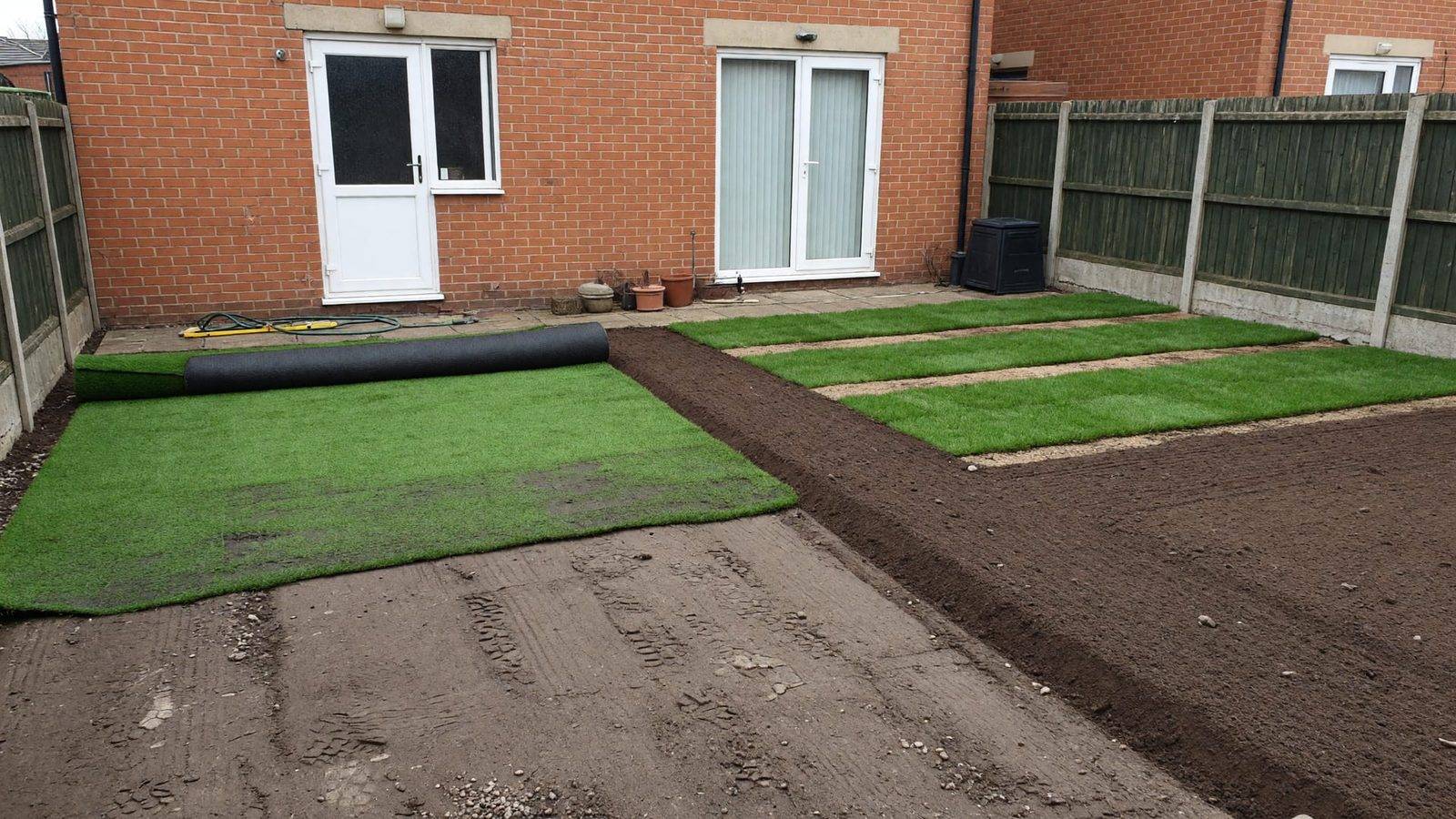
Remove turf and unsuitable soils to design depth.
3. Drainage-aware base
Compact free-draining sub-base with correct falls. Weed membrane as specified. On problem plots, link to wider garden drainage rather than trapping water under the carpet.
4. Product choice
UV-stable turf suited to UK weather; pile height and colour for a natural look; pet-friendly options where needed.
5. Seams, infill, edges
Tight joins, secure perimeters to paving, deck or timber edges, brushed finish.
6. Handover
Care guidance: debris removal, occasional rinse, what not to do with heat and chemicals.
Myths to ignore
- “It never needs cleaning” — leaves and algae still happen
- “Any cheap roll is fine” — density and drainage design matter
- “It will hide a water problem” — it will advertise one
- “DIY on old lawn is fine” — contour ghosts and ponding follow
How it fits a wider garden
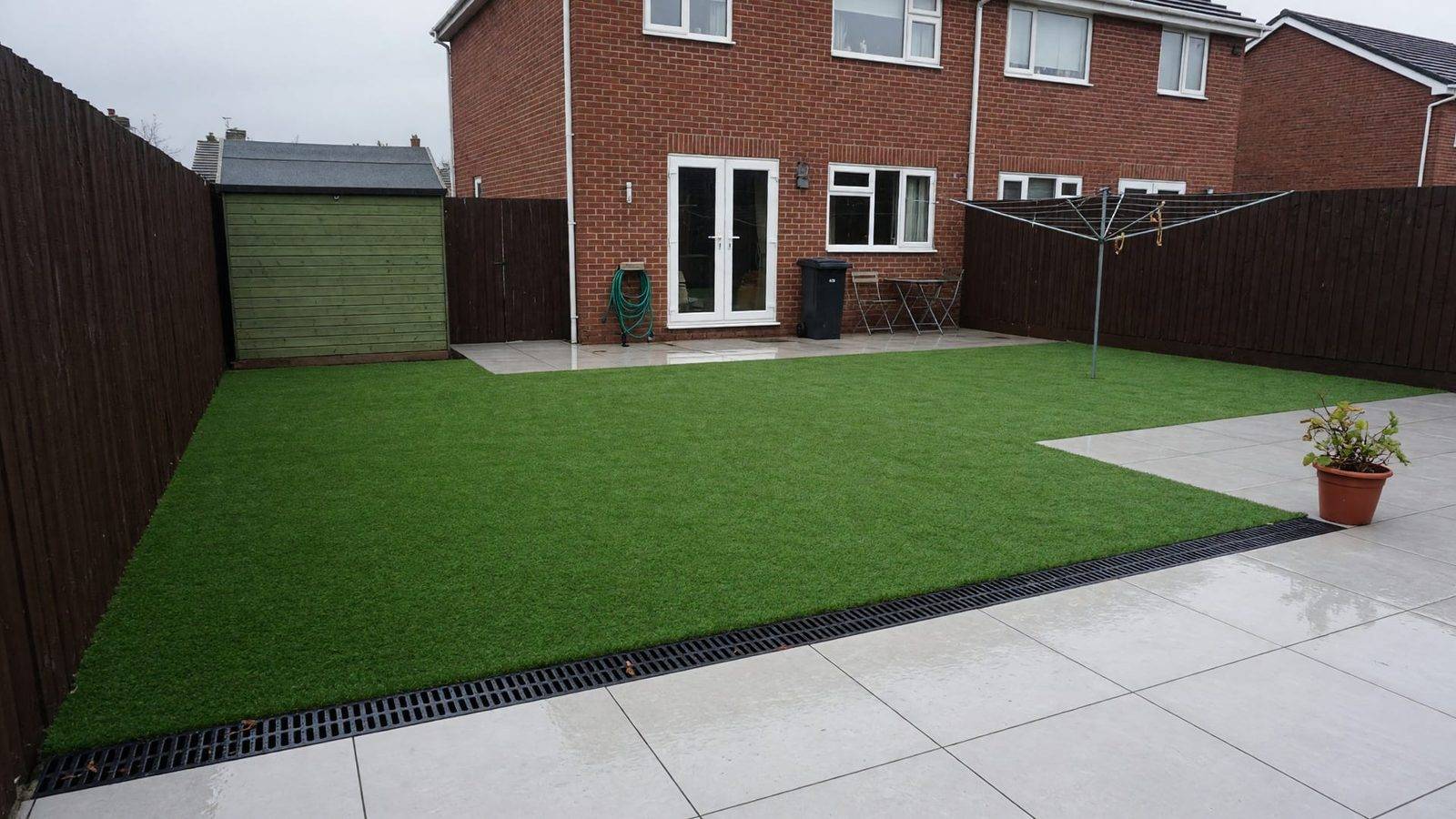
Artificial grass often sits beside porcelain patios, composite decks and new fencing in family redesigns. Quoting it inside full garden landscaping keeps levels coherent so the lawn does not sit in a dish between raised edges.
Base and drainage: what “good” looks like in the wet
A climate-ready artificial lawn is a layered system, not a carpet:
1. Correct dig-out depth for the product and use (play vs ornamental) 2. Removal of organic soils that will rot, shrink or hold water under the surface 3. Compacted free-draining sub-base with falls that send water somewhere intentional 4. Membrane as specified for the system—not a random sheet that traps water 5. Shock pad or underlay only where the specification calls for it and drainage still works 6. Secure perimeters to timber, aluminium or paved edges so wind and foot traffic do not lift the skin
On Lancashire clay, skipping sub-base depth to “save money” is how you buy a green paddling pool. If water already stands for hours after rain, solve that with garden drainage design—land drains, channels, regrading—before or as part of the grass package.
Pets, play and hygiene
Families and pet owners drive a large share of artificial grass enquiries in Preston suburbs. Practical points:
- Choose products marketed for pet use where urine and claw traffic are expected
- Drainage and rinse access matter more than pile height bragging rights
- Pick up solid waste promptly; rinse problem spots; do not assume odour cannot develop on a sealed, ponding base
- Light colours can show dust; very dark piles can feel warmer in rare heatwaves
- Provide a hard path for bins and bikes so the lawn is not the only route for wheels
Artificial grass can be an excellent play surface when specified for wear. It is not a substitute for supervision, shade planning or safe deck/patio edges nearby.
Living lawn vs artificial: total ownership view
- Day-one cost — Usually lower — Usually higher
- Weekly chores — Mowing, edges, feed, moss battles — Debris, occasional clean
- Wet winters — Mud, compaction, missed cuts — Depends entirely on base
- Shade — Often fails under trees — Can stay green if drainage OK
- Look over time — Seasonal change — Consistent if quality product
- Redesign flexibility — Easy to alter — Costly to rip and redo
Neither option is morally mandatory. Choose living lawn where you enjoy gardening and the ground can support it. Choose artificial where mud, shade or wear have already defeated turf despite reasonable care.
Common install failure modes (and how to avoid them)
- Contour ghosting — old lumpy lawn shape still visible because excavation was too thin
- Seam lines — rushed joins or wrong pile direction
- Edge lift — weak perimeter fixing beside decks and fences
- Ponding in the centre — dish shape from soft fill or no falls
- Weed breakthrough — incomplete prep or open edges to soil beds
- Shiny plastic look — low-quality pile or wrong colour for the light conditions
Professional installation is largely about preventing those failures, not about unrolling a product faster than a DIY weekend.
Programme and site expectations
A straightforward suburban lawn replacement may complete in a small number of days once materials and weather align. Add time for:
- Deep dig-outs and waste removal
- Drainage extras
- Complex shapes around trees and borders
- Integration with new paving or decking levels
- Restricted access carrying stone and spoil by hand
Photos after heavy rain are the best briefing tool you can send with a free online estimate.
FAQs
Will artificial grass flood my neighbour’s garden? A correct permeable build with sensible falls should manage roof and surface water responsibly. Redirecting a problem onto someone else is not a design goal—and may need proper drainage engineering on difficult plots.
Can I install over concrete? Sometimes, if drainage paths exist or can be created and levels suit doors and thresholds. Sealed concrete that ponds needs a different approach than open ground.
How long does it last? Quality UV-stable products with a sound base give long service lives; cheap rolls on soil do not. Treat manufacturer guidance as part of the decision, alongside install quality.
Is it suitable for every garden? No. Large informal rural gardens, strong ecological preferences, or plots that only need better living-lawn care may not benefit. Honesty at survey beats a hard sell.
Lancashire install notes worth repeating
Preston and Leyland gardens often combine clay, shade from fences, and heavy family use. That triad is exactly when artificial grass is most often requested—and exactly when a thin DIY roll fails. Spend the specification effort on sub-base depth, falls and edges; the carpet is the visible layer, not the whole system. If you are redesigning the whole rear garden, quote grass with paving, decking and fencing so finished heights meet cleanly at every junction.
After heavy rain, walk the lawn area and note where water sits for more than a short period. Those notes, plus approximate square metres and photos, are the best briefing pack for a free online estimate.
Next step
If you want a low-mud lawn that still behaves in Lancashire rain, request a free online estimate for artificial grass in Preston. Share photos after wet weather—the honest test—and approximate area. We will say if drainage must come first.
Related: waterlogged lawn drainage options, and seasonal maintenance if you are keeping living turf for now.
Enjoyed this guide?