Resin Bound Gravel Paths for Safer, Low-Maintenance Gardens
A lot of the gardens we see around Preston and Leyland still rely on loose gravel, rocking flags or a narrow strip of tired paving between the back door and the shed. That is fine when everyone in the house is sure-footed. It is a different job when someone is using a stick, a walker, a wheelchair or just taking more care after a wet night on Lancashire clay.
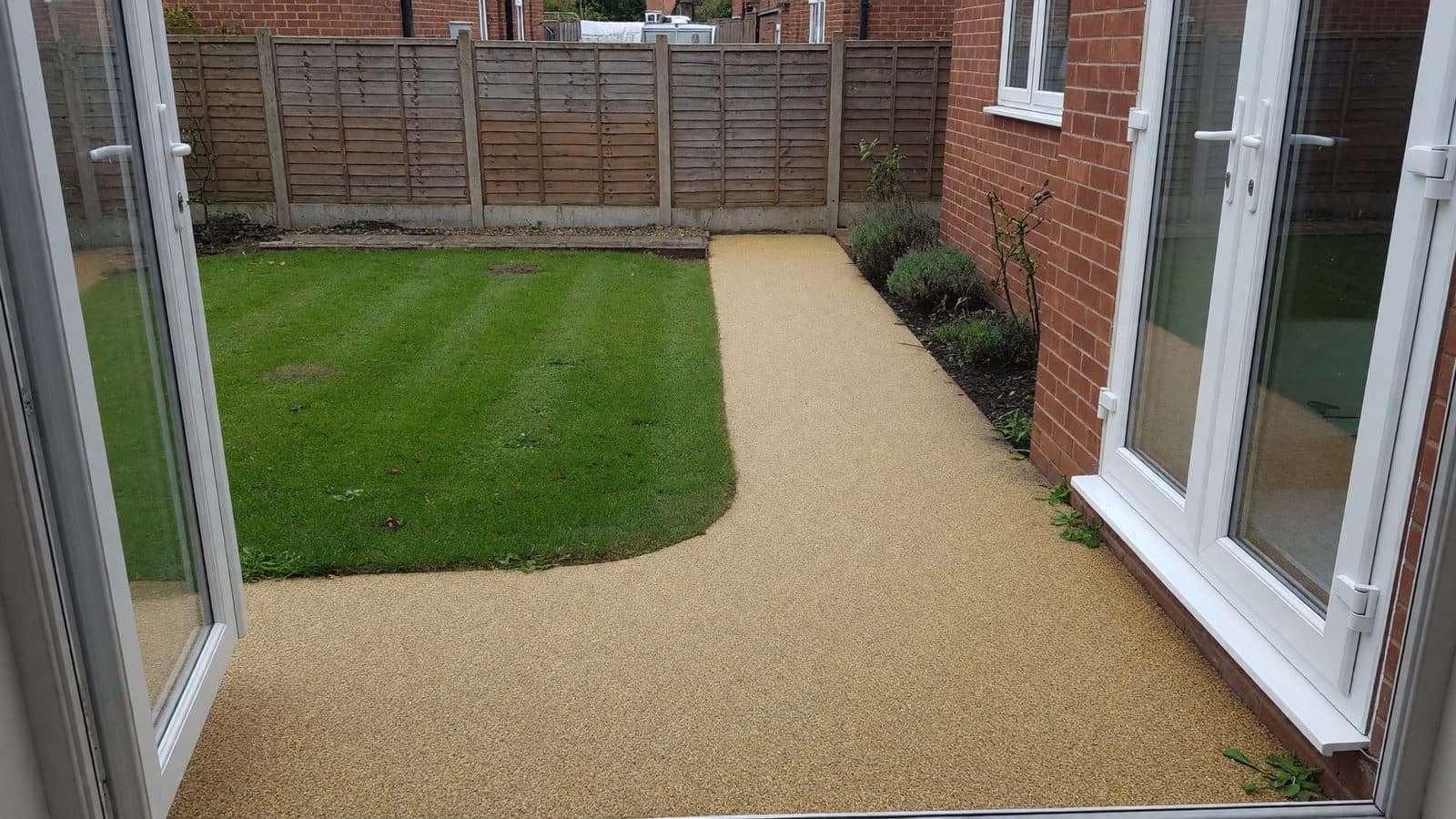
Resin bound gravel is one of the better answers we have for that situation. The stone is mixed with resin before it is laid, so the surface is firm, seamless and does not kick loose aggregate into the kitchen. It still needs a proper base, a fall away from the house and an edge that holds the wearing course. Get those right and the path is easier to walk, easier to roll and easier to look after than loose gravel or a patio full of open joints.
We install resin bound, not resin bonded. The two names get used as if they were the same product. They are not, and the difference matters more on a garden path than it does in a sales brochure.
Why loose gravel and old flags become a problem
Loose gravel moves. Wheels sink. Walking-stick ferrules catch. After a winter of Preston rain the stones migrate onto the lawn, into the threshold and down the gulley. Someone then has to rake them back, or they stay where they landed and become another trip.
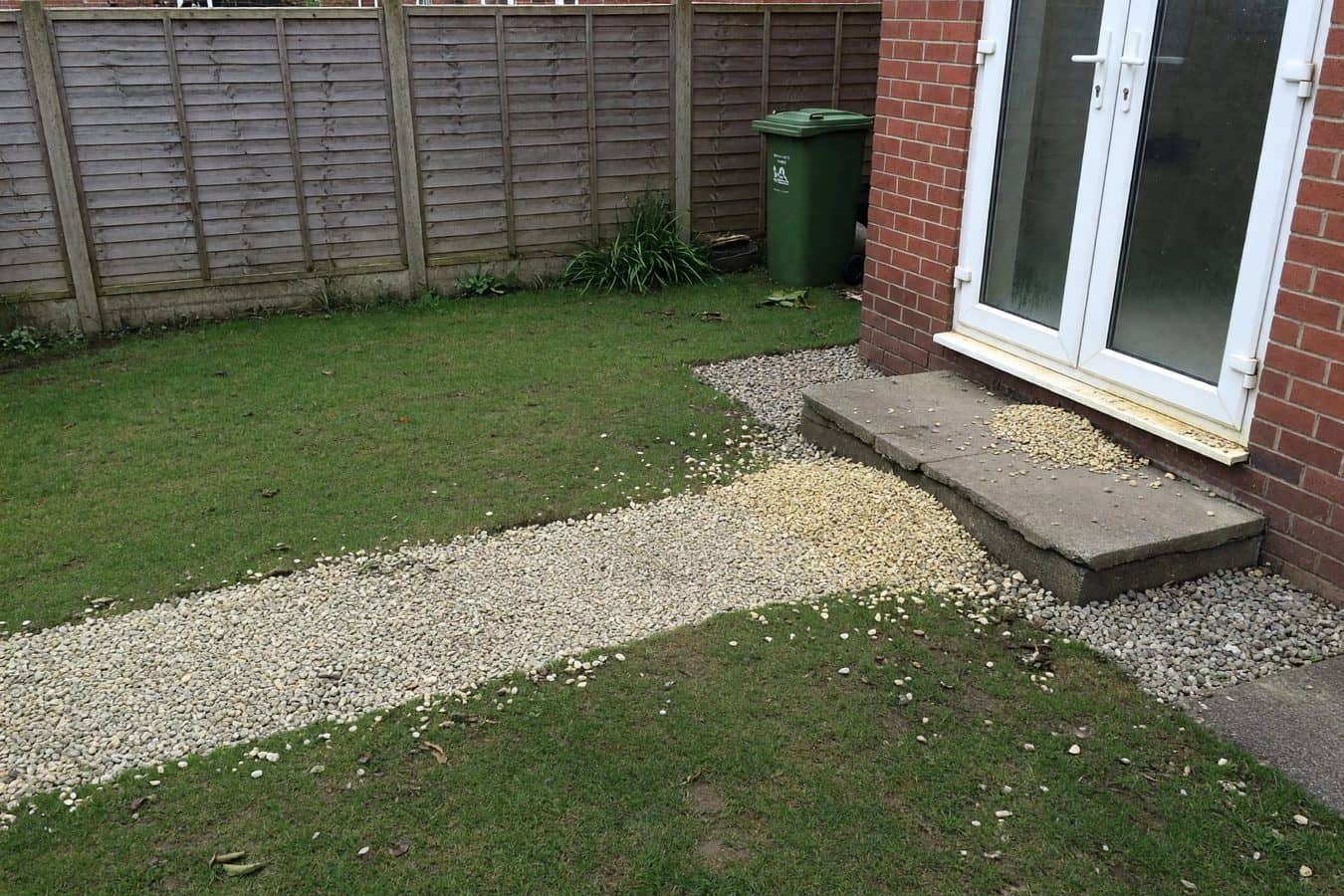
Old concrete flags have a different set of faults. Joints open. One corner lifts on clay. Algae sits in the low spots. A 20mm lip at a joint is enough to catch a frame or a toe. On plots in Cottam, Penwortham and Walton-le-Dale we often find the original path was laid almost flat, so water sits on the face after a heavy shower and the surface is greasy until lunchtime.
A bound surface does not magic those problems away on its own. It removes the loose stone and the open joints. The base, the fall and the threshold still have to be designed so water leaves the walking line.
Bound, not bonded — and why that matters underfoot
A resin bound path mixes the aggregate with the resin in the mixer, then trowels that mix as one wearing course. The stones are locked in the layer. Done properly there is no scatter, the face is even under a wheel, and rain can pass through the wearing course when the base is built for it.
Resin bonded work paints resin onto a base and scatters stone on top. The stones sit on the surface rather than in it. They shed. The top is not a permeable system. For an older relative, or anyone pushing a wheelchair, that scatter is the first thing that makes the route feel unsafe.
If a quote is markedly cheaper, ask which system it is — bound or bonded — in writing. We specify bound.
What “safer” actually means on a garden path
Safer, on a domestic plot, is a short list rather than a legal badge.
The walking line should be firm and even, with no loose stone and no open joints deep enough to catch a wheel or a ferrule. The face should have grip when it is wet, which on bound work usually means a specified aggregate and, where we judge it useful, a light clear grit on the final trowel. Rain should not pond on the route. The path should meet the back door without a sharp step if the levels allow, and it should land on the same hard surface at the patio, the shed or the bin store — not onto grass.
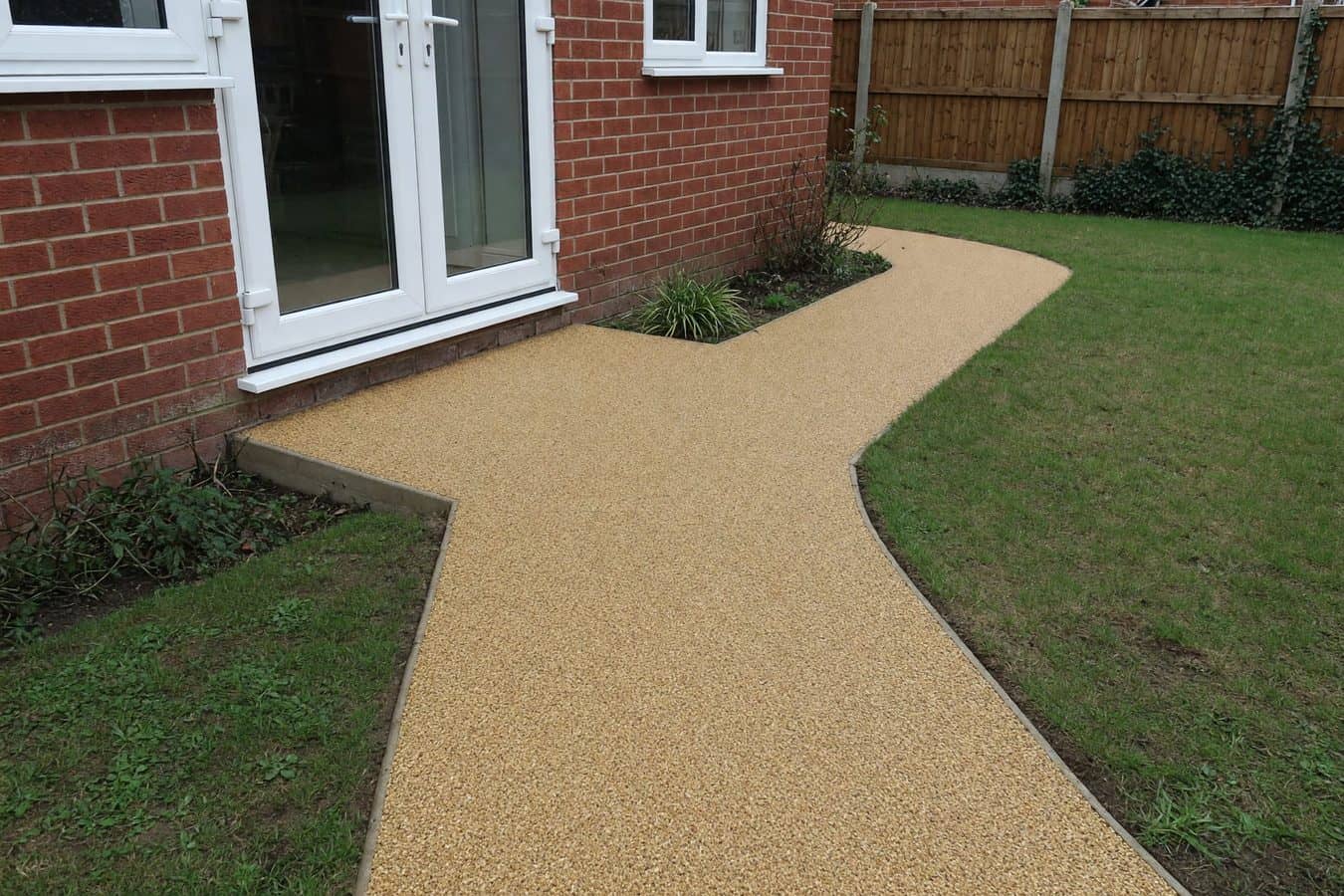
Width matters more than colour. A route that only just clears a wheelie bin is hard work with a walker. Where the garden can take it, we prefer a path a person can walk with a companion, or turn a compact wheelchair on at the landing. On tight Preston rear gardens that is not always possible from door to fence; we then keep the main line as clear as the plot allows and put the pinch points where nobody has to turn.
None of that is a substitute for a Building Regulations ramp on a public building. It is the standard we use when a family wants the garden to stay usable.
Low maintenance in a wet North West garden
The maintenance pitch on resin is often oversold. It is low care. It is not no care.
There are no joints for weeds to seed in the way they do in block paving. There is no weekly raking. A soft broom after leaf fall and an occasional gentle wash keep the face clear. Oil and red wine should be lifted promptly so they do not mark. Avoid harsh solvents and aggressive pressure washing — that is what shortens the surface, not the rain itself.
What actually shortens a bound path is a weak base, standing water, and grit or soil left sitting in the texture until moss takes hold. That is why we talk about falls and outlets on the same visit as colour. The care routine we give for drives is the same on a garden path: keep it clean, keep it draining, do not attack it with a jet washer on full power.
Typical life with a sound base and light care is around 10–15 years. That is how we spec the work, not a brochure maximum. The written guarantee that applies to a particular job is confirmed on the proposal.
Drainage, clay and the 5m² rule
Lancashire clay does not forgive a path that is laid pretty and flat. Water still has to go somewhere. A permeable wearing course helps, but only if the layers under it can take the water or a drain can collect it at the low edge.
On a new drive, a properly specified permeable resin system on a suitable base is generally SuDS-compliant, which means rain soaks through rather than running onto the highway. In England a new non-permeable driveway over 5m² that drains onto the road usually needs planning permission. A garden path in the rear is a different planning conversation, but the same physics applies: if the path sheds onto the house wall or a neighbour, we have built the problem into the job.
Where the existing tarmac or concrete is stable and already falls the right way, we can sometimes overlay. Where it is cracked, hollow or holding water, we rebuild the base. Type 3 open stone is the usual permeable sub-base on new work. The site visit is what decides that — not a photo of the colour chart.
If the garden already ponds after rain, the path is only half the job. A channel at the doors or a French drain at the low edge is often the difference between a dry walking line and a pretty surface that still soaks your slippers.
How we build the route so it stays usable
The sequence is the same as a small resin driveway, scaled to a path.
We start with levels at the threshold. The finished face should sit so the door still opens and water runs away from the brickwork. Then the line of the path: door to seating, door to shed, door to the side gate if that is the everyday route. Edges come next — a kerb, a metal edge or a planted restraint — because unbound edges let the wearing course unravel.
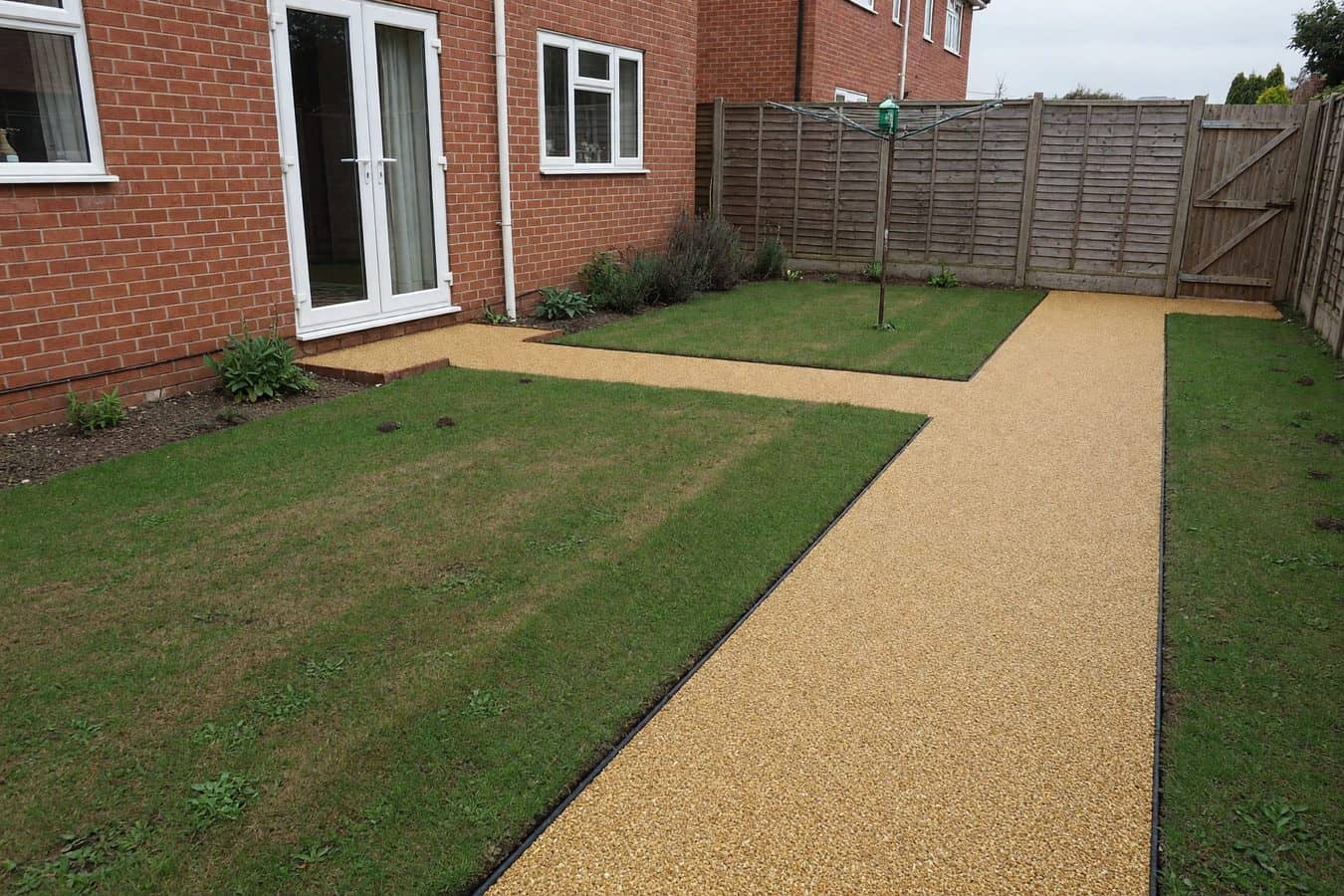
The mix is UV-stable resin and a graded aggregate. Finer blends feel smoother under a wheel; slightly more open blends show the stone more and can offer a bit more texture. Colour is chosen against the brick and the door, not from a tablet screen in full sun.
Pour day is weather-dependent. Resin does not like rain in the cure. Pedestrian use is usually the next day in decent conditions; we confirm that on handover rather than promising a clock time from the van.
When paving or another surface is the better hire
Resin bound is not automatic.
If the garden already has a good porcelain or sandstone patio and you only need a short link, matching flags can be the quieter job. If the route is a steep bank, a bound wearing course on a ramp still needs a sensible gradient and landings; sometimes a small set of steps with a handrail and a separate shallow ramp is clearer than one long ribbon of resin. If the budget is tight and nobody in the house needs a firm wheel line, a well-compacted self-binding path can serve for a while — knowing it will need topping and will soften in a wet winter on clay.
We would rather say that on the visit than sell a surface that fights the levels.
What to send us for a first look
A free online estimate is enough to start. Photos of the back door, the existing path and the wet patches after rain tell us more than a colour name. If someone in the house uses a wheelchair or a walker, say so — width, turning and the threshold matter more than the aggregate blend.
WhatsApp 01772 213019 is useful for photos. We reply within a working day. A site visit follows when the job is a fit, so we can measure falls and decide whether the old base can stay. A 25% deposit secures the booking once you accept the written proposal. Hours are Monday to Thursday, 8:00am–4:30pm.
The garden does not need to look like a show plot. It needs a walking line that stays firm in January, does not throw stone into the house, and does not ask an older relative to negotiate a lip they did not have five years ago. That is the job resin bound is good at, when the base underneath is honest.
Frequently asked questions
Is resin bound gravel suitable for wheelchairs and walkers?
Yes, when it is the bound system on a stable base. The stones are locked in the wearing course, so wheels and ferrules are not fighting loose gravel. Width, turning space and the door threshold still have to be designed. Bonded scatter systems are a poor substitute.
Will it be slippery in the rain?
A properly specified bound face is used as a non-slip domestic surface and drains instead of holding a sheet of water. Algae and silt left on any paving will make it greasy, which is why sweeping after leaf fall matters. We do not treat a garden path as a certified public-access floor; we specify grip for wet Lancashire use.
How much looking after does a resin garden path need?
Sweep. Wash gently when it is dirty. Lift spills. Do not blast it with a pressure washer on full power. There is no pointing and no raking. The maintenance notes we use on drives apply here.
Can you lay it from the back door to the patio?
Usually, if the levels work. The path should meet the threshold without trapping the door, fall away from the house, and land on the patio rather than on turf. Where the drop is too sharp we look at a short landing or a shallow ramp instead of a single steep run.
Do I need planning permission for a resin path in the back garden?
A rear garden path is not the same case as a new front driveway over 5m² draining onto the highway. Permeable bound work is still the better build on clay because it does not dump water on the house or the neighbour. We flag planning on the proposal if the job touches the public highway or changes how the frontage drains.
Related services
Prefer a professional install in Preston & the North West? Explore the services that match this guide.
Enjoyed this guide?