Artificial Grass vs Gravel: Which Surface Is Better for Your Garden?
Artificial grass and gravel are the two surfaces most homeowners reach for once a real lawn has given up on Lancashire clay. One gives you a soft, green, usable room. The other is a cheap, free-draining dressing that never pretends to be a lawn. The right choice depends on how the space is actually used, not which one looks better on Instagram.
We install both across Preston, Leyland and the surrounding villages. Mixing them is often smarter than declaring a single winner for every square metre.
Quick answer
- Kids, dogs and sitting → artificial grass on a properly drained base
- Utility, side returns, Mediterranean planting or tight budget → gravel
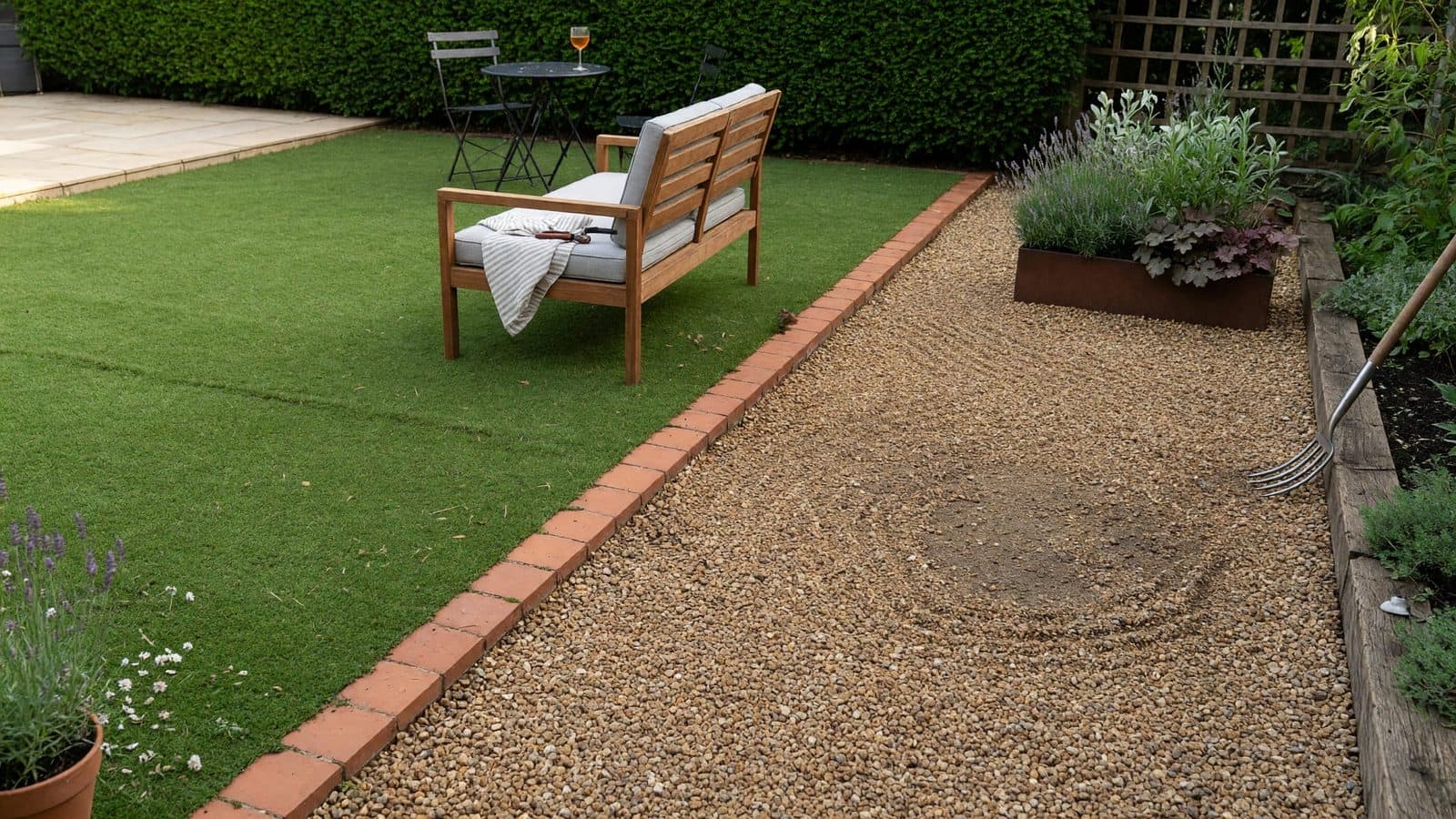
- Most family gardens → paved dining pad + artificial grass rectangle + gravel or planting in the leftover corners
Pros and Cons at a Glance
Artificial grass
Pros
- Looks like a lawn in winter when the base drains
- Soft for sitting, toddlers and most dogs
- No weekly mowing on saturated clay
- Furniture can sit on it (use paving pads for heavy tables)
- Pairs cleanly with paving for a low-maintenance family garden
Cons
- Higher upfront cost than tipping gravel
- Needs a proper excavated, compacted, free-draining base
- Poor installs pond and can hold odours
- Not zero maintenance — leaves, moss in shade, occasional clean
- Some owners simply do not want a synthetic surface
Gravel
Pros
- Low material cost and fast to lay on a simple build-up
- Excellent surface drainage when the sub-base is open
- Huge choice of colour and size
- Easy to refresh or change later
- Honest look for utility yards, Mediterranean planting and side returns
Cons
- Terrible as a play lawn — knees, bikes and footballs all suffer
- Furniture legs sink unless you add solid pads
- Migrates into the house, lawn and highway without upstands
- Fine grades become a cat toilet
- Weeds arrive as seed on the surface even over membrane
- Does not read as “garden” in the way a green lawn does
Drainage — The Lancashire Decider
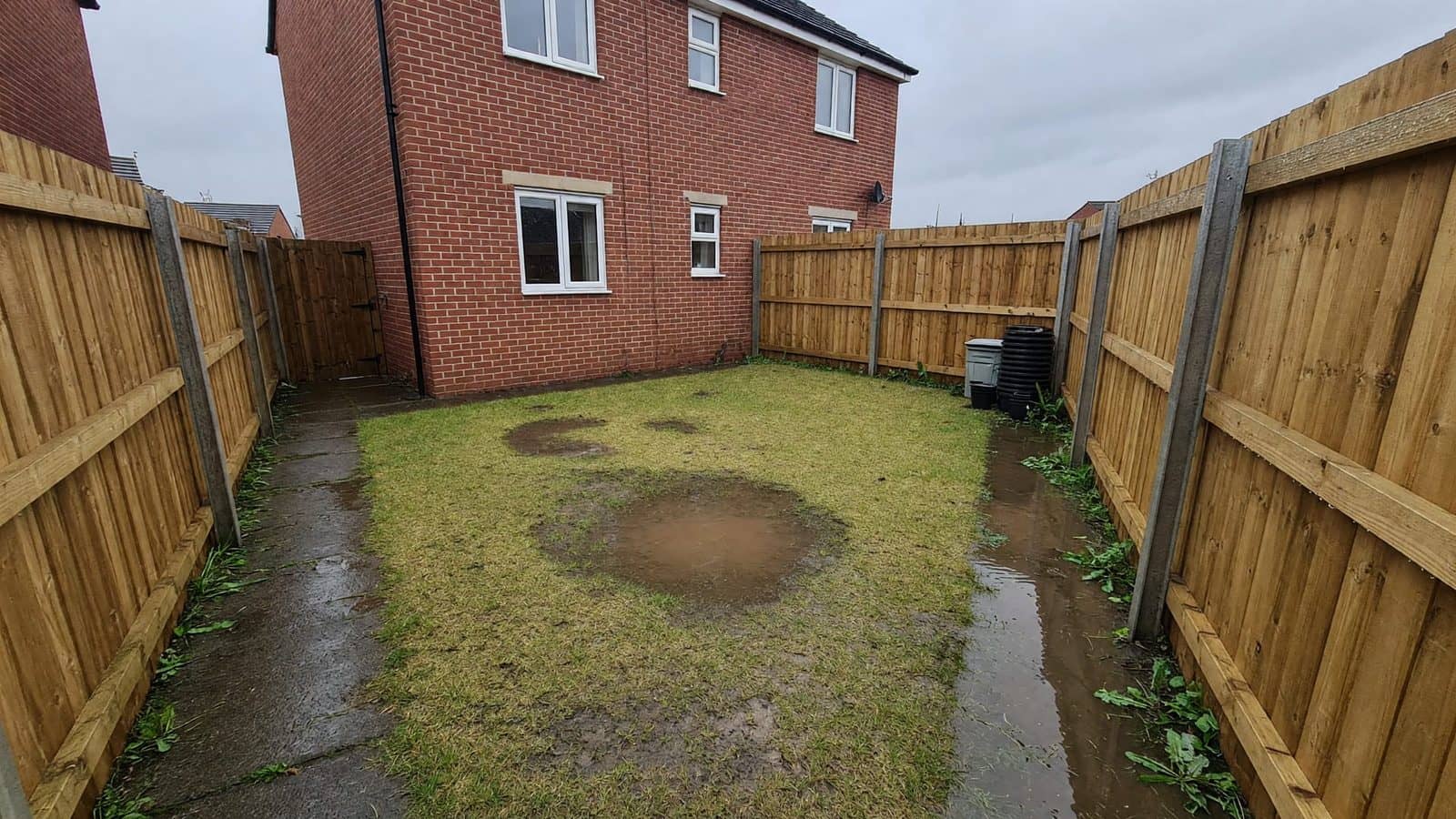
On clay, both surfaces fail if water cannot leave.
Artificial grass must sit on a porous sub-base with falls or an outlet. The carpet is perforated; it is not a magic drain. If the lawn is already a pond, fix garden drainage first or as part of the same job. We typically excavate 75–100 mm, lay geotextile, compact MOT Type 1 (or more open-graded stone on the worst clay), then a fines layer before the turf.
Gravel also needs a competent base. Deep loose stone on mud simply becomes a gravel swamp. A 25–40 mm dressing over compacted Type 1 is a surface, not a soakaway.
If the brief is “stop the mud” and nobody plays there, gravel plus planting is enough. If the brief is “the kids live out here all winter”, artificial grass on a drained base wins.
Heat, Look and Neighbours
Quality artificial grass in a realistic colour looks like a garden from the kitchen window. Gravel looks like hard landscaping. Neither is wrong. Front gardens sometimes prefer gravel or resin for planning and highway-drainage reasons; rear family gardens more often want green.
On rare hot days artificial grass can feel warmer than gravel in the shade. Lighter piles and a proper infill help. It is a comfort issue, not a reason to reject turf in Lancashire’s climate.
Cost Thinking (2026 UK figures)
Gravel wins week one. Artificial grass wins if you were otherwise about to pave or deck the same play area, or if you would spend every Saturday on a doomed lawn.
Typical installed ranges (full system including excavation, waste, edging, base and surface):
- Gravel garden surface: roughly £35–£70 per m² depending on depth, edging and access
- Artificial grass: £45–£85 per m² for a mid-range residential install (higher for premium pile or complex drainage)
Compare installed systems, not the price of a bag of stone versus a roll of turf. A cheap turf roll on soil is not the “grass” side of this comparison — it is the install that makes people hate the material.
A Mixed Layout That Usually Wins
- Paved or resin pad for the table
- Artificial grass rectangle for play
- Gravel or planting in leftover corners and the shady side return
That design uses each surface for what it is good at and keeps the hire focused.
Shade, Algae and the “Always Green” Promise
North-facing Preston gardens grow moss on real lawns and, if you skip drainage, a film on gravel and a flat look on cheap turf. Neither surface is maintenance-free in shade. Turf still needs the debris lifted so the pile can stand; gravel still needs silt raked off so it does not turn to a crust. If the garden never sees sun, be honest about that in the brief — product choice and base design change.
Front Garden vs Rear Garden
Frontages often have planning and highway-drainage constraints that rear lawns do not. Gravel or a permeable bound surface can be the right front-drive language; a green carpet is more often the rear play room. Do not copy a rear-garden turf quote onto a sloped frontage without checking falls to the pavement.
FAQ
Which is better for a wet garden?
Neither, until water has somewhere to go. Then choose by use: play → turf; utility → gravel.
Can I put artificial grass over gravel?
Not as a shortcut. The gravel is rarely a designed, level, compacted base. We assess and usually rebuild.
Which is lower maintenance?
Turf: occasional clean and leaf removal. Gravel: raking, top-up, weeds and chasing stones.
Should I just pave instead?
If the space is for dining, paving beats both. If it is for play, paving is a harder landing.
How long does each last?
Quality artificial grass: 15–20 years with normal domestic use. Gravel: effectively indefinite if edged and topped up, though the surface look declines without maintenance.
Send photos of the lawn, note pets and whether you need a table on the same surface. Request a free online estimate for artificial grass — if gravel or a patio is the better spend, we will say so.
Related services
Prefer a professional install in Preston & the North West? Explore the services that match this guide.
Enjoyed this guide?