Waterlogged Lawn? Drainage Options That Actually Work
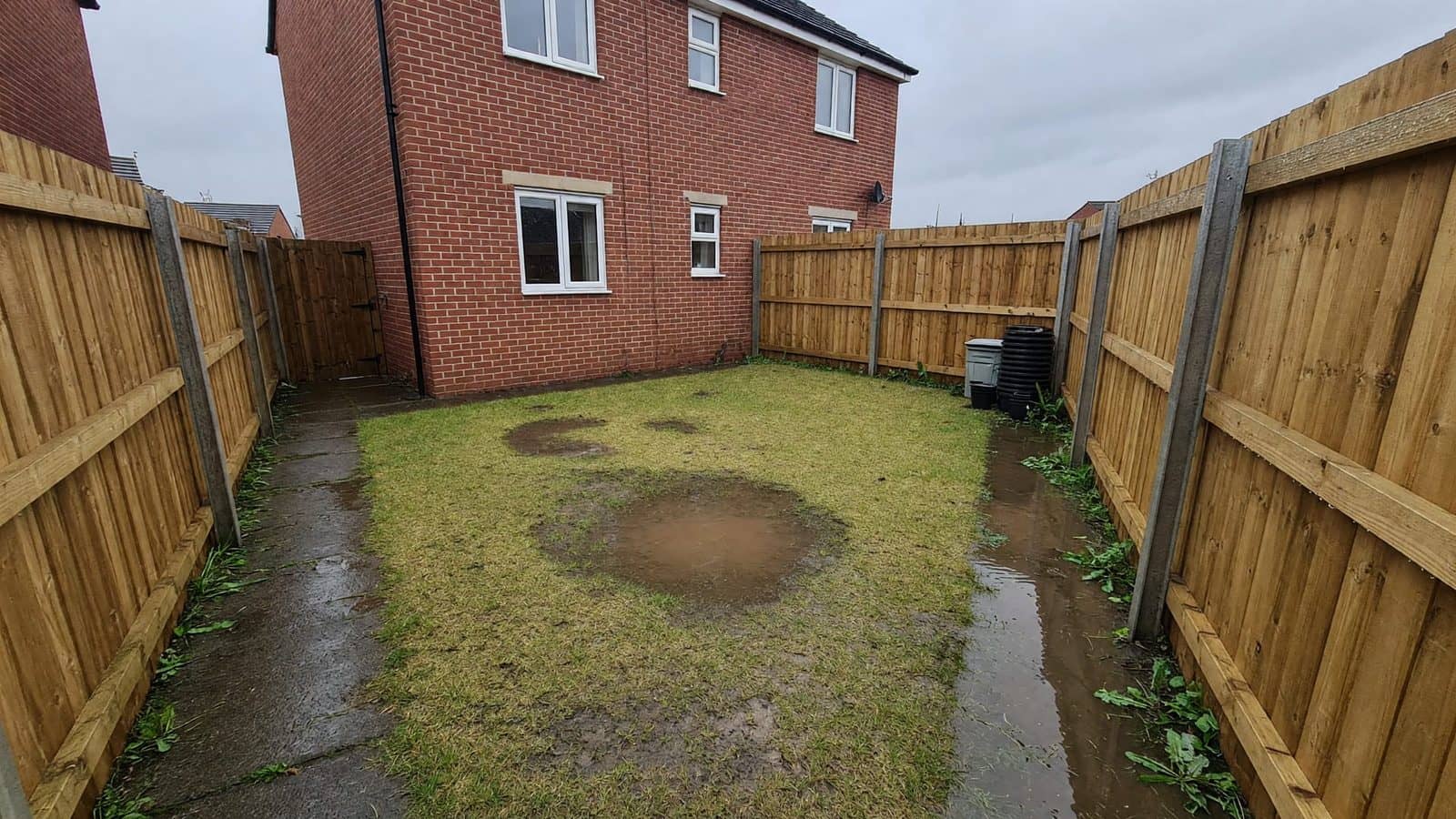
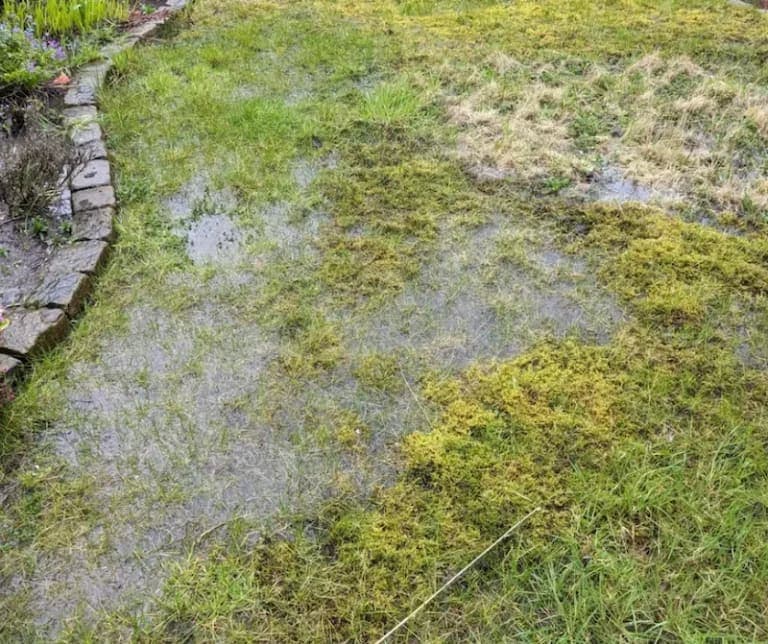
A lawn that stays soft, mossy or under water after rain is one of the most common garden problems we see in Preston, Leyland and across the North West. It is frustrating, it ruins shoes and mower wheels, and it is rarely solved by another bag of lawn feed. This guide explains why lawns stay wet and which drainage options actually work — especially on heavy Lancashire clay.
Why your lawn will not dry out
Typical causes, often combined:
- Heavy clay soil that holds water and drains slowly
- Compaction from construction plant, play or parking
- Poor levels — low spots and dish-shaped lawns that collect runoff
- Blocked or missing drains from the original build
- Runoff from roofs, drives or neighbouring ground with nowhere safe to go
- New-build rubble and thin topsoil over a sealed clay pan
If water sits for days after rain, treat it as a ground and drainage issue first. Aeration and sand dressings help some soils, but they will not fix a lawn that is effectively a shallow pond.
Options that work (and ones that do not)
1. Re-levelling and falls
Sometimes the “drainage” fix is reshaping. Filling hollows, correcting falls away from the house, and removing dish shapes can stop water collecting even before you install pipes. This is often combined with other measures.
2. French drains (land drains)
A trench with a perforated pipe in clean gravel, wrapped correctly, collecting water and carrying it to a legal outfall or soakaway. Excellent for intercepting runoff along boundaries, patio edges or the foot of a slope. Needs a real destination for the water — not a dead-end trench that fills like a bathtub.
3. Channel drains and surface collection
Linear channels at patio or driveway thresholds catch water before it floods the lawn. Useful when hard surfaces shed onto grass. Must connect into a designed system.
4. Soakaway crates / attenuation
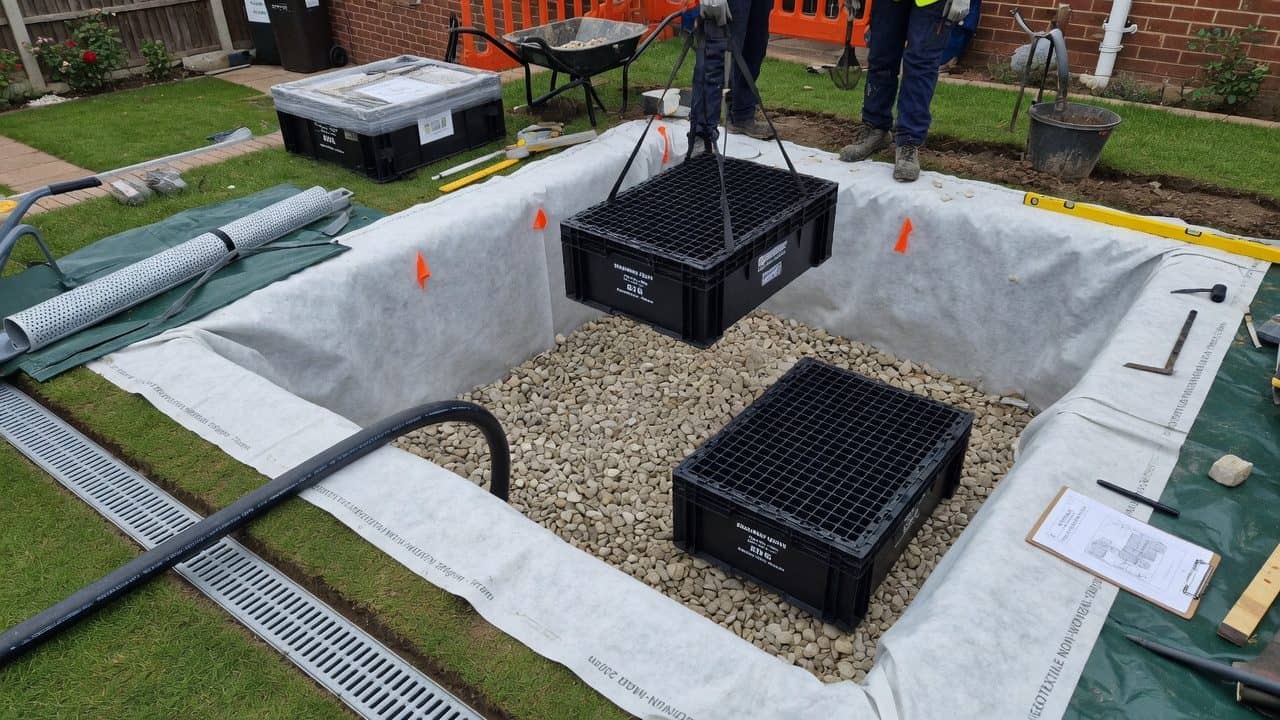
Plastic crate systems create underground storage so water can soak away gradually or attenuate peak flow. On clay, soakaways need careful sizing and placement — digging a gravel hole in impermeable clay without design often creates an underground pond. Professional design matters here.
5. Pumps for sunken areas
Basement-style or heavily sunken gardens may need a pump chamber where gravity outfall is impossible. This is specialist work and must be specified properly.
6. Full garden redesign with drainage built in
If the lawn is only one symptom of a failed layout — wrong levels, tiny patio, no planting structure — a landscaping redesign can integrate drains, new hard surfaces and usable lawn on better ground. That is often better value than endless spot fixes.
What usually fails
- Spiking alone on a compacted clay pan under a new build
- A single rubble pit with no overflow path
- Laying new turf on wet, unimproved ground “to make it look nice for photos”
- Sealing surfaces without providing an alternative route for water
DIY or hire a contractor?
You might DIY light re-levelling or simple channel clearing. Hire a professional when:
- Water threatens the house or damp courses
- You need a soakaway or connection that must perform for years
- Clay and compaction mean machine excavation
- You want drainage integrated with a new patio or full landscaping
A good contractor will look for where water comes from and where it can legally and safely go — not just dig a trench where the grass is wettest.
How we approach waterlogged lawns
We start with how the garden behaves after rain, the soil, and nearby hard surfaces. Solutions might be a French drain and soakaway, a new patio with correct falls, or a wider redesign so the lawn sits on ground that can actually drain. Written guarantees cover our workmanship; materials are chosen for Lancashire weather, not catalogue photos alone.
Next step
If your lawn is still a bog days after rain, gather a few photos after the next downpour and note how long water sits. Request a free online estimate and we will outline practical drainage options for your Preston-area garden — including when a simple fix is enough and when a deeper system is the honest answer.
Related reading on soakaways and new-build ground conditions can help you prepare questions before we talk.
Related services
Prefer a professional install in Preston & the North West? Explore the services that match this guide.
Enjoyed this guide?