Resin Patio vs Flags in a Lancashire Garden
A lot of the briefs we see now are not for a drive at all. They are for a rear patio: a place to put a table, sometimes an L-shaped sleeper border, sometimes a strip of grass next to it. Resin bound gravel is what people have seen on the front of the house, so they ask whether the same surface will do off the kitchen doors.
It can. It is not automatically the better patio. Flags still win on some plots. The useful question is what the surface has to do in Lancashire rain, on clay, with furniture sitting on it all winter.
What a resin patio actually is
A resin bound patio is the same family of surface as a permeable resin bound driveway: stone coated in resin, trowelled as one sheet, water going through the mix rather than sitting on top. That is different from resin *bonded*, where stone is scattered onto a sticky layer and can come loose under chair legs.
On a patio the sheet is usually thinner-traffic than a drive, but the base still has to be right. Soft ground, a thin sand bed, or a fall that dumps water against the house will show up faster here than on a front drive, because you walk it every day and you notice a puddle by the door.
In England, new hard surfaces over 5m² that shed onto the highway can need planning permission if they are not permeable. A rear patio that drains into the garden is a different planning picture from a front drive, but the same habit still helps: keep the surface permeable and give the water a legal place to go.
Resin patio vs porcelain or sandstone
We already compare porcelain and sandstone as flags. Put resin next to both and the trade-offs look like this.
Joints. Flags have joints. On sandstone they collect sand, moss and the odd weed. On porcelain the joints are tighter but they still need a compound that can cope with frost. Resin has no open joints. That is the main reason people ask for it after years of pointing a patio.
Algae and shade. A north-facing Preston patio under a fence will grow a film on almost anything. Porcelain shows it as a slick. Sandstone holds it in the pores. Resin shows it as a dark patch that needs a soft wash, not a pressure lance on full chat. Shade does not disappear because the surface changed.
Furniture. Table and chair legs sit on a small footprint. On flags they can rock if one slab has settled. On resin they sit on a continuous sheet, which feels better until the base has moved — then you get a dish rather than one rocking flag. Heavy planters should still sit on pads, not raw resin.
Look. Resin is a contemporary sheet. If the brief is to match existing Indian sandstone around an older house, flags are the honest match. If the brief is a low-joint, easy-clean dining space next to new doors, resin is often what people actually want.
Repair. A chipped flag can be lifted. A damaged patch of resin is a colour-match and a visible joint unless you redo a larger bay. That matters on a patio more than people think, because barbecue fat and dropped pots happen here.
The sleeper edge
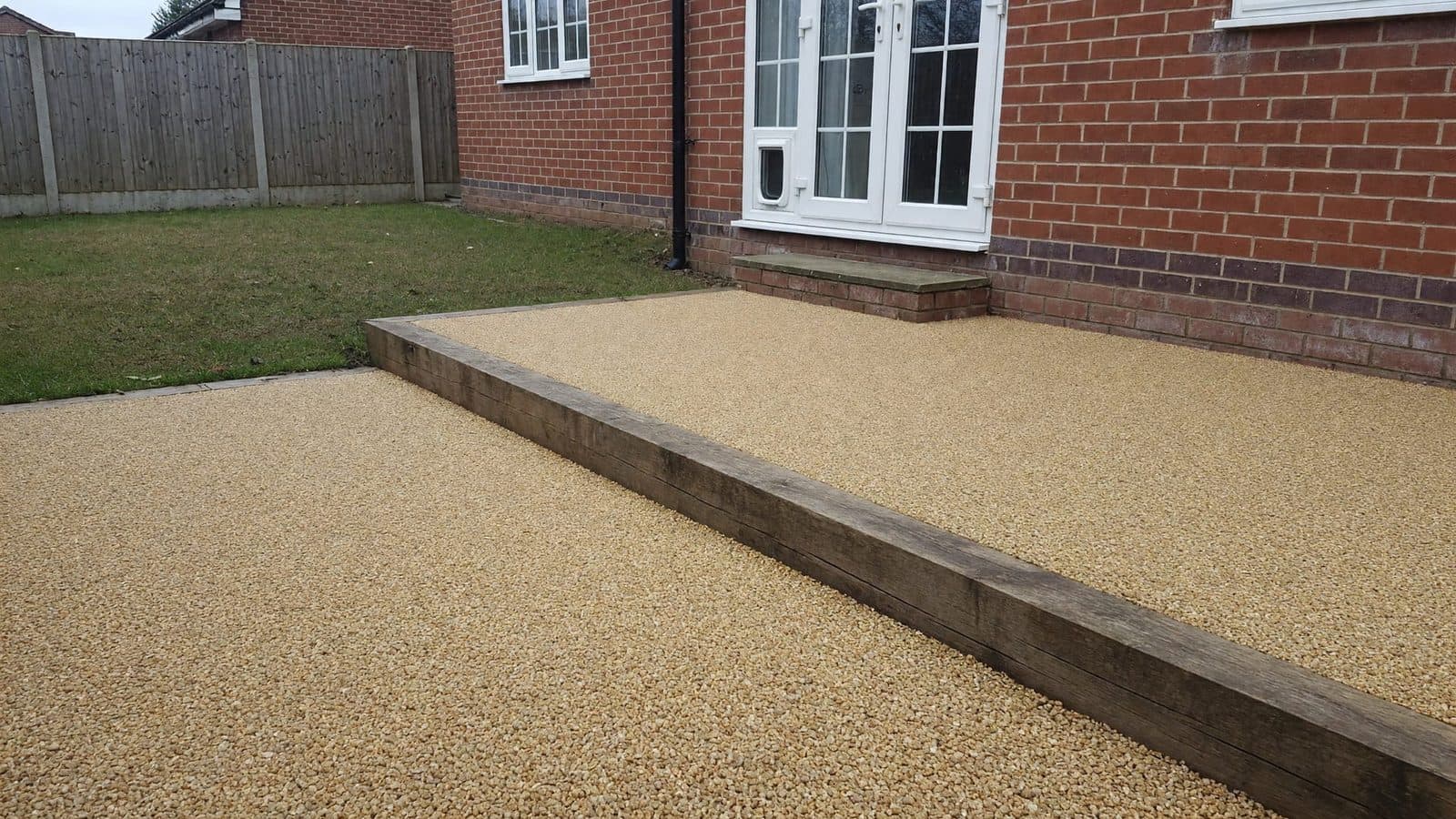
Plenty of rear gardens want a resin or flag patio with an L-shaped sleeper border holding a raised bed or a change of level. The sleeper is doing two jobs: a look, and a stop-end so the surface does not unravel.
Sleepers against clay need a fall *away* from the timber face or a drain behind it. If the patio sheets water into the sleeper line, the timber stays wet and the ground behind it slumps. That is the same logic as a sleeper retaining wall on a slope, just at seating height.
We set the resin or flags to a finished level that still leaves a sensible gap to the damp-proof course at the house, then let the sleeper sit as a clean upstand, not as a dam.
When flags are still the better patio
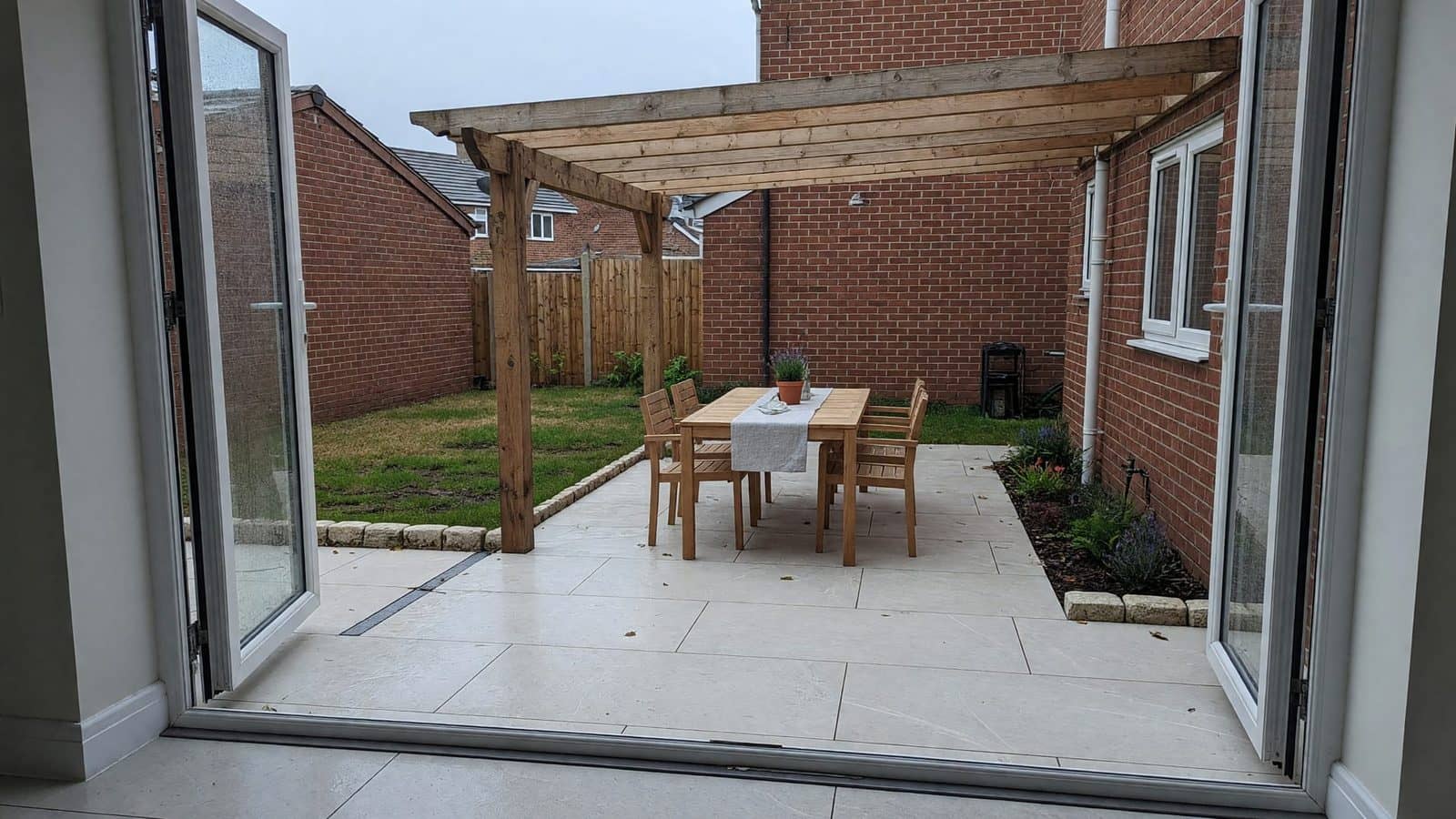
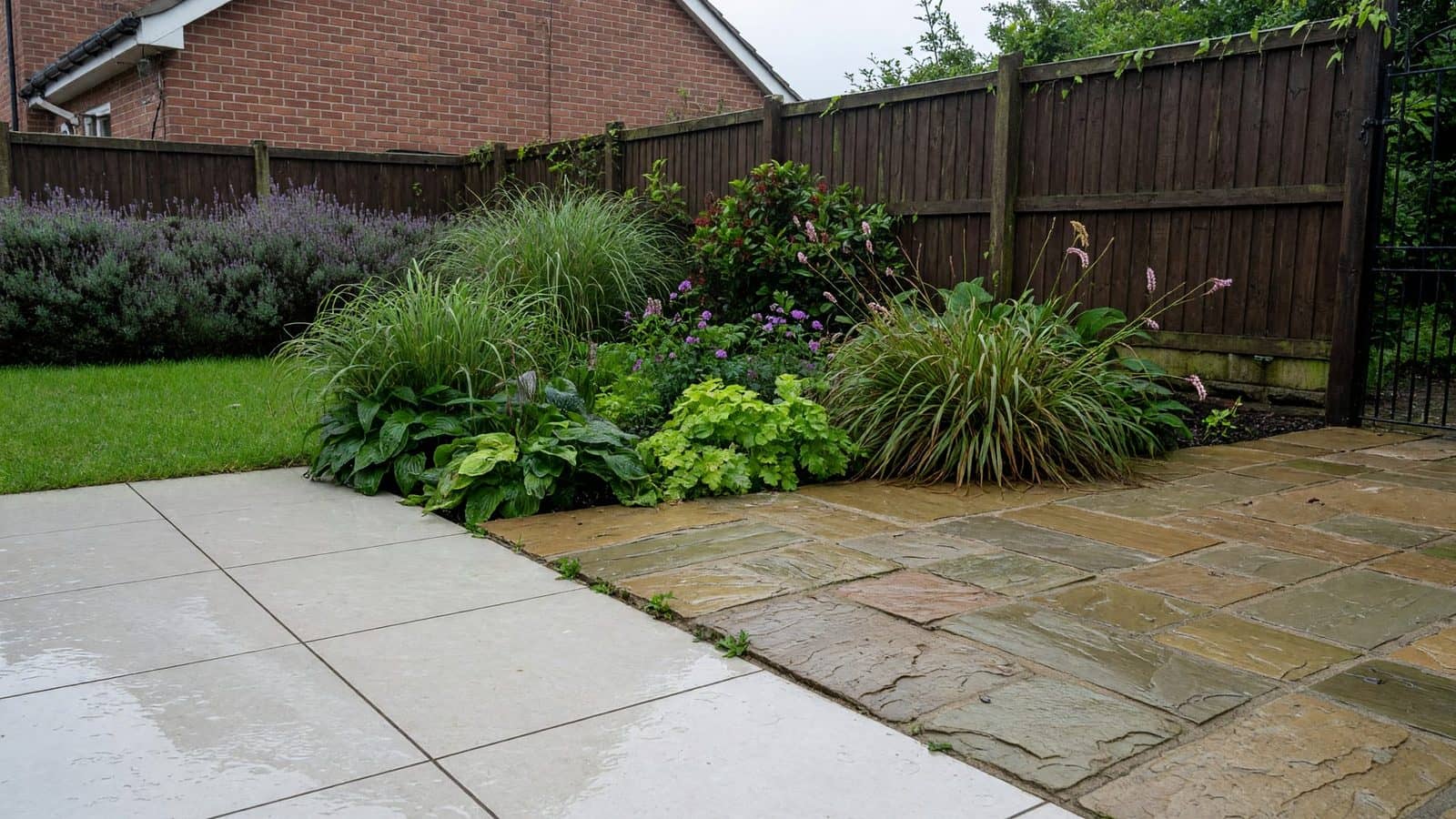
Choose flags when you need to match an existing patio, when you want a traditional riven face, or when you may want to lift a section later for a pipe or a cable. Porcelain is still the cleaner flag in wet Lancashire weather if you accept the jointing rules. Sandstone is still the one that looks at home next to older brick.
Choose resin when you want one sheet, fewer weeds, and a surface that stays comfortable underfoot after rain — and you are happy that repairs are patches, not one slab.
A patio cost guide for Preston still applies to the excavation, base and waste. Resin does not skip that work. The pour is the last day, not the whole job.
What we check on a visit
Levels from the kitchen threshold, the DPC line, where the water will run, whether the existing base can take a bound sheet, and whether a sleeper edge is holding soil or just decorating. Photos of the doors, the current surface and the boundary are enough for a first free online estimate. WhatsApp 01772 213019 if that is easier.
We do not quote a patio from a drive price list. The two surfaces look related. The site work is not the same.
Related services
Prefer a professional install in Preston & the North West? Explore the services that match this guide.
Enjoyed this guide?