BRE 365 soakage / soakaway / percolation test in Preston
A factual BRE Digest 365 soakage / soakaway / percolation test report for planning and building control. Machine-dug trial pit, crew and backfill all included from £850 + VAT — we run the test using water from your outside tap.
Family-run Preston landscapers (Walton-le-Dale), Acorn Landscape Gardening. A team of eight, rated 4.8 from 145+ Google reviews. The same local crew that digs French drains and soakaways — the test is done on the ground, not as a desk exercise.
- What it is
- BRE Digest 365 soakage (infiltration) test and written report
- Cost
- from £850 + VAT for one standard trial pit (about 1.2 m deep)
- We do
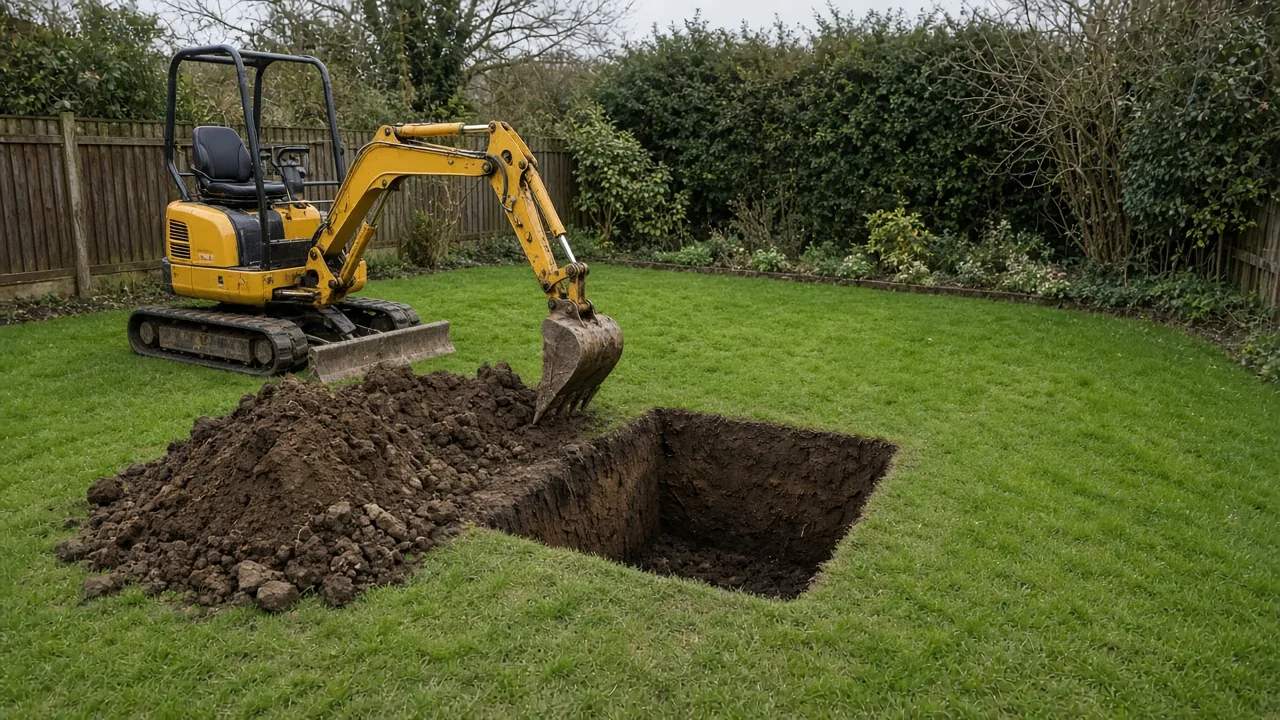
- machine-dug pit (micro digger fits gates from 75 cm), three fills using your outside tap, readings, backfill and tidy — crew included
- You get
- branded Acorn PDF report (our template): pit log, photos, readings, soakage rate per fill, design soakage rate
- Not included
- soakaway sizing, drainage design, engineer sign-off, competent person certificate
If Preston City Council, Chorley Council, South Ribble or building control have asked for a BRE 365 soakage test before they will accept a soakaway, this is that job. We dig a standard trial pit about 1.2 m deep on your plot, run the BRE Digest 365 test using water from your outside tap (three fills), time how the level drops, and send you a clear written report with the pit log, photos, readings, the soakage rate for each fill and the design soakage rate. From £850 + VAT for one standard pit about 1.2 m deep. Deeper pits (1.2–1.8 m) from £150 + VAT extra; deeper than 1.8 m by quote only. Extra pits on the same visit from £350 + VAT each. We test at the depth your soakaway will sit, up to 1.8 m, and readings are taken from the surface.
Family-run from Walton-le-Dale, Preston — Acorn Landscape Gardening. Team of eight. 4.8 ★ from 145+ Google reviews. Specialist garden drainage alongside resin and landscaping.
Soakage test process — six steps
- 1
Enquire
Send the site postcode, purpose (planning or building control), proposed depth and whether you have an outside tap.
- 2
We confirm scope
Standard ~1.2 m package from £850 + VAT, plus any likely extras (deeper pit, hardstanding, second day).
- 3
Machine dig
Our crew digs the trial pit with our micro digger (fits gates from 75 cm) at the agreed depth (up to 1.8 m).
- 4
Three fills
We run the BRE 365 fills using water from your outside tap and take readings from the surface.
- 5
Backfill tidy
We backfill and leave the site tidy. Turf or paving reinstatement is quoted separately if needed.
- 6
Written report
You get a branded Acorn PDF (our report template) with the pit log, photos, readings and soakage rates. Your report within 5 working days of the test, often sooner.
What's included in a BRE 365 soakage test
- Machine-dug standard trial pit about 1.2 m deep, with our crew (deeper than 1.8 m by quote only)
- Run three fills using water from your outside tap, timing the drop as the method requires
- Photograph the pit and the work
- Written branded Acorn PDF report (our template) with: pit log, photos, readings, soakage rate for each fill, design soakage rate
- Backfill the pit afterwards and leave the site tidy
What's not included
- Soakaway sizing or drainage design
- Engineer sign-off or a 'competent person' certificate
- Planning drawings or calculations beyond the soakage rates in the report
- Reinstating turf, paving or other surfaces after the dig (quoted separately)
What's in your BRE 365 soakage report
Your report within 5 working days of the test, often sooner after we finish on site (exact figure to confirm when booking).
- Branded Acorn PDF made from our report template
- Pit log (location, dimensions and ground notes)
- Photos of the trial pit and fills
- Readings from each fill (taken from the surface)
- Soakage rate for each fill
- Design soakage rate for the report
Optional extras (from prices)
Second day on site
Slow-draining ground such as clay may need a second day to finish the three fills. Fixed £400 + VAT — with the £850 standard pit, the most you pay for a standard one-pit test is £1,250 + VAT.
£400 + VAT
Each extra pit on the same visit
Additional trial pits when the brief needs more than one location.
from £350 + VAT
Deeper test pit (1.2–1.8 m)
For soakaways whose base sits deeper than the standard about-1.2 m pit. From £150 + VAT extra on top of the standard one-pit price. Deeper than 1.8 m by quote only.
from £150 + VAT extra
Breaking out hardstanding
Where we have to cut through tarmac, concrete or similar to dig the pit.
from £150 + VAT
How a BRE 365 / percolation test works
- 1We dig a trial pit at the depth your soakaway will sit — about 1.2 m as standard, or deeper (1.2–1.8 m from £150 + VAT extra; deeper than 1.8 m by quote only).
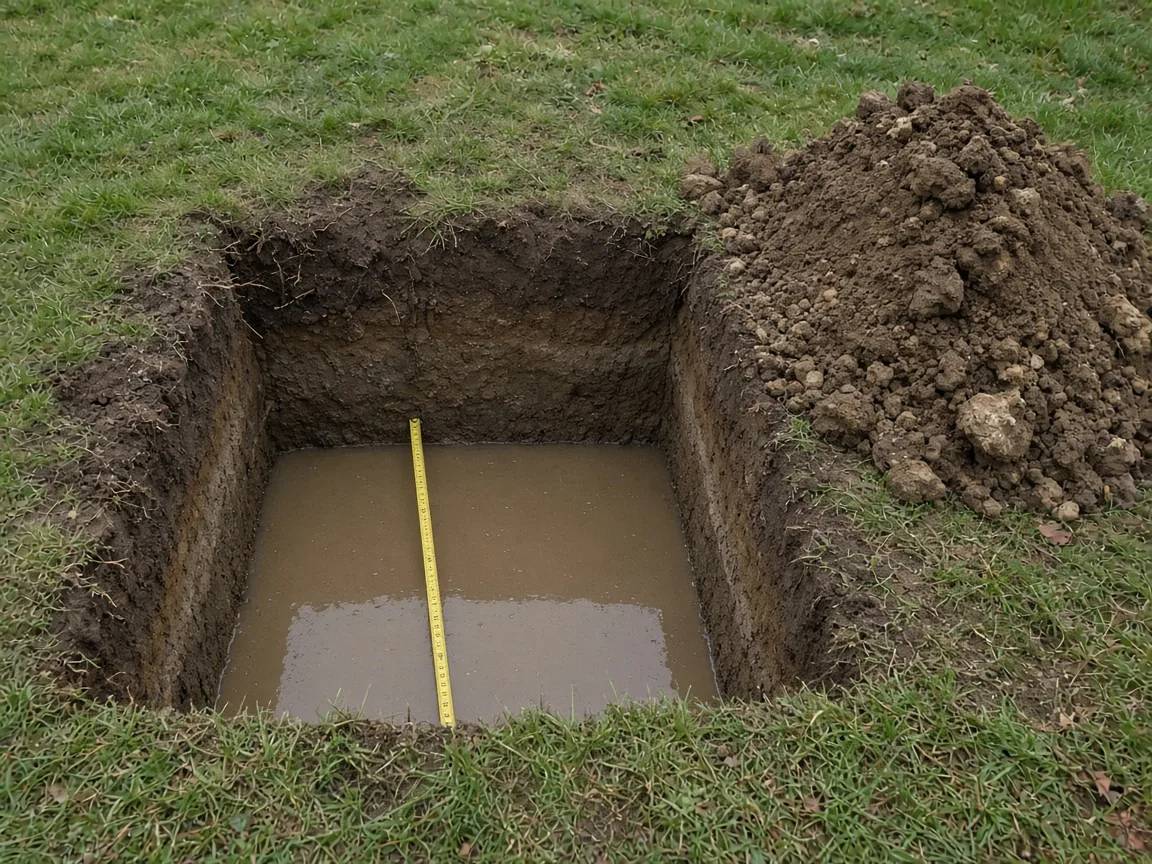
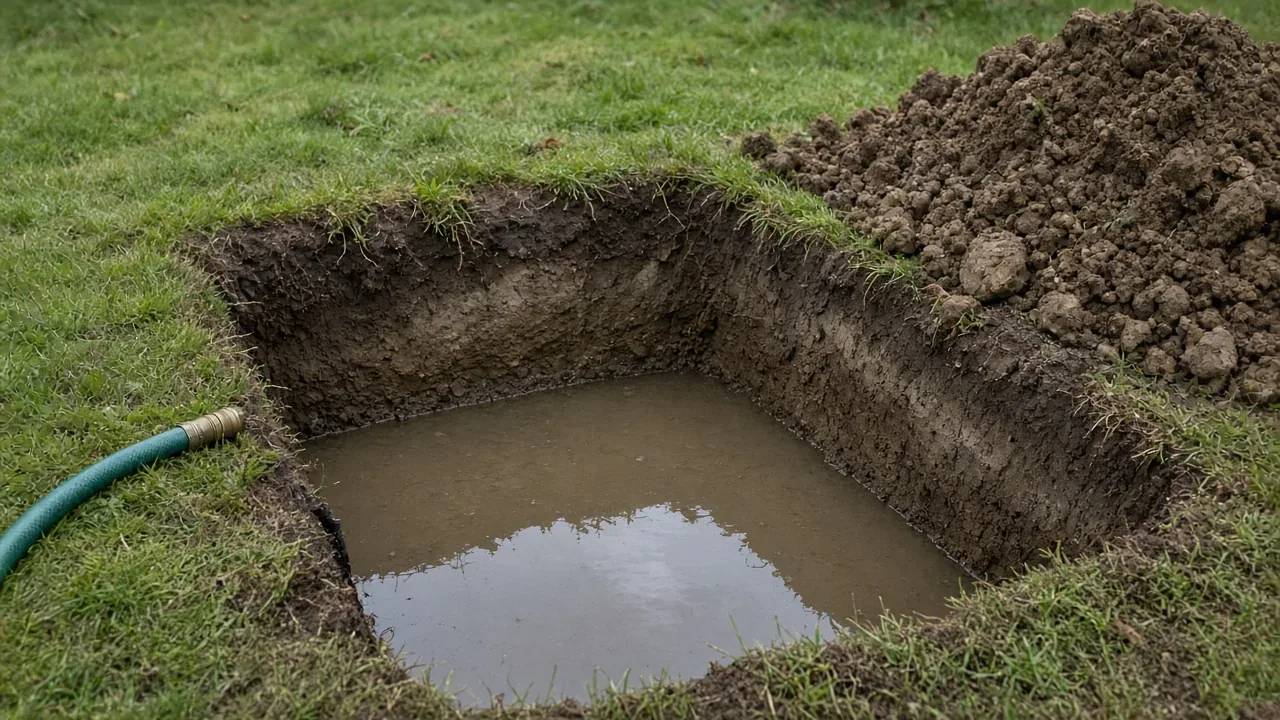
- 2Using water from your outside tap, we fill it and let the ground wet up.
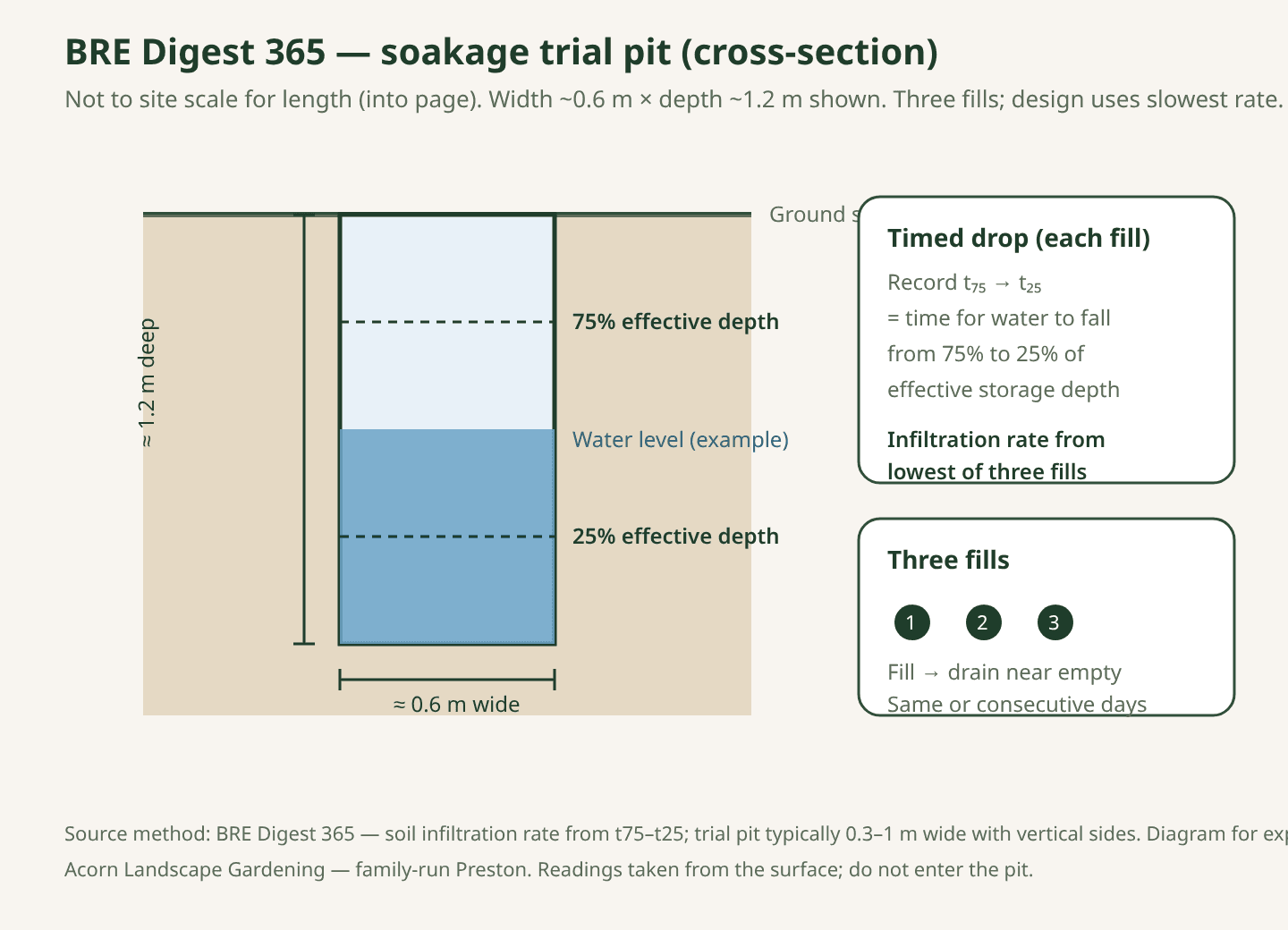
- 3We fill it again (the method calls for three fills in total) and time how fast the water level falls between set marks, with readings taken from the surface.
- 4From those timings we calculate the soakage rate for each fill and the design soakage rate for the report.
- 5We backfill the pit and leave the site tidy.
Most tests take one day. Slow-draining ground such as clay can need a second day on site at £400 + VAT (so a standard one-pit test is at most £1,250 + VAT). We follow the BRE 365 method until the three fills and readings are done, and we never go beyond two days without your agreement.
We test at the depth your soakaway will sit, up to 1.8 m, and readings are taken from the surface. The standard price covers a pit about 1.2 m deep; a deeper pit between 1.2 m and 1.8 m is from £150 + VAT extra; deeper than 1.8 m is by quote only.
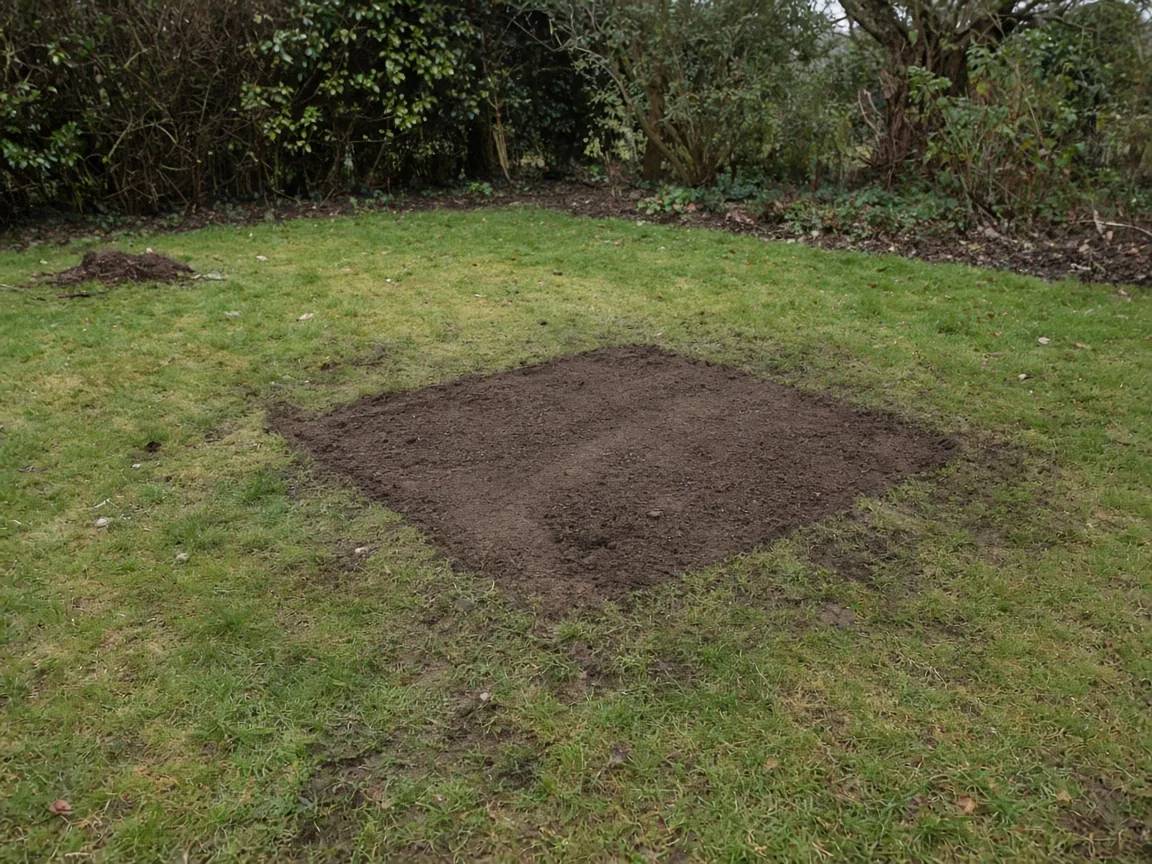
What building control expects from a soakaway / soakage test
Planning and building control usually want evidence that infiltration is viable before they accept a soakaway. Part H of the Building Regulations covers drainage and waste disposal. BRE Digest 365 is the soakage / infiltration test method commonly used to show whether the ground can take a soakaway — it is not the same as a foul-drainage Part H / BS 6297 septic percolation test.
- A trial pit at the proposed soakaway location and depth (we test at that depth up to 1.8 m)
- Three fills with timed level drops
- A written record: pit log, photos, readings, soakage rate per fill and design soakage rate
Who needs a BRE 365 soakage / soakaway / percolation test?
Homeowners, self-builders and architects commission a BRE 365 soakage test when Preston City Council, Chorley Council, South Ribble, Lancashire planning or building control ask for evidence before accepting a soakaway. You may see it called a soakage test, soakaway test, infiltration test or percolation test. For surface-water soakaways the usual method is BRE Digest 365. That is different from a foul septic “perc” test under Part H / BS 6297 — if you need the septic version, say so and we will point you to the right specialist rather than sell you the wrong report.
What building control expects from a soakage test
Part H of the Building Regulations sets the drainage rules. BRE 365 is the test method commonly used to show infiltration is viable for a soakaway. We do not claim BRE 365 “is” Part H, and we do not issue building-control approvals. We dig a machine-excavated trial pit at the proposed location and depth (up to 1.8 m), run three fills using your outside tap, take readings from the surface, and send a factual report with the pit log, photos, readings, soakage rate per fill and design soakage rate — the pack councils typically ask for.
Clay, second days and the £1,250 cap
Lancashire clay often drains slowly. Most BRE 365 soakage tests still finish in a day. If the ground is slow, a second day on site is £400 + VAT, so the most you pay for a standard one-pit test about 1.2 m deep is £1,250 + VAT. That cap does not include a deeper pit (1.2–1.8 m from £150 + VAT extra), extra pits, hardstanding breakout or surface reinstatement. If the first fill is draining very slowly by midday, we call you: continue to a second day, or stop for a report that records very slow soakage. We never go beyond two days without your agreement. If your ground is likely to be heavy clay, we will say so in the quote.
What if the soakage test “fails”?
There is no pass sticker. The report records the measured soakage rates. Very slow rates often mean a soakaway is not suitable in that location or at that depth. We do not design an alternative system or size attenuation for you. If you later want drainage works — French drain, soakaway crates where viable, or other options on our garden drainage page — we can quote installation separately. That quote is still not engineer sign-off or a competent person certificate.
Machine-dug pit, crew and backfill — what “from £850” includes
The from £850 + VAT package is an all-in site visit for one standard trial pit about 1.2 m deep: machine dig with our crew, three BRE 365 fills using water from your outside tap, readings from the surface, backfill and a tidy site, plus the written report. We do not ask you to organise a digger or fill by hand. You do need safe access — our micro digger fits through gates as narrow as 75 cm (tell us the gate width) — and a working outside tap. Deeper than 1.8 m is by quote only.
After the test — can Acorn install the soakaway?
Yes, where a soakaway or other drainage is appropriate we install garden drainage as on our garden drainage service page — French drains, soakaways and channel drainage — quoted separately after the report. We still do not offer soakaway sizing, drainage design, engineer sign-off or a competent person certificate on the BRE 365 service itself.
Who this soakage test is for
Homeowners, self-builders and architects use this when planning or building control ask for a BRE 365 soakage (percolation / infiltration) test before they will accept a soakaway.
Homeowners
You have been told you need a soakage or percolation test for a planning application, extension or drainage upgrade.
Self-builders
Your plot needs a BRE Digest 365 test so building control can see whether a soakaway will work on your ground.
Architects and designers
You need a clear written soakage report for a client in Preston, Chorley, Leyland or nearby — pit log, photos, rates and design soakage rate, without us sizing the soakaway.
What you need to provide
- Safe access for our digger and crew — our micro digger fits through gates as narrow as 75 cm (tell us the gate/access width)
- A working outside tap for the fills (we use water from your tap)
- Site plan or sketch showing the proposed soakaway location, if you have one
- The depth the soakaway base will sit, if known (we test at that depth up to 1.8 m)
- Any known services in the dig area (cables, pipes, ducts) — tell us before we dig
How to book
- 1Enquire via the contact page with the site address, what the council or building control has asked for, and any drawings.
- 2We confirm the standard from £850 + VAT package (about 1.2 m pit) and any likely extras (deeper pit, hardstanding, second day on clay).
- 3We agree a date, dig the pit, run the BRE 365 fills using your outside tap, and backfill tidy.
- 4You receive the written report: pit log, photos, readings, soakage rate per fill and design soakage rate. Turnaround: Your report within 5 working days of the test, often sooner.
BRE 365 soakage tests in Preston, Chorley and Leyland
Preston, Chorley, Leyland, Penwortham, Fulwood, Bamber Bridge and the surrounding Lancashire towns. If you're further out, ask — we'll say straight if the travel still makes sense.
Related drainage services
Garden drainage
French drains, soakaways and channel drainage once the ground conditions are known.
Learn more →Garden condition inspection
£195 + VAT visual inspection and contractor report if you need the wet-garden problem in writing first (not a BRE 365 test).
Learn more →Soakaway crates guide
Background reading on soakaway crates and why a percolation / BRE 365 test matters.
Learn more →BRE 365 soakage and percolation test FAQs
Why do councils ask for a BRE 365 soakage test?
Planning and building control need evidence that a soakaway will actually drain into the ground on your plot. BRE Digest 365 is the usual method they recognise for a soakage / percolation / infiltration test. A report with measured soakage rates lets them decide whether a soakaway is acceptable.
Is a BRE 365 soakage test the same as a percolation test?
People often say percolation test, perc test, soakage test, soakaway test or infiltration test. For surface-water soakaways in the UK, councils commonly want the BRE Digest 365 method. That is what we carry out and report — not a DIY hole-in-the-garden check, and not a foul septic perc test.
Is BRE 365 the same as Building Regulations Part H?
No. Part H of the Building Regulations covers drainage and waste disposal. BRE Digest 365 is the soakage / infiltration test method commonly used to show whether a soakaway is viable. We run the BRE 365 test and write the factual report. We do not approve schemes under Part H, and a BRE 365 report is not the same as a foul-drainage Part H / BS 6297 septic percolation test.
What happens if the soakage test fails or drains very slowly?
The report records the result. Very slow soakage often means a soakaway is not suitable in that spot. We do not design an alternative or size attenuation. If you want installation work afterwards — for example a French drain or other drainage on our garden drainage page — that is quoted separately. We still do not offer sizing, design, engineer sign-off or a competent person certificate as part of this test.
Do you bring a digger, and what access and tap do you need?
Yes — the from £850 + VAT package includes a machine-dug pit, our crew and backfill. Our micro digger fits through gates as narrow as 75 cm — tell us the gate or access width. You also need a working outside tap for the fills. We dig the pit, run the test and backfill using water from your outside tap.
Can you install the soakaway after the test?
Yes. Where drainage is appropriate we install soakaways, French drains and related works as on our garden drainage page, quoted separately after the report. The BRE 365 service itself stays the test and report only — no soakaway sizing, drainage design, engineer sign-off or competent person certificate.
How soon do I get the written report?
Your report within 5 working days of the test, often sooner.
How much does a BRE 365 soakage test cost?
From £850 + VAT for a standard one-pit test about 1.2 m deep. Most finish in a day. Slow ground such as clay may need a second day at £400 + VAT, so the most for that standard one-pit package is £1,250 + VAT. Deeper pits (1.2–1.8 m) from £150 + VAT extra; each extra pit on the same visit from £350 + VAT; breaking out hardstanding from £150 + VAT. Deeper than 1.8 m by quote only.
How long does the test take?
Most BRE 365 soakage tests take one day. The method fills and drains the trial pit three times and times the drop between fixed levels. On slow-draining ground such as clay, the waits between fills can mean we need a second day on site at £400 + VAT — so the most you pay for a standard one-pit test is £1,250 + VAT (£850 + £400). If your ground is likely to be heavy clay, we will tell you in the quote.
What if the ground drains very slowly on the day?
If the first fill is draining very slowly by midday, we will call you to choose whether to continue to a second day at £400 + VAT, or stop and get a report recording very slow soakage — which often shows a soakaway is not suitable there. We never go beyond two days without your agreement.
What do I get in the report?
The pit log, photos, the readings from each fill, the soakage rate for each fill, and the design soakage rate. That is the factual record for your planning application or building control submission. We do not size the soakaway, design the drainage or provide engineer sign-off.
Is one pit enough?
One standard trial pit about 1.2 m deep is included. Some sites need more than one pit (different areas) — each extra pit on the same visit is from £350 + VAT. A deeper pit between 1.2 m and 1.8 m is from £150 + VAT extra; deeper than 1.8 m is by quote only. We test at the depth your soakaway will sit, up to 1.8 m, and readings are taken from the surface.
How deep do you dig the test pit?
The standard price is for a pit about 1.2 m deep. We test at the depth your soakaway will sit, up to 1.8 m, and readings are taken from the surface. A deeper pit between 1.2 m and 1.8 m is from £150 + VAT extra; deeper than 1.8 m is by quote only. The £1,250 + VAT cap for a standard one-pit test applies to the about-1.2 m pit plus an optional second day — it does not include a deeper pit or other extras.
Do you design or size the soakaway as well?
No. This page is the soakage test and report only. If you later want a soakaway or French drain installing, that is a separate garden drainage quote.
What do you need from us on the day?
Access to the test area and a working outside tap. We dig the pit, run the test and backfill, using water from your outside tap.
Do you put the ground back afterwards?
The standard price includes backfilling the pit and leaving the site tidy. Reinstating turf, paving or other surfaces is extra and quoted separately.
Book a BRE 365 soakage test
Need a BRE 365 soakage test for planning or building control? Tell us the site address, what the council has asked for, and any drawings you already have.
Tell us what the test is for and whether there is an outside tap. Add the site address, pit depth and access in the form if you have them.