Lift and Relay a Patio vs Laying New Paving
A patio that has dropped in one corner, or a run of flags that rock when you walk them, often arrives as a request to “lift and relay”. Sometimes that is exactly the job. Sometimes the flags are the only part still worth keeping, and the sand underneath is why they failed.
The difference matters because a relay looks cheap until you open the bed.
What lift-and-relay actually means
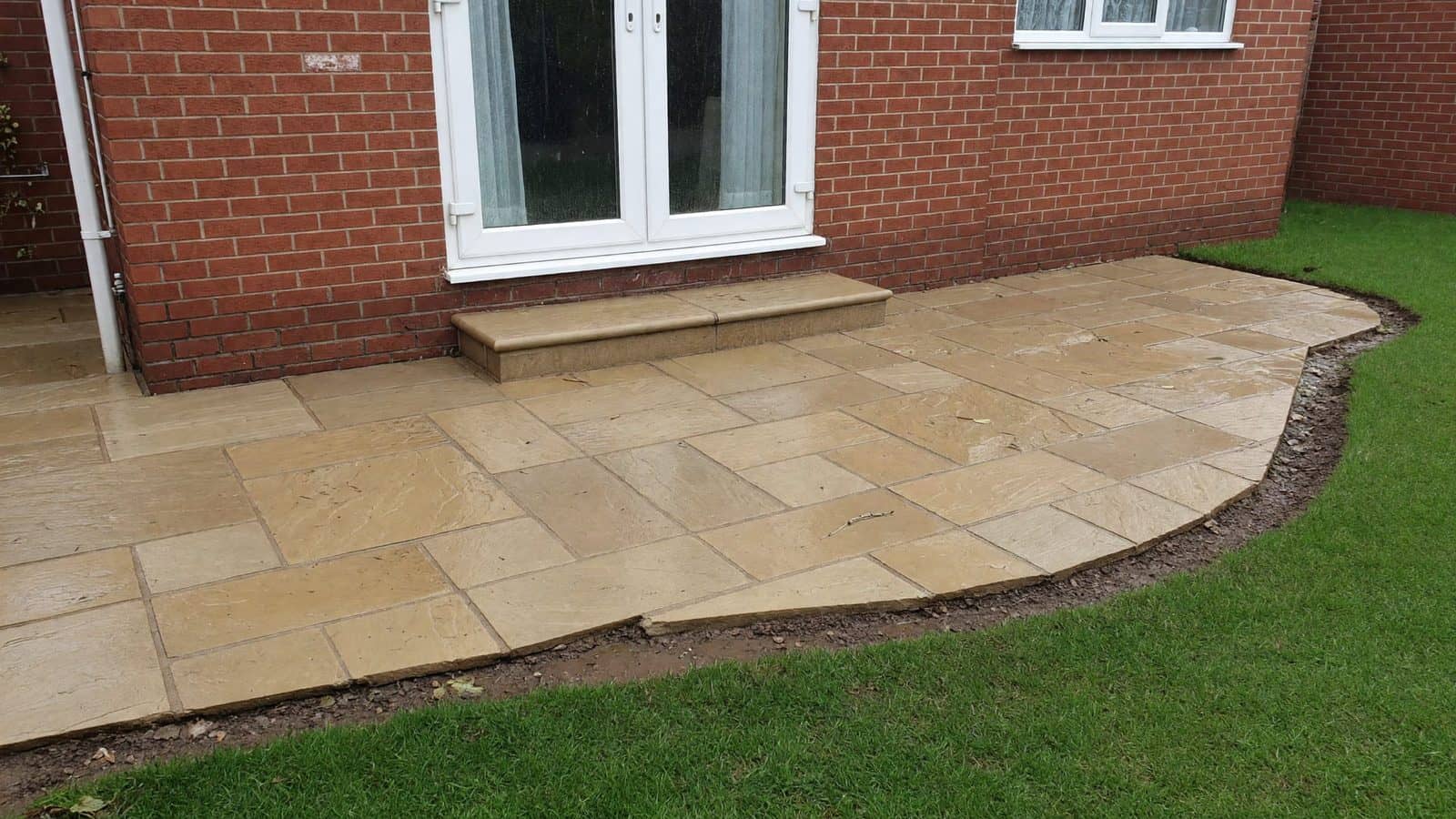
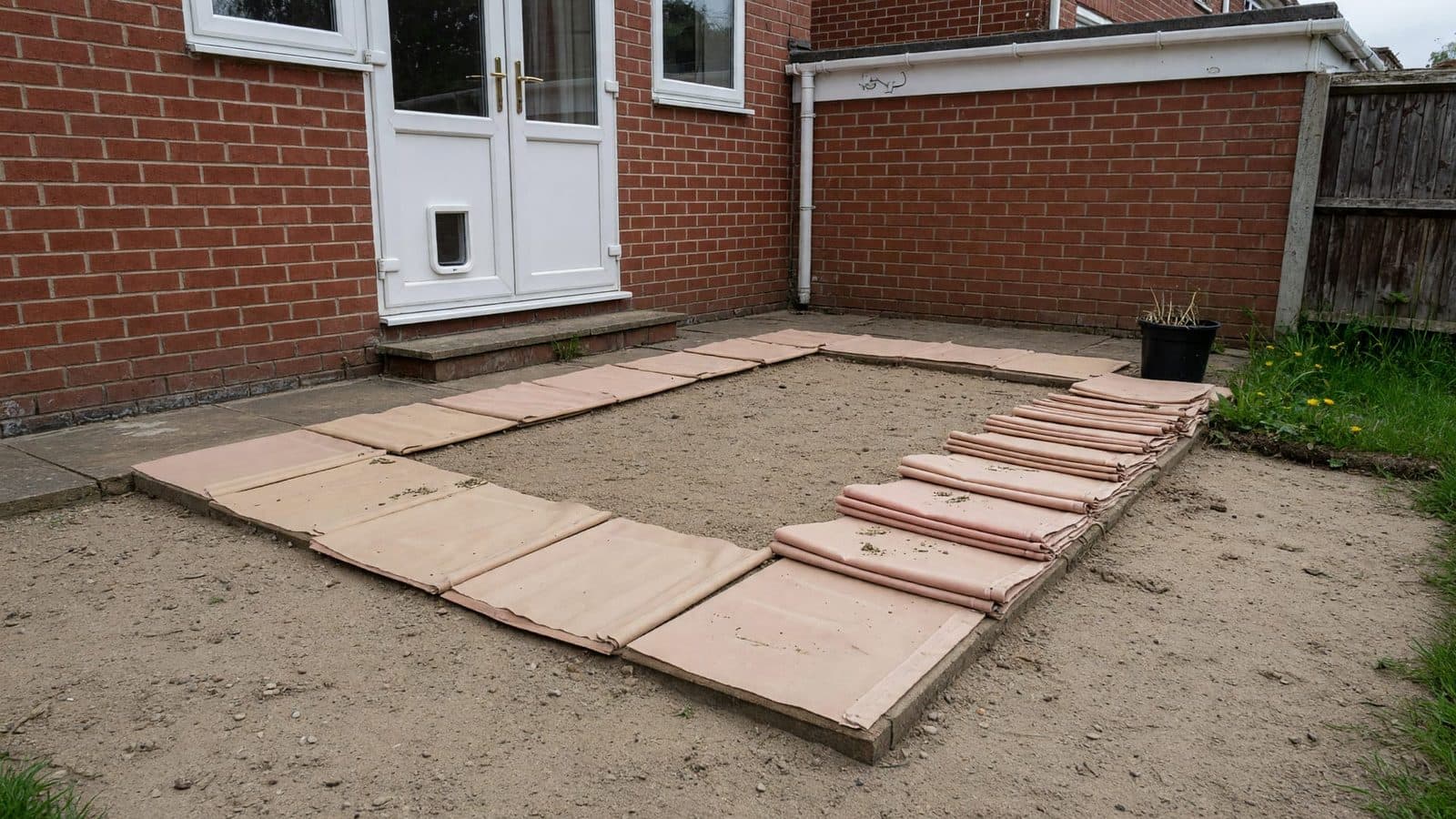
You take the flags up, clean them, correct the bedding and the levels, and put the same stones back with new joints. On block paving the same idea applies: lift, re-sand the bed, compact, re-joint. You are paying for labour, waste from the old bed, and pointing — not for a lorry of new porcelain.
That only works if the flags themselves are sound and the *reason* they moved can be fixed in the same opening.
When a relay is enough
A relay is a fair job when:
- a handful of slabs have settled over a service trench or a soft spot
- joints have washed out but the sub-base is still tight when you lift a stone
- the fall is almost right and you are correcting a dish, not rebuilding the plot
- the stone is a match you cannot buy any more and the faces are still good
On those plots we lift, check the Type 1 or hardcore, re-bed, and point. The patio looks like the one you already lived with, just flat again.
When the base has gone
Clay in Leyland and Preston heaves and slumps with the seasons. A patio laid on a thin sand bed with no proper sub-base will keep moving after a tidy relay. You will pay twice.
Start again when you find wet clay under the sand, when the whole sheet has no fall away from the house, or when more than a third of the flags are cracked, spalled or too thin to lift cleanly. That is a new patio build: excavate, compact a real base, set falls, then new or reused flags.
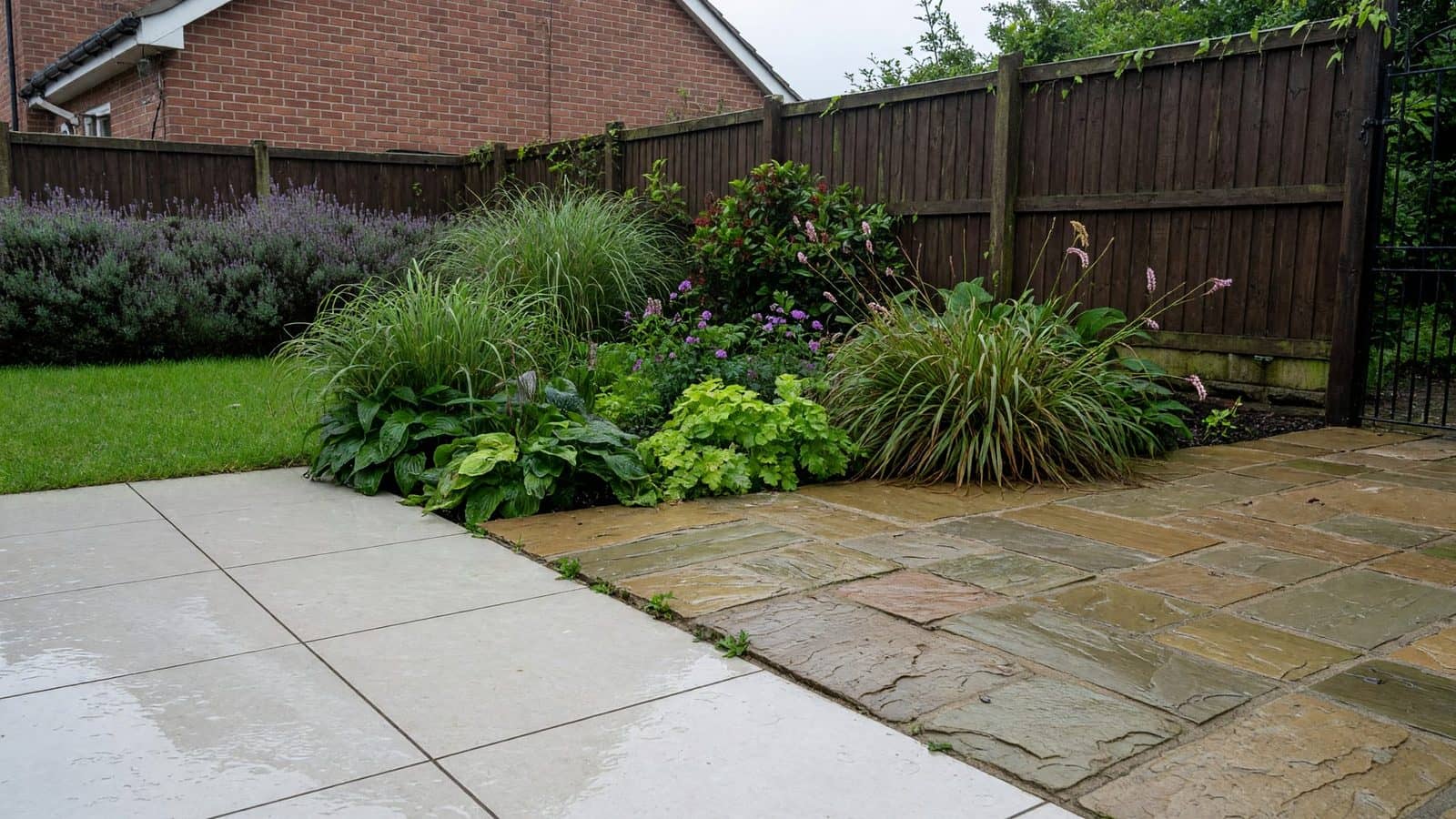
Reusing good sandstone on a new base is common. Calling that a “relay” undersells the groundwork.
Joints after a lift
Whatever goes back down needs joints that suit the stone. Sandstone and porcelain do not take the same compound. We have pieces scheduled on sandstone jointing and porcelain jointing — the short version is: do not brush a cheap kiln-dried sand into a patio you have just paid to open, and do not slurry porcelain the way you would a riven flag.
Falls and the house wall
A relay is the moment to check the patio is not bridging the damp-proof course and not throwing water at the doors. If the original patio was laid flat “to look level”, putting the same flags back on the same line repeats the puddle. Correct the fall while the stones are up. That is also when a channel drain earns its keep at a kitchen threshold.
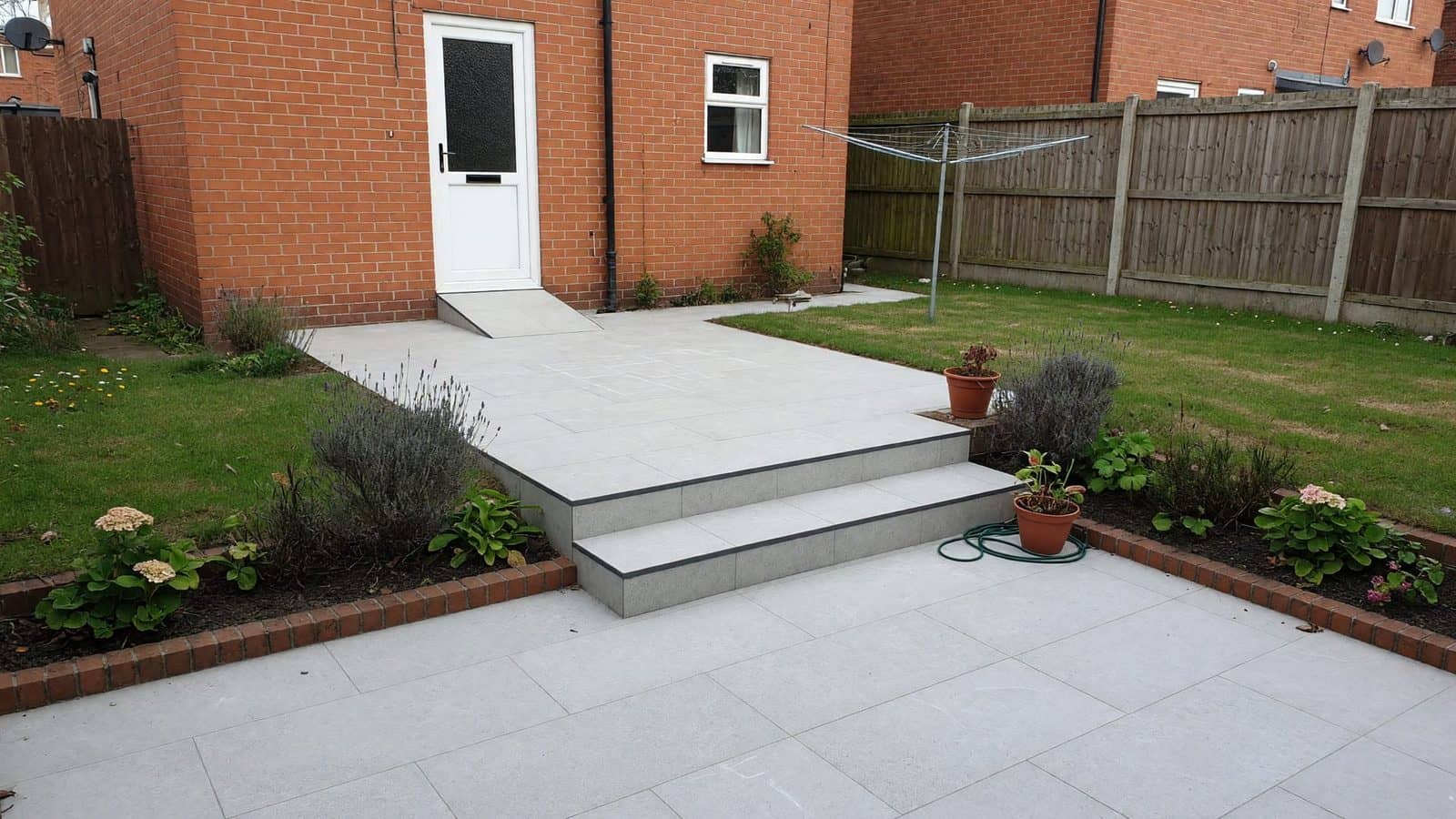
If you are choosing a new surface instead of reuse, porcelain versus sandstone is the material question. The groundwork question is the one that decides whether the old patio was ever going to last.
What we need for an estimate
Photos after rain help more than dry photos: you can see the dish. A rough size, and whether you want to keep the existing flags or change them, is enough for a free online estimate. WhatsApp 01772 213019.
We will say from the pictures if it looks like a relay or a rebuild. The honest answer is the one that stops you paying for the same patio twice.
Related services
Prefer a professional install in Preston & the North West? Explore the services that match this guide.
Enjoyed this guide?