Low-Maintenance Redesign of a Tired Lancashire Garden
What a tired Lancashire garden usually looks like
On plots around Preston, Leyland and Penwortham, “we’ve done nothing for years” rarely means a blank canvas. It usually means a lawn that is more moss than grass, borders that have swallowed the fence, and a side return that is now a green corridor for bins. A liner pond sits under a film of leaves. Bamboo that looked like a screen ten years ago is coming up in the neighbour’s gravel. The patio has dropped at the house wall and holds a sheet of water after rain.
That mix is why a weekend with a strimmer does not last. The growth comes back because the layout still asks too much of the ground and of you.
Low maintenance is a layout, not a plant list
A garden stays easy when most of the surface is built to shed water and hold an edge, and the planting is a short list that copes with clay and rain. Lawns, cottage borders and leaky ponds look cheap on day one and expensive in year three.
On Lancashire clay that usually means:
- a patio or path with a proper fall away from the house, not flags sat on the old soil
- a defined edge so grass and gravel stay in their own lanes
- less lawn, or a lawn that is actually level and drained
- fewer plant species, with evergreen structure instead of a mixed border that needs deadheading
- the awkward strip at the side of the house treated as hard landscape, not leftover soil
If the ground stays wet, no amount of “easy-care” shrubs will behave. Drainage has to sit in the same drawing as the paving. That is the same order we use after an extension and on waterlogged lawns.
What to keep, and what will keep winning
Walk the plot before anything is stripped. Mature trees that are sound and in the right place are worth more than a lorry of new plants. A fence that is still plumb can stay. A hydrangea that still flowers can often be lifted and set into a new bed.
Things that rarely earn their keep on a low-maintenance brief:
- Running bamboo. Clumping types in a contained bed can stay. Running types next to a boundary need a proper barrier or they need to come out. Cutting the canes is not a design.
- Old liner ponds. If the liner is brittle, the pump is dead and the edges have collapsed, filling and building a bed or a shallow formal pool is usually quieter than another repair.
- Failed turf on clay. A dish-shaped lawn that holds water after every wet week is not “a bit tired”. It is a levels and drainage job.
- Paving with no fall. Relaying the same flags on the same soil repeats the puddle.
We will say on a visit which plants can move on the day, which are better left, and which have to come out because a patio or drain has to sit there. Tree stumps from old borders can be ground out as part of the clearance.
Hedge and tree work in the UK has a nesting-season limit. If birds are using the growth, that work waits. It is ordinary site practice, not optional.
Clearance without starting from a mud bath
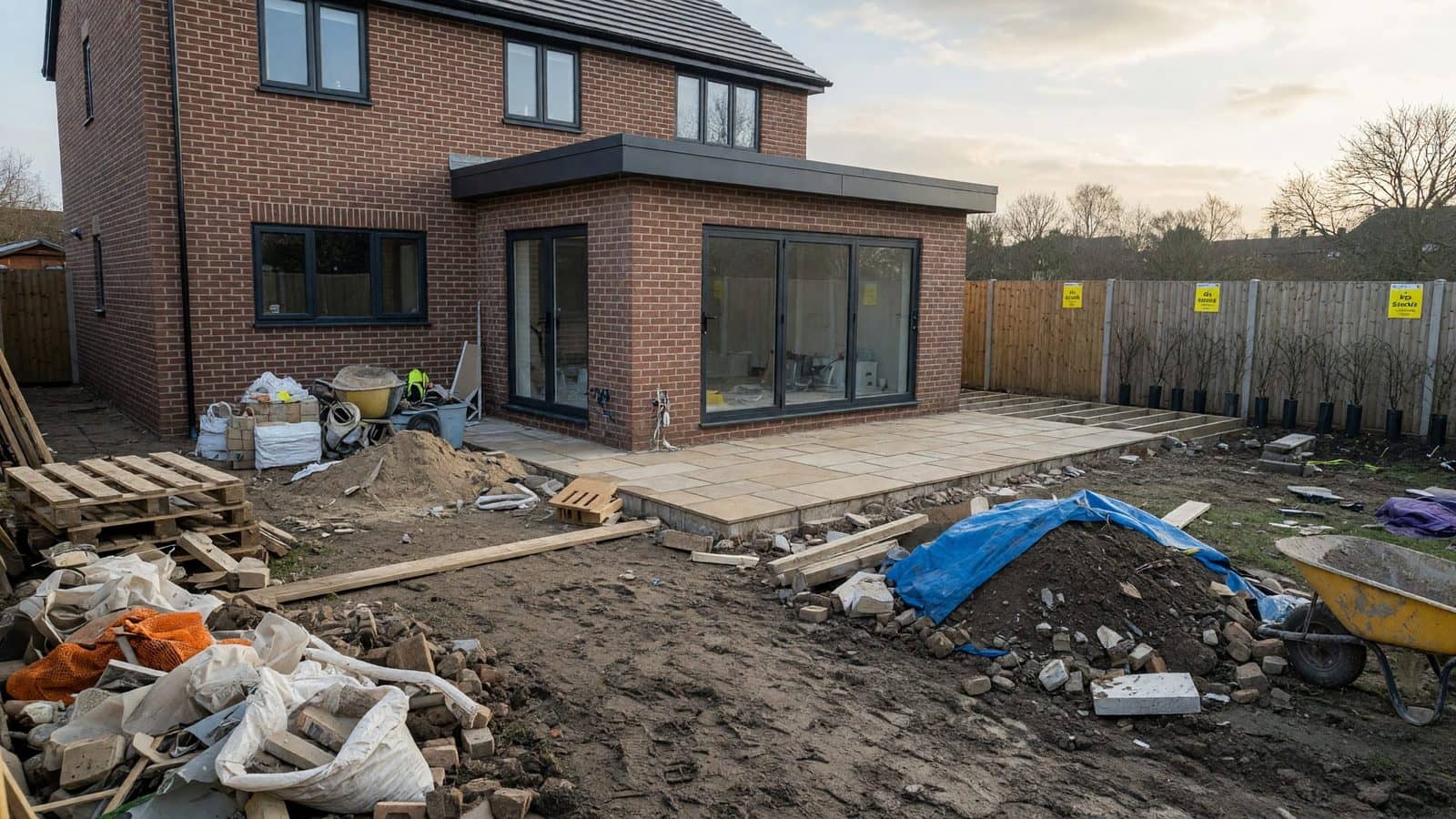
Wholesale strip-out feels decisive and often wastes the structure you already paid for. We clear rubbish, dead wood and obvious invasives first, then cut back enough to see levels, manholes, downpipes and the real fence line. Only then do we mark what stays.
On clay, clearance and rebuild in one programme is cleaner than “tidy it now and landscape later”. An open, rutted plot through a wet autumn turns into a second drainage problem before the first one is fixed.
Green waste and old paving leave in a planned number of loads. That matters on terraced streets and new-build estates where there is one parking space and a narrow side gate.
Fix the water before you pick the plants
Most overgrown Lancashire gardens are wet as well as wild. Water sits against the house, in the middle of the lawn, or in the side return because the ground is dished and the clay will not take it away.
Typical pieces of the same job:
- re-level so falls run away from doors and the damp course
- a channel drain where a patio meets the wall
- a French drain along a boundary or at the foot of a bank
- a soakaway or a connection into an existing surface-water drain where that is legal and the ground will accept it
A soakaway on heavy clay is not a magic hole. It has to be sized and sited, or the water simply sits in a different place. We cover the options properly in our drainage guide and on the garden drainage service page.
More hardstanding also has a planning angle. In England, a new non-permeable surface over 5m² that sheds onto the highway usually needs permission. A permeable build or drainage that keeps water on the plot is how most domestic jobs stay on the right side of that rule. We check it at estimate stage rather than after the flags are down.
Surfaces that earn the “low maintenance” label
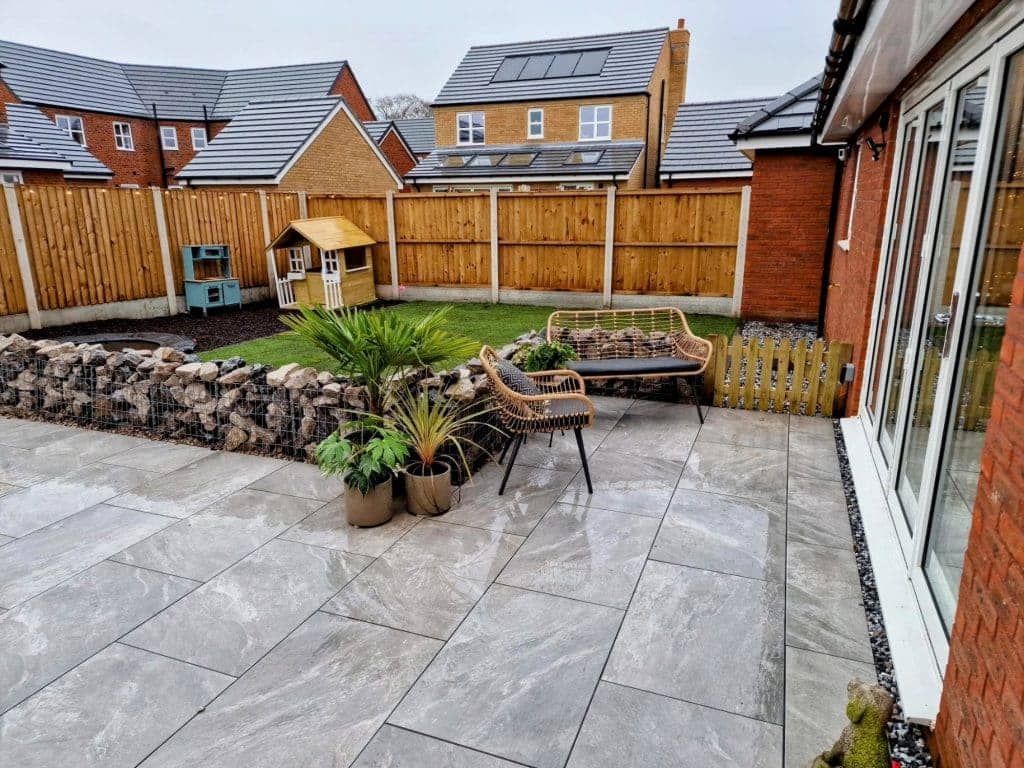
Patio and paving. Porcelain is the request we hear most for a clean, wipeable terrace. Sandstone still suits older houses and matching builder flags. Both need a compacted sub-base and a fall. The comparison is in porcelain vs sandstone in Lancashire weather. A patio that ponds is high maintenance, whatever the stone.
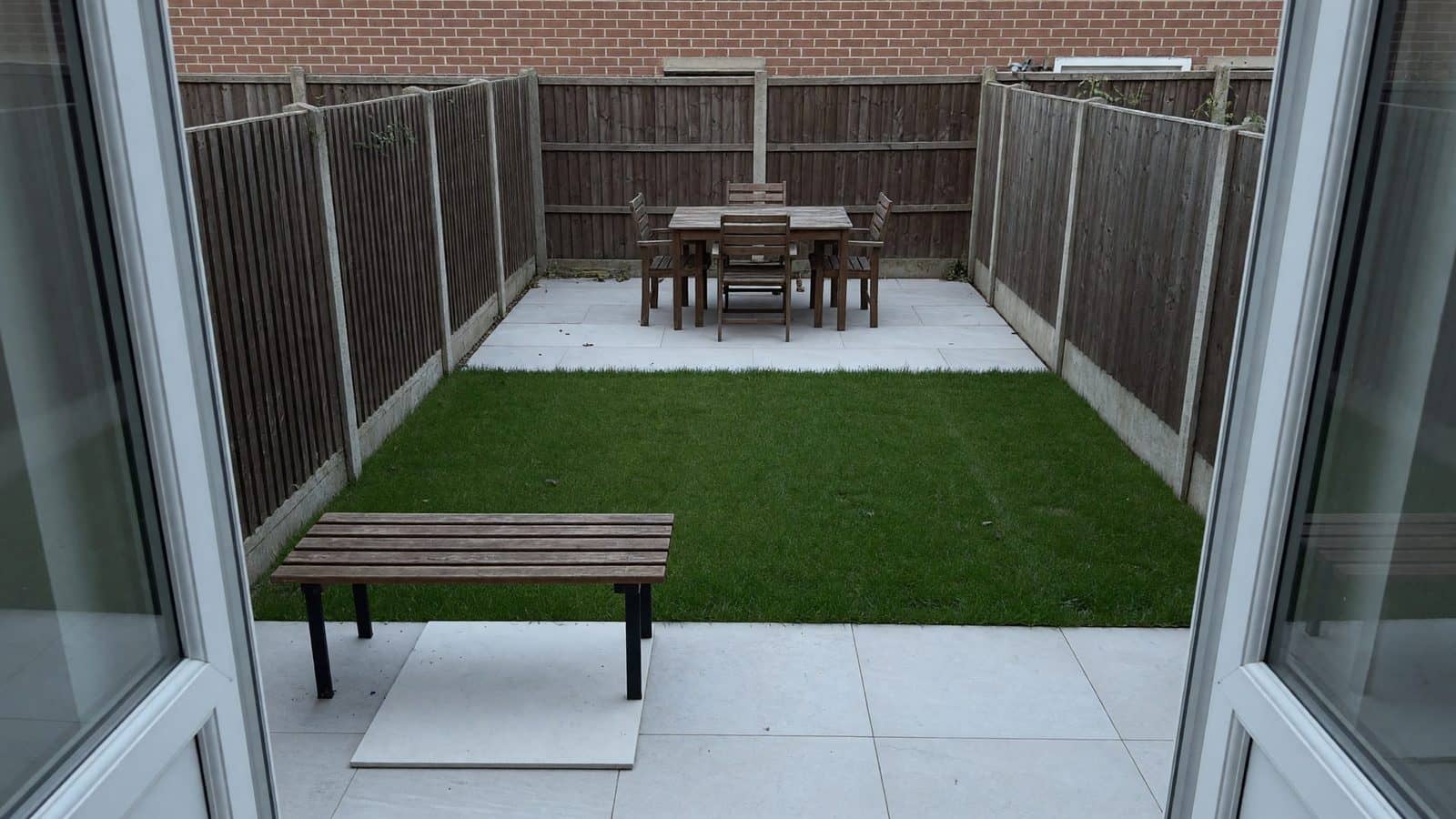
Lawn. Keep a rectangle if you want kickabout space and you are willing to mow. Shrink it if the rest of the garden is already asking too much. A smaller, level lawn on improved ground is easier than a large, wet one.
Artificial grass. Useful for play and for shady side strips that never grow real turf. It still needs a drained, firm base. It is not a sheet you drop on mud. See artificial grass vs gravel.
Gravel. Fine in a contained bay with a proper edge and a membrane. Poor next to a back door on a windy estate, where it walks indoors.
Decking. Only where the ground is awkward and you need a level platform. On a wet, shady plot the subframe and the air gap matter more than the board colour.
Raised beds and sleepers. Good for holding soil off a patio and for giving planting a crisp edge. On a slope they are structure, not decoration — the height and the drain behind the face have to be designed.
Planting that stays quiet after the team leave
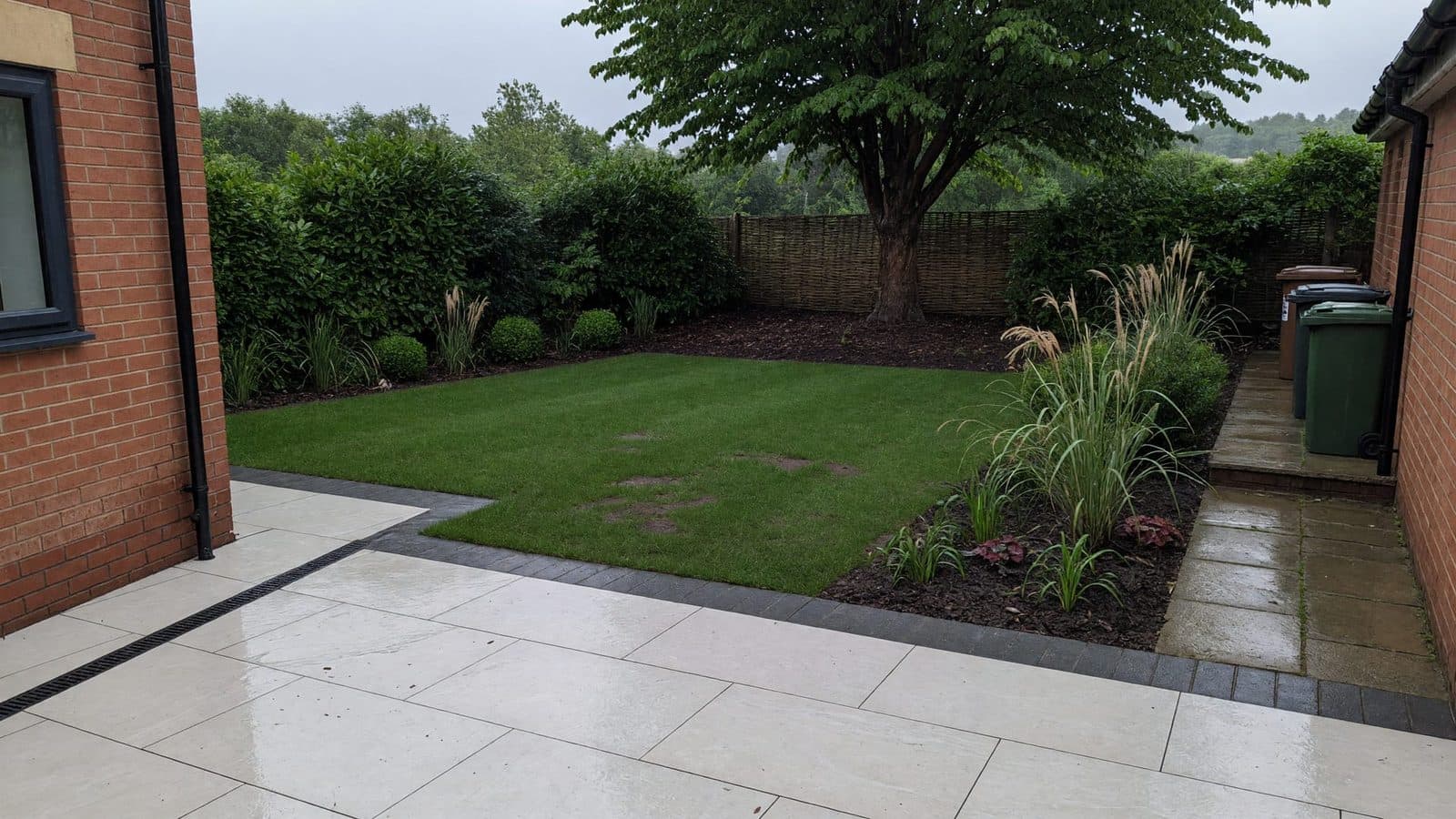
Low-maintenance planting here is a short list that likes moisture and does not need fussing. We use evergreen structure so the garden still reads in February, groundcover that actually closes the soil, and a handful of perennials rather than a mixed border from a magazine.
What tends to work on local clay and in rain:
- evergreen shrubs for the back of a bed and for screening (laurel is the hedge replacement we are asked for most)
- ornamental grasses for movement without weekly deadheading
- hardy geraniums, ferns and similar groundcover in the shade of a fence
- one or two feature plants, not twelve varieties in a two-metre bed
Mulch after planting. It cuts weeding while the groundcover knits. What does not work is a “wildlife meadow” on a small wet plot if the brief is tidy and low effort. Meadows need an annual cut and they look rough for months. Be honest about which look you will live with.
Bamboo belongs in a contained bed or it does not belong. A cheap root barrier that stops short of the right depth is how it arrives in the side return two years later.
The three problems that hide inside this brief
The side return. Narrow, dark, often the only route for bins and bikes. Soil and leftover slabs stay wet. The low-maintenance version is a paved or resin strip, a channel if water sheds off the house, and a fence or screen that you can paint once rather than prune twice a year.
The tired pond. If you still want water, a small formal pool with a clean edge is easier than a kidney-shaped liner under trees. If you do not use it, fill it properly, compact the ground and put a bed or paving there. A sunken, half-filled pond is a maintenance job and a safety job.
The bamboo and the boundary. Agree what happens at the fence before the digger starts. Roots and running canes do not respect a title plan. Removal is slower than people expect because the crown has to come out, not just the visible canes.
Those three can be phases if the whole garden cannot be done in one hit. House terrace and side return first, back boundary later, is how a lot of households actually buy the work.
What “low maintenance” still asks of you
After a proper rebuild you should not be out there every Saturday. You should still expect:
- a sweep of the patio and a rinse when algae shows on shaded flags
- a spring and autumn pass on the beds — cut back, top up mulch, pull what the groundcover missed
- gutter and channel-drain checks so the system you paid for is not blocked with silt
- a mow if you kept a lawn
That is the honest version. Zero care only exists on a fully paved yard, and even that needs a brush.
How we take a tired plot from photos to a finished garden
Send the contact form or WhatsApp photos to 01772 213019. A free online estimate usually comes back within one to two working days from satellite imagery plus what you send.
If the job is a fit, we visit to measure levels, drainage and access. Full redesigns get 3D visuals and a written specification with a fixed price for the scope on the page. A 25% deposit books the slot. We are typically two to three months out; drainage and smaller winter jobs can sometimes start sooner.
We work Monday to Thursday. Written guarantees apply to the work we install. VAT is included in the figures we send unless we say otherwise.
If the garden has been left for years, that is a normal brief for us, not a special case. The work is full garden landscaping: clearance, levels, drainage, paving and planting as one job, not a strim and a promise.
Related services
Prefer a professional install in Preston & the North West? Explore the services that match this guide.
Enjoyed this guide?