New turf after a dry summer on clay: gaps, lips and patchy rolls
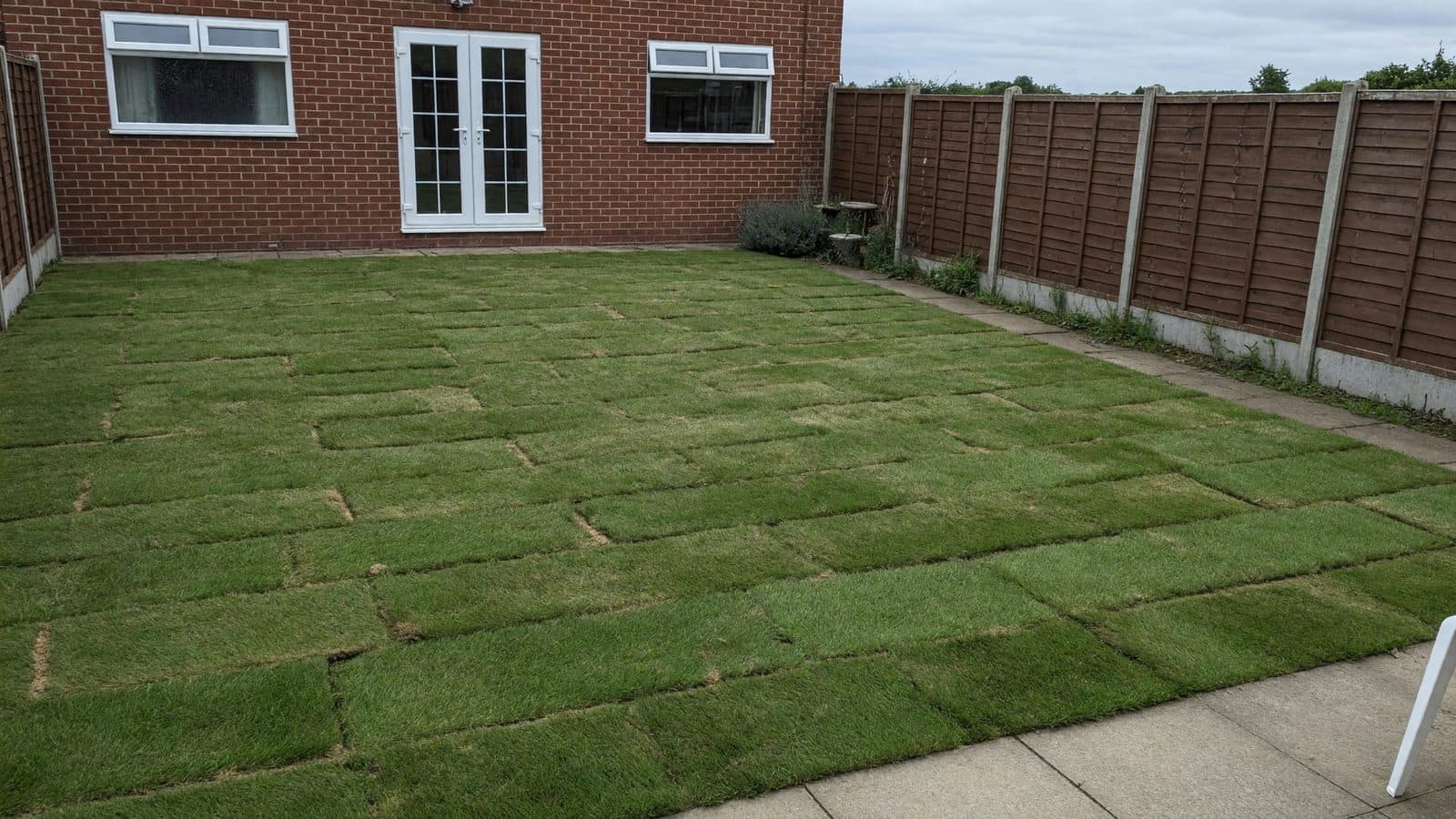
The first decent rain after a dry summer is when a lot of new lawns around Preston, Leyland and Penwortham start to look worse, not better. The rolls that went down green now show pale seams. Edges have lifted into little lips. One strip is still a decent colour and the next one is straw. Clay under the turf has opened hairline cracks. It is easy to assume the lawn is finished.
It usually is not. New turf shrinks when the soil in the backing dries out, and Lancashire clay shrinks with it. Most of what you can see is dehydration and poor contact, not a dead lawn. The test is simple: lift a corner, look for white roots, and see whether the soil underneath is still bone dry. That tells you whether to water and wait, to fill seams, or to cut and replace a few rolls.
Why new turf shrinks on clay
Turf is a living mat with a thin soil backing. While it is rooting, almost all of its water comes from the surface. Miss a few dry, windy days and the backing contracts. Rolls that were butted tight pull apart. Edges curl. Colour goes patchy because some rolls sat in a slightly damper hollow and some sat on a harder, drier ridge.
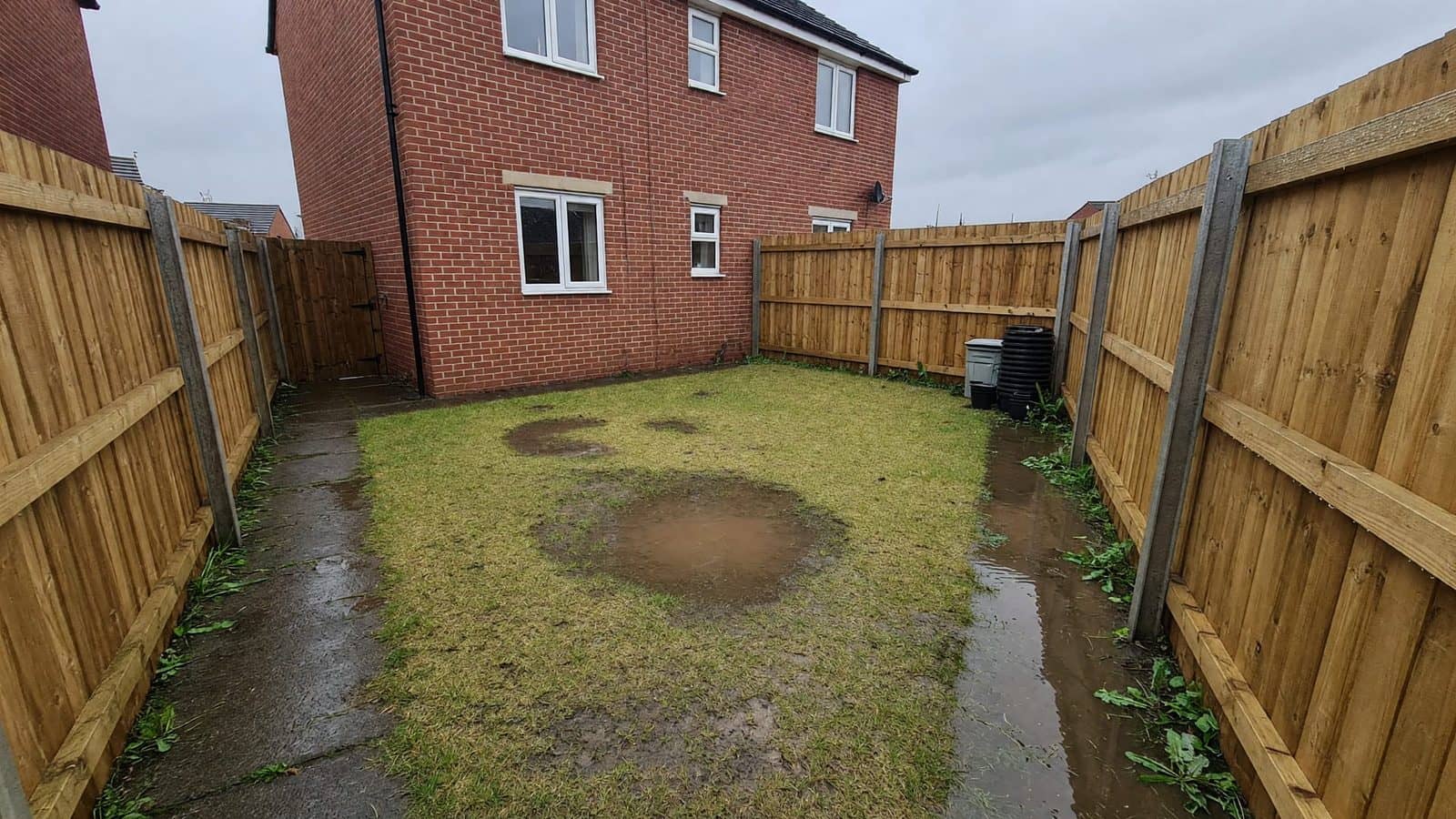
Clay makes that worse. The same soil that ponds after a wet winter shrinks and hardens when it is dry. Water then runs off the crust instead of soaking in, so a hosepipe session can look generous and still leave the underside of the turf dry. That is why a lawn can look thirsty and waterlogged in the same year on the same plot.
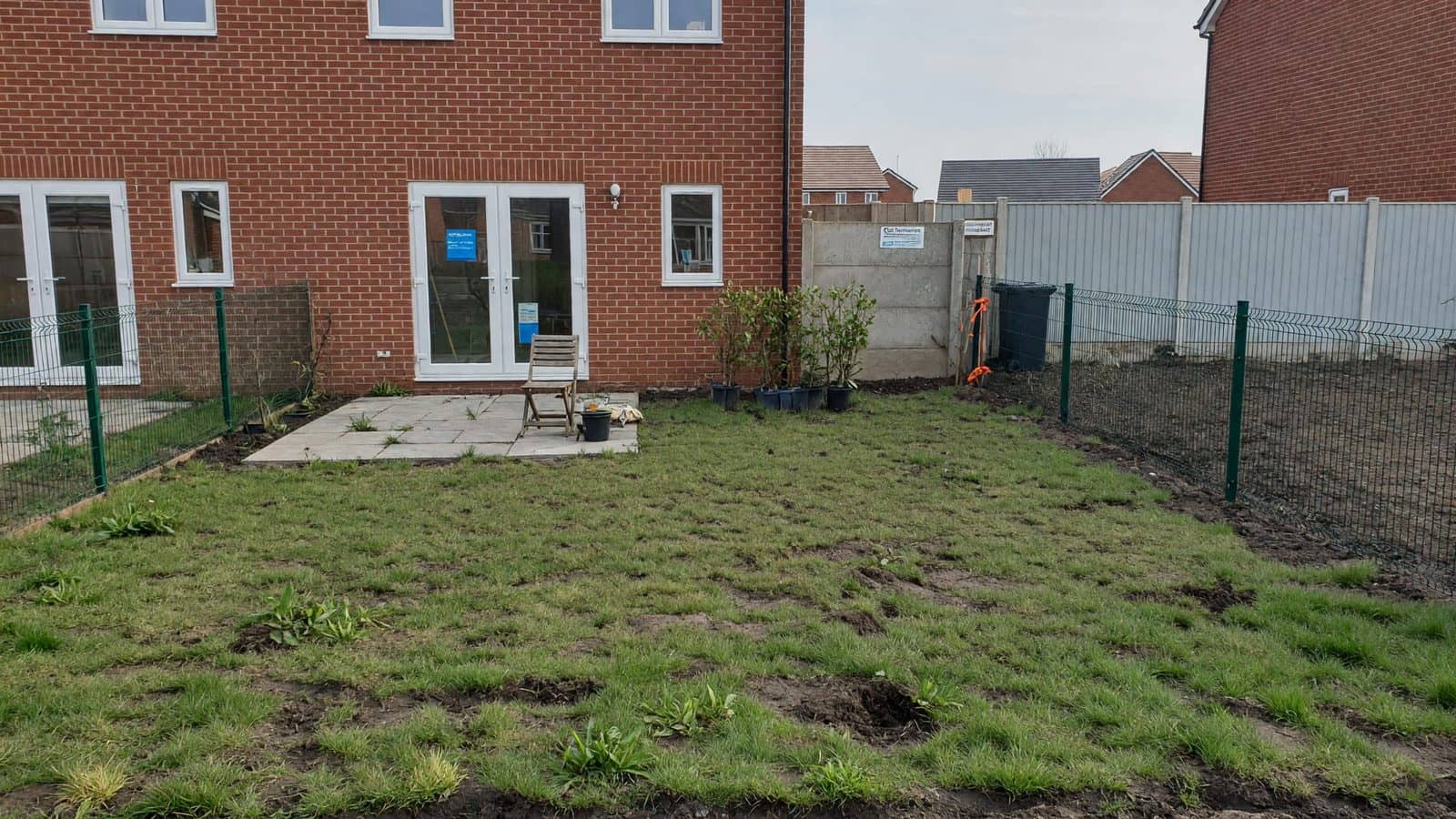
We see this most on new-build rectangles and gardens finished after an extension: a thin layer of topsoil over compacted clay, turf laid to make the handover look tidy, then a hot, dry spell before the roots have anything to hold. The new-build problems we pick up in Cottam and Broughton start here as often as they start with standing water.
Is the lawn ruined?
Not automatically. Cool-season turf used on UK lawns often looks worse than it is after drought. When moisture returns, living crowns put out new leaf. Dead turf does not.
Lift one corner in a good patch and one in a poor patch. Living turf that is still establishing shows short, bright white roots on the underside and soil that is at least damp a few centimetres down. Dead turf is brittle, the backing lifts like cardboard, and there are no new white roots after several days of proper watering. Brown leaf on its own is not the verdict. No recovery after rain, plus a dry, rootless backing, is.
A few dead seams across an otherwise rooting lawn is a repair. A whole area that stays straw after autumn rain, with no roots and a hard, cracked pan underneath, is a relaying job — and often a soil job first.
Gaps between rolls
Hairline gaps after a dry spell often close on their own once the backing rehydrates and the grass starts to knit. Do not drag the rolls sideways to close them. That just moves the gap and throws up a ridge.
Water first, slowly, so the clay can take it. Then, if a gap still shows after a few days:
- Gaps you can slide a finger into: brush in a mix of screened topsoil and a little compost, press it level with the surrounding turf, and keep it moist.
- Wider dead seams: add a pinch of matching lawn seed with the soil, or cut a thin strip of spare turf to fit.
- Do not pack sharp sand into clay cracks on its own. A little sand in a soil mix is fine. Sand alone on heavy clay can set like a cap.
Keep feet off the seams until they have knitted. Weeds love an open joint.
Raised lips on the rolls
Lips are the dried, curled edges of a roll, or a roll that never sat flat on the soil. They catch the mower, look like steps, and dry out even faster than the middle of the roll because air gets underneath.
If the turf is still loose — usually in the first couple of weeks — soak the edge until it is pliable, press it back down onto damp soil, and weight it with a board for a day. A light roll after watering helps if the whole lawn is sitting proud in places.
If the edge has already rooted in the raised position, pressing it will tear it. Cut the lip out as a narrow strip, tickle the soil so the new piece sits flush, and relay a fresh offcut. Water it in the same day. Leaving a hard lip “and hoping the mower knocks it down” just scalps the high edge and leaves a bald line.
Patchy rolls
One roll green, the next pale, is common after a dry summer. It is rarely a different grass variety. It is usually different moisture and different contact.
Typical causes we find on site:
- Air pockets where the ground was not firmed, so that roll never wetted evenly.
- A roll laid over a dry clay lump or a smear of builder sand.
- Edges and perimeters drying first — against paving, fences and the house wall.
- Traffic across one path while the rest of the lawn was left alone.
Water the pale rolls more carefully than the green ones. Cycle the sprinkler or can: a short application, a pause so the clay can take it, then another pass. Lifting a corner after that session is the only honest check. If a whole roll is dead through, replace that roll rather than overseeding on a sealed, dry backing.
How to water clay without making a pond
On clay, one long soaking often runs off or sits in the first hollow it finds. Short, repeated passes work better until the surface has opened up.
Aim to wet the turf backing *and* the top of the soil beneath it, not just to darken the leaf. Early morning is kinder than midday. In a dry, windy spell that can mean more than one session a day for the first fortnight after laying. Once white roots are into the soil, stretch the gaps between waterings so the roots chase moisture down instead of sitting in the backing.
You can overwater new turf. If the surface squelches, the colour goes a flat yellow-green, or water sits in footprints for hours, stop and let it breathe. That is the other face of Lancashire clay, and it is why a waterlogged lawn and a shrunk lawn can be the same plot three months apart.
United Utilities has not been running a hosepipe ban in the North West through this summer, so a sprinkler on new turf has been allowed. Rules change by company and by week. If a Temporary Use Ban is in force where you live, check the current exemption for newly laid turf before you assume a hosepipe is banned. A watering can and stored rainwater are never restricted.
What to do this autumn
September and October are the recovery window for this kind of lawn. Soil is still warm, nights are wetter, and cool-season grass wants to grow.
A sensible order on a tired but living lawn:
1. Rehydrate slowly for several days, not one heroic Saturday. 2. Press or recut obvious lips while the turf is damp. 3. Fill remaining gaps with soil, or soil and seed, and keep those lines moist. 4. Stay off it until the seams have closed. 5. First cut high. Do not scalp a lawn that is only just moving again. 6. Leave heavy feeding and hollow-tine aeration until the turf is actually rooted. Spike a dry clay pan now and you just punch holes in a crust.
If the ground under the turf is still a compacted builder layer — the scaffold line, the mixer stand, the thin spread of subsoil that was sold as topsoil — watering will not invent a root zone. That is a lift, a cultivate and a relay, which is the same logic as waiting to turf after an extension until the levels and the muck are honest.
When it is a drainage job, not a watering job
Watch what happens after the first proper autumn rain.
If the gaps close, the colour evens and the lawn firms underfoot, you were looking at drought stress. If the same lawn then sits wet for days, grows moss in the seams, or ponds against the patio, the clay never had anywhere for water to go. Shrinkage in August and a bog in November are the same soil profile talking.
Aeration and a bag of lawn sand will not fix a dish-shaped plot or a sealed pan. That is when we look at falls, a French drain, or whether the lawn should even stay as lawn. We have set that out properly in the drainage options for waterlogged lawns and in whether a new-build garden actually needs a drain.
Some families decide the lawn is more trouble than it is worth and switch the worn path or the boggy corner to paving or artificial grass. That only works if the ground under it still drains. A plastic lawn on a clay dish becomes a shallow tray.
When to call us
Send photos if you want a second pair of eyes: one of the whole lawn, one of a typical seam, and one with a corner of turf lifted so we can see the backing. Note how long ago it was laid and whether water still sits after rain. That is enough for a free online estimate.
We will tell you honestly if it is aftercare, a few replacement rolls, or a groundworks job. A garden condition inspection is there if you want that written down before you spend.
WhatsApp is often the quickest way to send the pictures: 01772 213019. We are based in Walton-le-Dale and work across Preston, Leyland, Penwortham, Chorley and the nearby towns.
Related services
Prefer a professional install in Preston & the North West? Explore the services that match this guide.
Enjoyed this guide?