Fixing New Build Garden Problems in Cottam and Broughton
The reality of new build landscaping in Preston is that the beauty you see on the surface depends entirely on what lies beneath. If you ignore the foundations of the land, no amount of expensive garden furniture or high-end turf will survive the winter.
Drainage issues in new build gardens
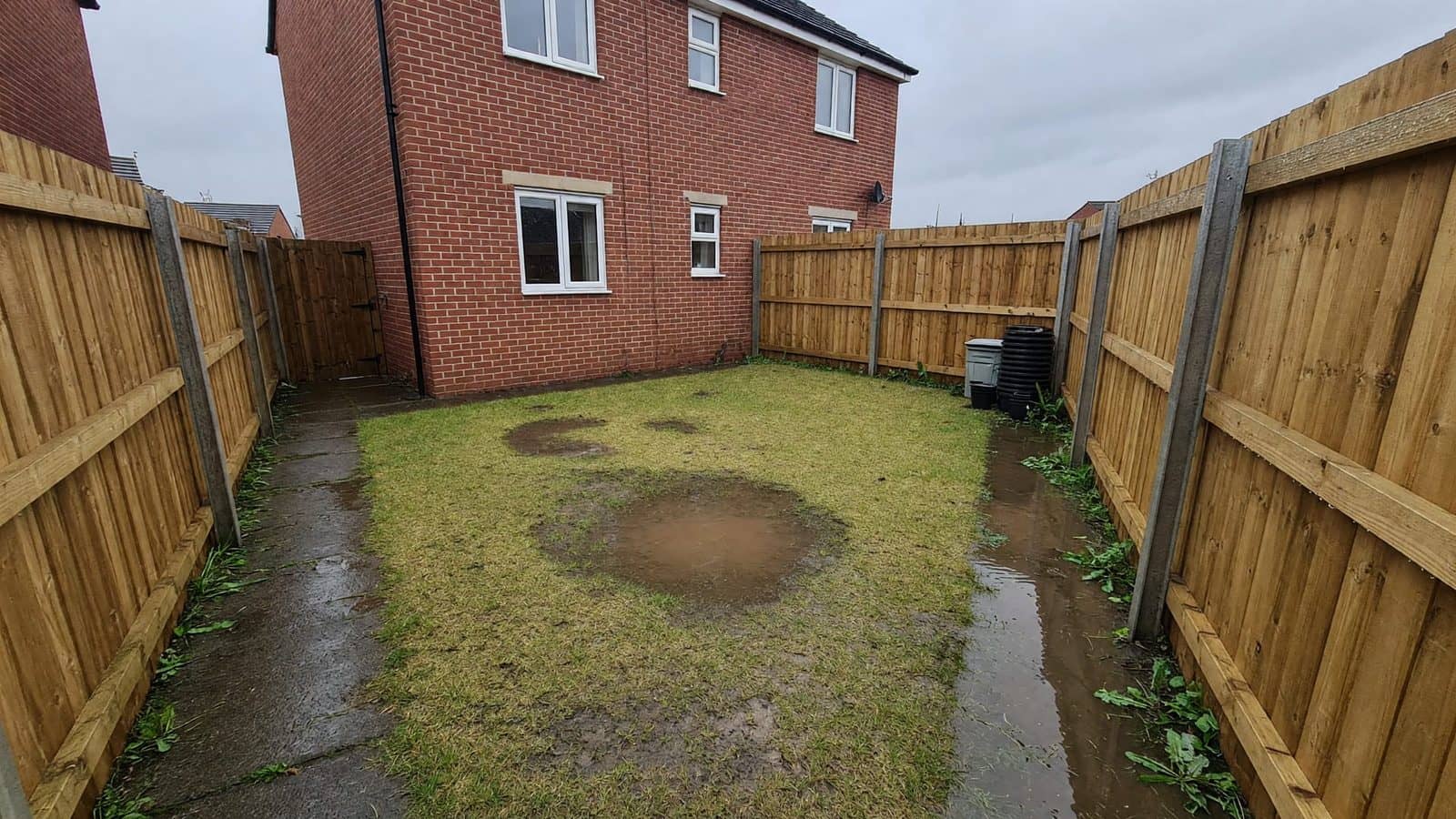
The most frequent complaint we hear from residents in North Preston (Cottam, Broughton and surrounding areas) is that their garden never seems to dry out. Even after a few days of sunshine, the ground remains soft and spongy. This is rarely a fault of the homeowner and almost always a result of how the land was managed during the construction phase.
The heavy Lancashire clay factor
North Preston sits on a geological layer known as glacial till. This is a dense, heavy clay soil that was deposited during the last ice age. Clay is composed of tiny particles that pack together tightly, leaving almost no room for water to filter through. In its natural state, this soil is already difficult to drain.
When a developer builds a new estate, they use heavy machinery to move earth and install services. These multi-ton excavators drive over your future garden repeatedly, crushing the soil structure. This process, known as compaction, turns the already dense clay into a literal waterproof plug. When rain falls on a compacted clay garden, it cannot soak into the earth; it simply sits on the surface until it evaporates.
The problem with developer topsoil
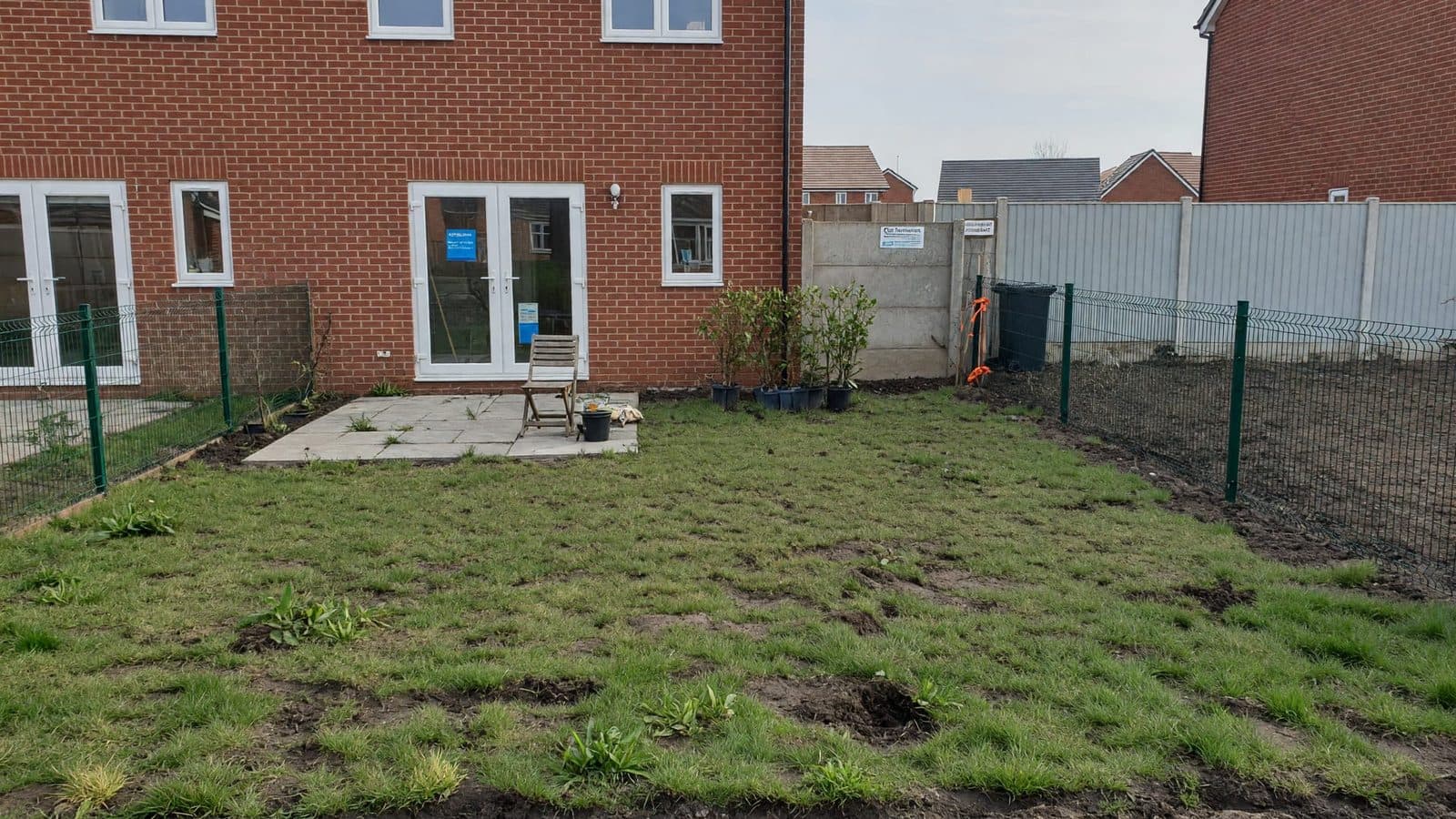
Most new build gardens are finished with a thin layer of topsoil and a roll of budget turf. To the untrained eye, it looks fine on moving day. However, beneath that two-inch layer of soil, there is often a mix of compacted clay, crushed bricks, and leftover construction rubble. Laying turf directly over this debris is a recipe for a mud bath. The roots of the grass cannot penetrate the compacted layer, meaning the lawn stays saturated and eventually dies off, leaving you with a patchy, moss-ridden mess.
Effective drainage solutions
Fixing a wet garden in Cottam requires more than a few bags of grit. It requires a managed system that gives the water a clear path out of your garden. If you simply dig a hole in clay and fill it with gravel, you haven’t solved the problem; you have just created an underground pond.
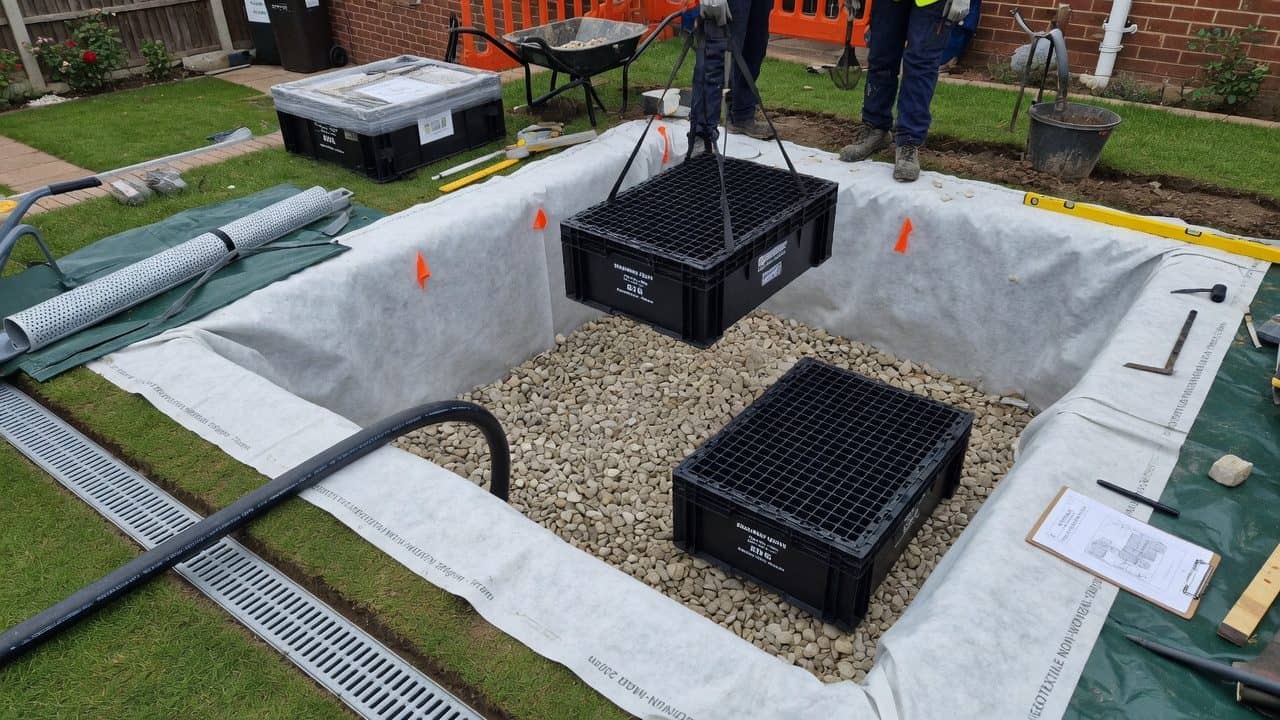
Effective drainage is about managing the fall of the land. In a professional installation, we determine where the water wants to go and where it can go. We then have a range of drainage options including French drains, pumps and attenuation crates that can significantly improve the flow of water in your new build garden.
Handling sloped new build gardens
Many new developments in the Preston area are built on land that isn’t perfectly flat. While a slope can provide a nice view, it often makes the garden feel unusable. It is difficult to set up a dining table or let children play football on a significant incline.
Terracing with sleepers and walls
The most effective way to reclaim a sloped garden is through terracing. By using high-quality timber sleepers or stone retaining walls, we can carve the slope into flat, usable zones. This “staircase” effect transforms a single, awkward hill into two or three distinct areas. Timber sleepers are a popular choice for new builds because they offer a clean, contemporary look that complements modern architecture.
Adding steps and tiers
A sloped garden shouldn’t be seen as a problem; it should be seen as an opportunity for better design. Steps and tiers add a sense of depth and scale that a flat garden simply cannot match. We can use these structural elements to hide drainage channels or to create built-in seating areas. Strategically placed steps also help manage water runoff. By breaking up the slope, you prevent rainwater from gaining momentum as it flows toward your house.
Achieving privacy on new builds
Privacy is one of the biggest challenges in modern housing developments. With houses built closer together to maximize space, many residents in Cottam feel like they are living in a fishbowl. The standard 1.8-metre fence provided by developers often isn’t enough when your neighbour’s second-story windows look directly down onto your patio.
Beating the fishbowl effect
The key to privacy in a new build is to create visual breaks that don’t make the garden feel like a prison cell. If you just put up a massive, solid wall, you lose the light and the open feel of the space. Boundary heights are also often restricted.
Instead, we focus on smart screening. High-quality hardwood fencing, such as cedar or larch battening, provides a sophisticated look that offers privacy while still allowing some light to filter through. Because the lines are horizontal, it also has the clever effect of making a narrow garden feel wider.
Smart screening for instant privacy
For those who need even more height, we often recommend pleached trees, garden structures such as a pergola or summer house, or high-end trellis extensions. Pleached trees are essentially a hedge on stilts. They have a clear trunk that reaches the height of your fence, with a thick, manicured canopy above it. This blocks the view from upstairs windows without taking up much ground space in your garden.
This structural approach to privacy ensures that your garden feels like a private sanctuary rather than just another plot on an estate. It adds a premium feel that sets your property apart from the standard developer finish.
Low-maintenance design choices
Once the drainage and levels are sorted, the final step is choosing the right materials and layout for the Preston climate. Our local weather is notoriously damp, which means the design must be as functional as it is aesthetic.
Zoning small gardens for families
New build gardens are often rectangular and can feel quite boxy. We use zoning to break up the space and make it feel significantly larger than it is. By using different textures—perhaps a resin bound gravel area for a seating nook and a large paved patio for dining—we create distinct outdoor rooms. This structural approach allows you to have a dedicated space for every activity.
Choosing paving materials
The choice of paving is an important visual decision which can determine the overall style of your garden. While porcelain is the gold standard for modern low maintenance, natural stone still has a place in more traditional Lancashire designs.
Porcelain paving is a popular choice for new builds because the clean, sharp lines perfectly match modern architecture. Because it is non-porous, it does not absorb water, making it virtually impossible for moss or algae to grow on the surface. It is slip-resistant and incredibly hard-wearing, meaning it stays looking new for years with just a quick wash.
Sandstone offers a more organic, textured finish that suits homes in areas like Broughton where a softer, weathered look is often preferred.
Raised beds for better drainage
In North Preston, the ground-level soil can be too heavy and wet for many plants to survive. Building raised beds using timber sleepers or masonry is the most effective way to circumvent the clay issue. By lifting the planting area above the natural ground level, you create an environment with much better drainage. You can fill these beds with high-quality topsoil and grit, ensuring that water moves away from the roots.
Starting your new build garden project
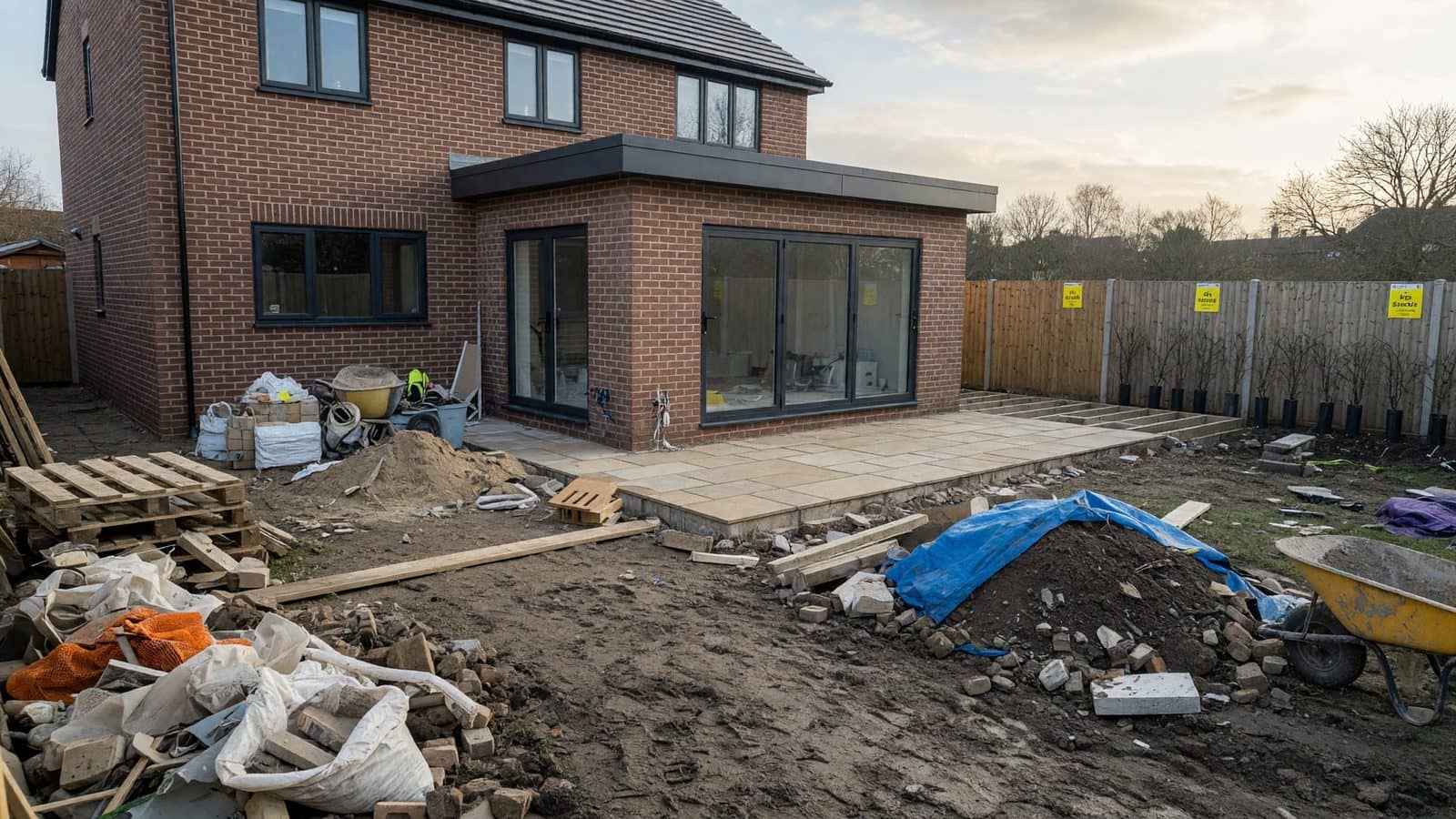
The secret to a successful new build garden is found in the groundworks. By addressing the heavy clay soil, managing the levels of the land, and installing professional drainage, you create a foundation that will last for decades. Once the “hidden” problems are solved, the structural elements like retaining walls and porcelain paving can truly shine.
If you are tired of looking at a muddy bog and are ready to turn your plot into a functional, private outdoor space, we can help. We understand the specific challenges of the Preston landscape and have the equipment and expertise to fix them properly. Get a free online estimate for your Preston project today and let us help you build a garden that is ready for whatever the Lancashire weather throws at it.
Related services
Prefer a professional install in Preston & the North West? Explore the services that match this guide.
Enjoyed this guide?