Composite vs Timber Decking in a Wet North West Garden
In a lot of Preston and Penwortham gardens the decking looks fine in June and then stays dark and slippery from October onwards. North-facing plots, close-board fences and a wet clay lawn underneath do most of the damage. The boards get the blame. The frame and the airflow usually deserve more of it.
For a wet North West garden, capped composite is the safer default if you want less staining, fewer splinters and a surface that does not drink the rain. Timber still has a place where you want a traditional look and you will keep up the oil or stain. Either material fails in this climate if the subframe sits in standing damp with no ventilation.
Why a North West garden is harder on decking than a brochure
Preston takes something like a metre of rain in a year, spread over a large number of wet days rather than a few dramatic storms. That matters more than the headline total. Boards stay damp. Shade from the house, a fence or a tree means they never really dry. Clay under many Lancashire plots holds water against posts and joists.
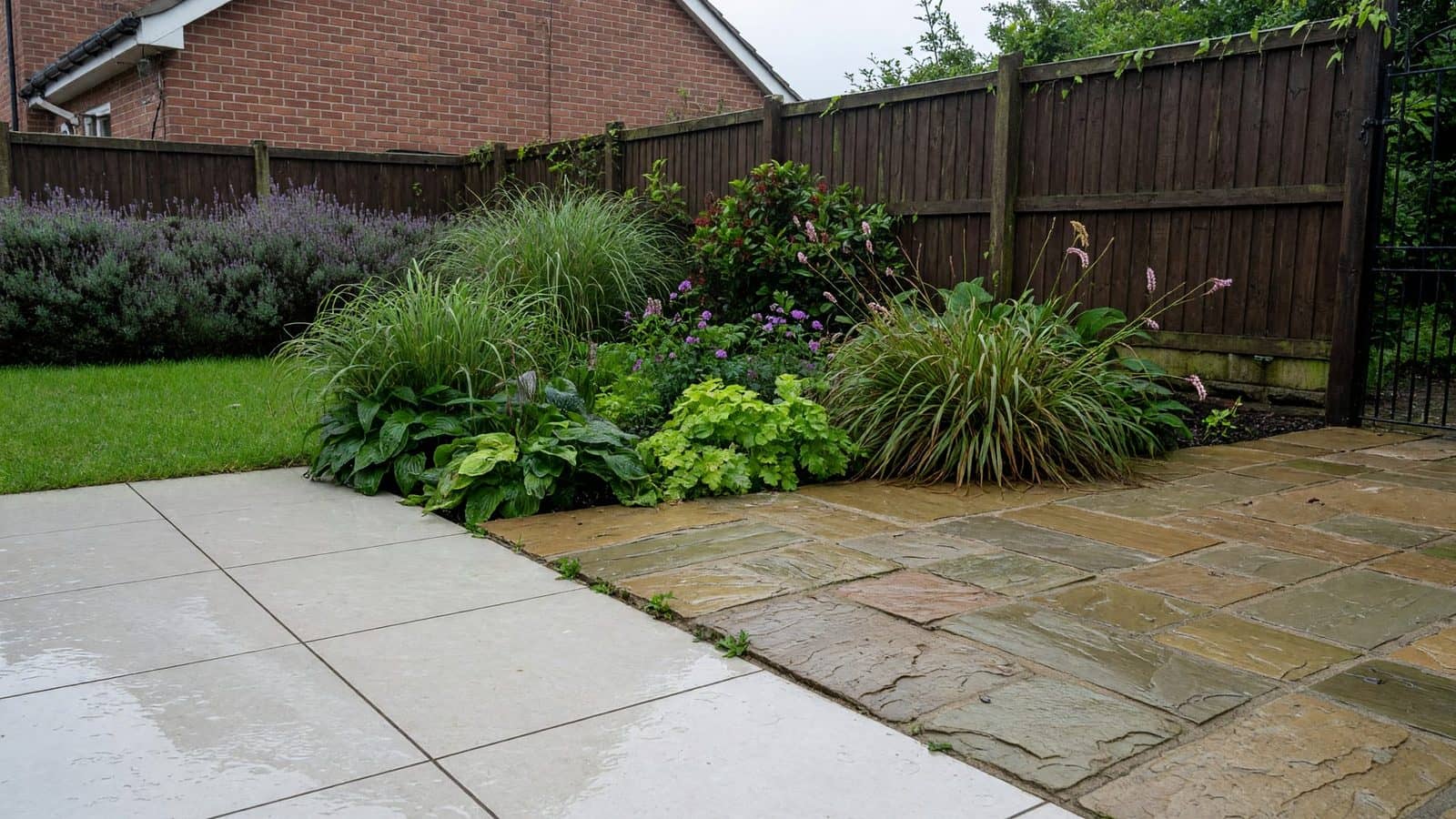
We see the same pattern on rear gardens in Penwortham, Ashton-on-Ribble and sloped new-builds around Preston: decking next to light grey porcelain, a sleeper border and a lawn that stays soft after rain. The hard surfaces work. The decking only works if water can leave the boards and the void underneath can breathe.
Decking is not a patio. Water should shed through the gaps and away from the house, and the ground under the frame should not be a pond. If the plot already holds water, sort garden drainage before you fix the board colour.
What composite actually is (and what it is not)
Most boards we fit now are capped composite: a wood-and-plastic core wrapped in a polymer skin. The cap is what stops the board drinking rain, taking up kitchen oil and turning grey the way cheap first-generation composite did. Uncapped boards still exist. They are usually cheaper and they behave more like timber in a wet, shaded garden — they stain and they hold biofilm.
Composite does not need painting or staining. That is the line we already use on the decking service page, and it is the main reason people ask us to take up tired timber and put composite down instead. It also resists splinters, which matters with children and dogs.
It is not maintenance-free in Lancashire shade. Algae and mildew sit on the surface in the wet film after rain. They are not eating the board from the inside. Leaf litter, pollen and a north-facing fence give them somewhere to live. A wash with a mild cleaner or a sodium bicarbonate mix, as we have written about before, lifts most of it. Bleach is a poor idea on capped boards.
Composite also moves with temperature. Gaps and hidden clips have to follow the manufacturer’s spacing or the boards telegraph and lift. That is an install detail, not a product failure.
How timber behaves in Preston rain
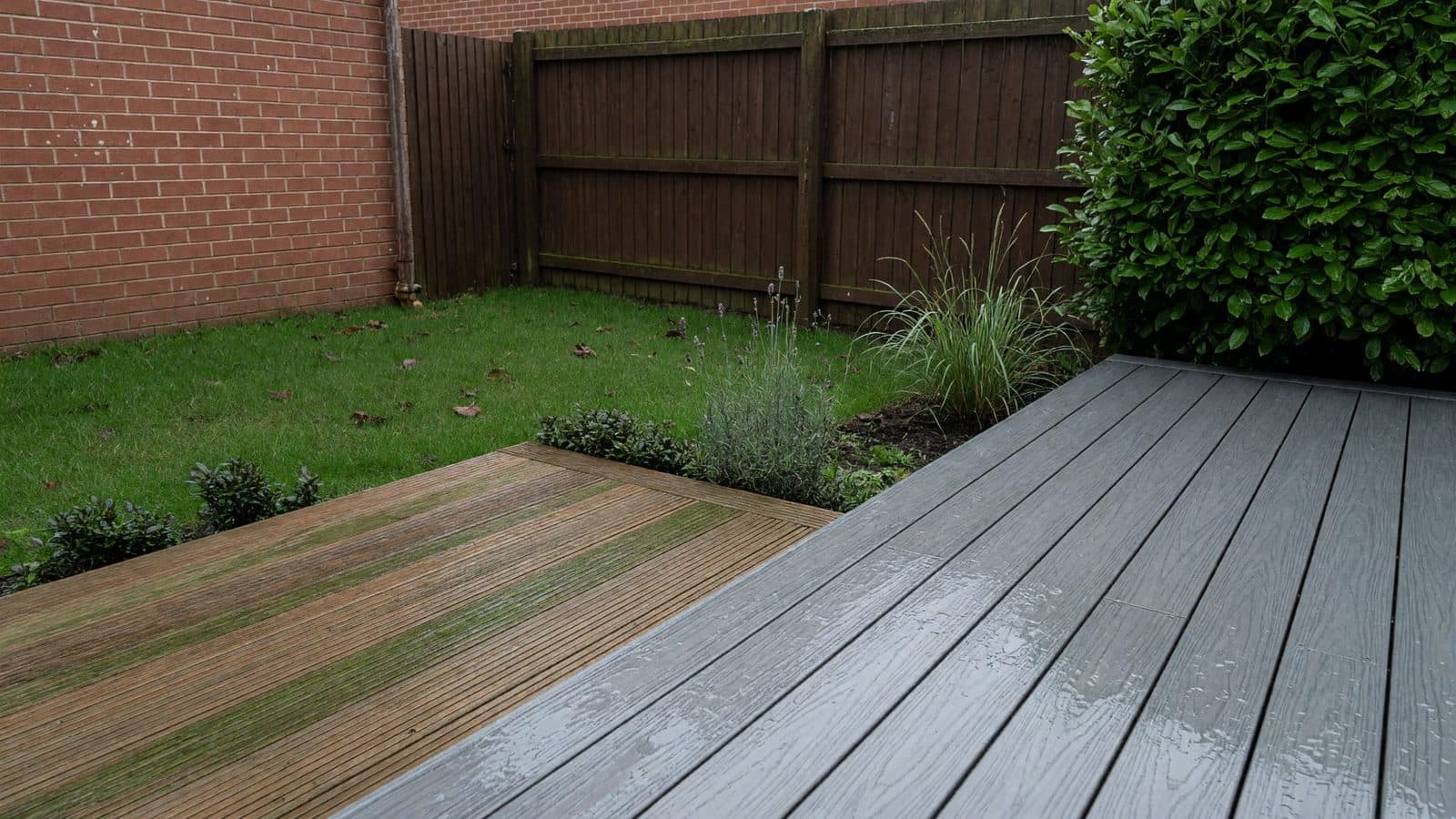
Softwood decking is still the lower ticket on day one and it can look warmer against red brick and older houses. Hardwood lasts longer than cheap treated pine, but it is still timber: it takes up water, it moves, and in this climate it grows a green film unless you clean and treat it.
The maintenance cycle is the real cost. In a wet North West garden you are looking at regular cleaning plus oil or stain when the surface goes dull and thirsty. Miss a couple of seasons and the boards grey, the ends check, and fixings start to sit proud. Pets and bare feet then meet splinters.
Timber is honest about damage. A rotten board is obvious. Composite can look tidy on top while a timber joist underneath is going — which is why the frame specification matters as much as the board brand.
The part most comparisons skip: what sits under the boards
A large share of composite decking installs in the UK still sit on pressure-treated timber joists. The walking surface can be almost inert. The structure is not. Cut ends of treated timber, ledger boards against a house wall, and joist tops that pond water are where wet Lancashire gardens punish the decking.
What we pay attention to on site:
- Air under the frame, not boards laid onto damp soil or tight against a solid base with no void
- A fall so water leaves the surface instead of sitting in the grooves
- Ground preparation and a membrane so the void is not growing weeds into the joists
- Posts and bearers sized for the slope or the soft ground, not plastic pads on a winter lawn
- Ventilation in any fascia — boxed-in decking with no airflow is a damp cupboard
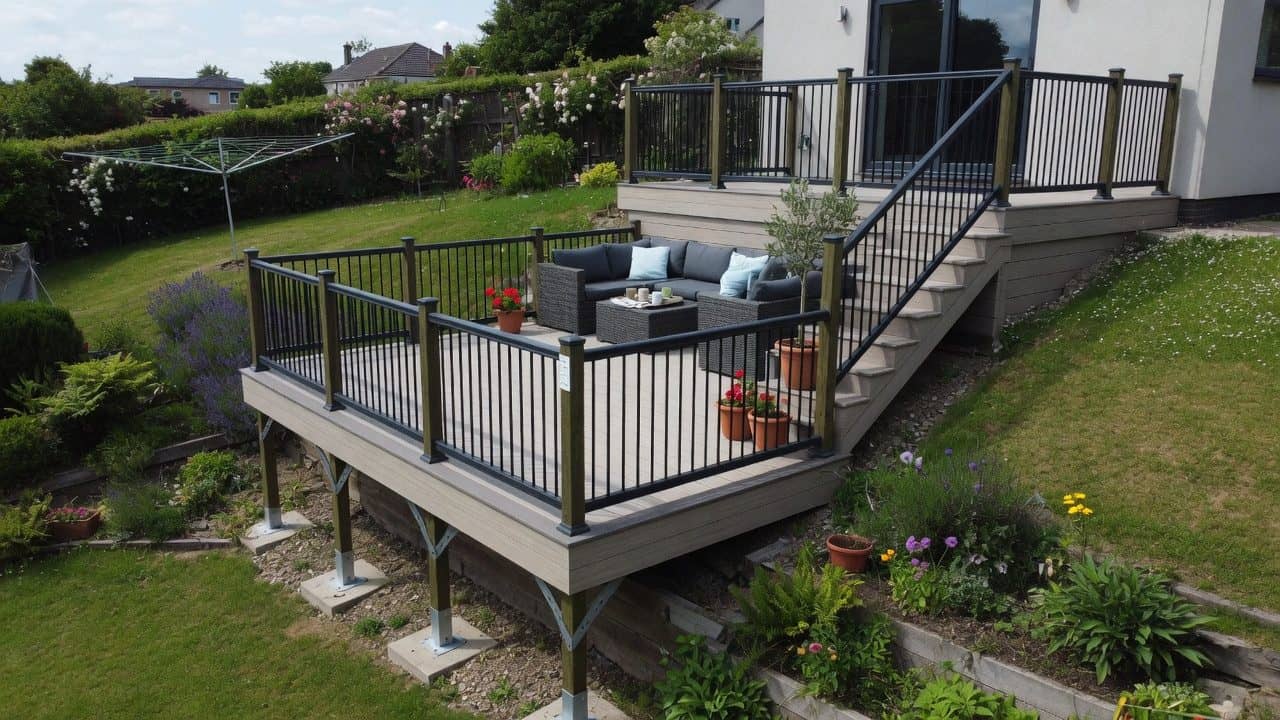
On uneven or falling plots we use a proper post-and-frame build rather than packing a flat kit. That method is in how to lay decking on uneven ground. Composite boards on a weak or rotting frame will still bounce and dip.
Where the decking has to sit close to grade and airflow is tight, a composite or other non-timber joist system is worth discussing. It costs more. It removes the main rot path. We would rather have that conversation at estimate stage than five years later when the boards are fine and the frame is not.
Shade, slip and algae — both materials get this wrong
South-facing, open decking dries. A lot of North West rear gardens do not. Close-board fencing, a side return, a mature hedge and the house itself keep boards wet for days.
On timber, that wet film feeds algae in the grain. The board becomes a skate rink long before it is structurally finished. On composite, the same film sits on the cap. Capped boards clean more easily and they do not hold as much water in the fibres, but they are not immune. Furniture feet, planters and doormats that trap moisture make local green patches.
If slip is the worry — steps off bifolds, a play area, a north-facing terrace — say so when you enquire. Board profile, fall and how often you will wash the surface matter as much as “composite or wood”. Porcelain next to the decking, which we often pair with composite in Penwortham and Preston, gives a different wet grip again. That is a layout choice, not a board-brand choice.
When we still recommend timber
Composite is the usual recommendation for low upkeep, pets, and plots that stay damp. Timber is still right when:
- You want a traditional boarded look against an older house and you will maintain it
- The decking is small, open to weather and sun, and you accept a stain cycle
- You are matching existing timber structures and a mixed palette would look messy
- Budget on day one is tight and you understand you are buying a shorter, higher-care surface
We will say so plainly. The service page already frames it as budget, shade, pets and how much upkeep you want — not a single winner.
Replacing tired timber decking
A common request is not a new platform from scratch. It is old softwood decking that has gone grey, springy or slimy, and a hope that new composite boards can go on the old joists.
Sometimes the frame is reusable. Often it is not. Once you lift boards on a wet Lancashire plot you find joist tops that have held water, posts that have moved in clay, and no fall. Putting expensive capped boards on that frame wastes the material. We would rather price a new subframe, or a hybrid where only sound members stay, than hide a problem.
If the garden around the decking is unfinished after an extension, deal with levels and roof water first. The sequence is the same as in garden after an extension: doors, drainage, then the walking surfaces.
Composite vs timber at a glance
- Rain and wet days — Cap sheds water; surface still grows algae in shade — Absorbs moisture; grain holds algae and stays darker
- Maintenance — Wash; no paint or stain — Regular clean plus oil or stain
- Splinters — Rare on a sound board — Common as boards weather
- Subframe — Often still timber — protect or upgrade it — Same frame risk, plus the boards themselves move and check
- Look — Consistent colour; less “wood” character — Warmer, traditional; weathers unless treated
- Best for here — Shaded, busy, low-upkeep North West plots — Open, maintained timber decking or a traditional match
- Weak point — Cheap uncapped boards; bad airflow under the frame — Missed treatment cycles; rot at ends and joists
No pound-per-metre figures in this piece. Board grade, height, steps, balustrades and groundworks swing the number more than the material name.
How we specify decking on a wet plot
We start with a free online estimate from photos and an approximate size. On anything more than a simple rectangle we visit to check levels, shade, where water sits after rain, and whether the old frame is worth keeping.
The written spec covers boards, subframe, ventilation, fixings, any steps or balustrades, and how the decking meets a patio or lawn. Full garden jobs include drawings. Decking is often one zone in a wider layout with paving and planting rather than a kit dropped on the grass.
A 25% deposit secures the slot once you accept. Work is guaranteed in writing. Hours are Monday to Thursday, 8:00am–4:30pm. WhatsApp or phone 01772 213019 if photos are easier than the form.
Frequently asked questions
Is composite decking better than wood in a wet Lancashire garden?
For most wet, shaded North West plots, yes — capped composite needs far less painting and staining and it resists splinters. Timber can still be the right choice if you want a traditional look and you will maintain it. The subframe and airflow decide how long either option lasts.
Does composite decking go slimy in the rain?
It can, in shade. Algae sits on the wet surface; it is not rotting the board. Keep leaf litter off, wash when the film appears, and do not trap water under mats and planters. Decking that never dries needs better fall and light as well as a better board.
Can you put composite boards on an old timber frame?
Only if the joists are sound, level and can dry. On many Lancashire plots the old frame has held water for years. We check that on a visit rather than assuming the boards are the only thing that needs changing.
Do I still need drainage if the decking has gaps?
Yes, if the ground under and around the decking holds water. Gaps let rain through the boards. They do not drain a clay lawn or a downpipe that dumps onto the plot. Standing water against posts shortens the life of a timber subframe.
Composite or porcelain for a seating area next to the house?
Both work. Porcelain is a solid patio with falls into a drain. Decking is useful where you need to gain height or span uneven ground. We often use both on the same garden — porcelain off the bifolds, composite on a change of level.
If you are choosing boards for a wet plot in Preston, Leyland, Penwortham or nearby, send photos and a rough size for a free online estimate. We reply within one working day from contact@acorn-gardening.co.uk — check spam if you have not seen a reply.
Related services
Prefer a professional install in Preston & the North West? Explore the services that match this guide.
Enjoyed this guide?