Decking Materials & Cost Guide for UK Gardens
Decking is one of the fastest ways to create a usable outdoor room—but quotes vary widely because materials, subframe, height, access and extras matter more than a single board price. This guide explains how decking costs typically break down for UK gardens, with local notes for Preston, Leyland and the North West. It is budgeting guidance, not a fixed price list.
What you are actually buying
A professional deck is a system:
1. Design and set-out — levels, spans, steps, drainage clearances 2. Subframe — posts, joists, fixings engineered for the ground 3. Decking surface — composite or timber boards 4. Edges and details — fascias, trims, junctions to walls 5. Access elements — steps, landings, gates 6. Optional extras — balustrades, privacy screening, lighting integration, links to patio or artificial grass
Quotes that only multiply board m² by a cheap rate often omit excavation, waste, posts in concrete, or balustrade loads.
Composite vs timber: cost and ownership
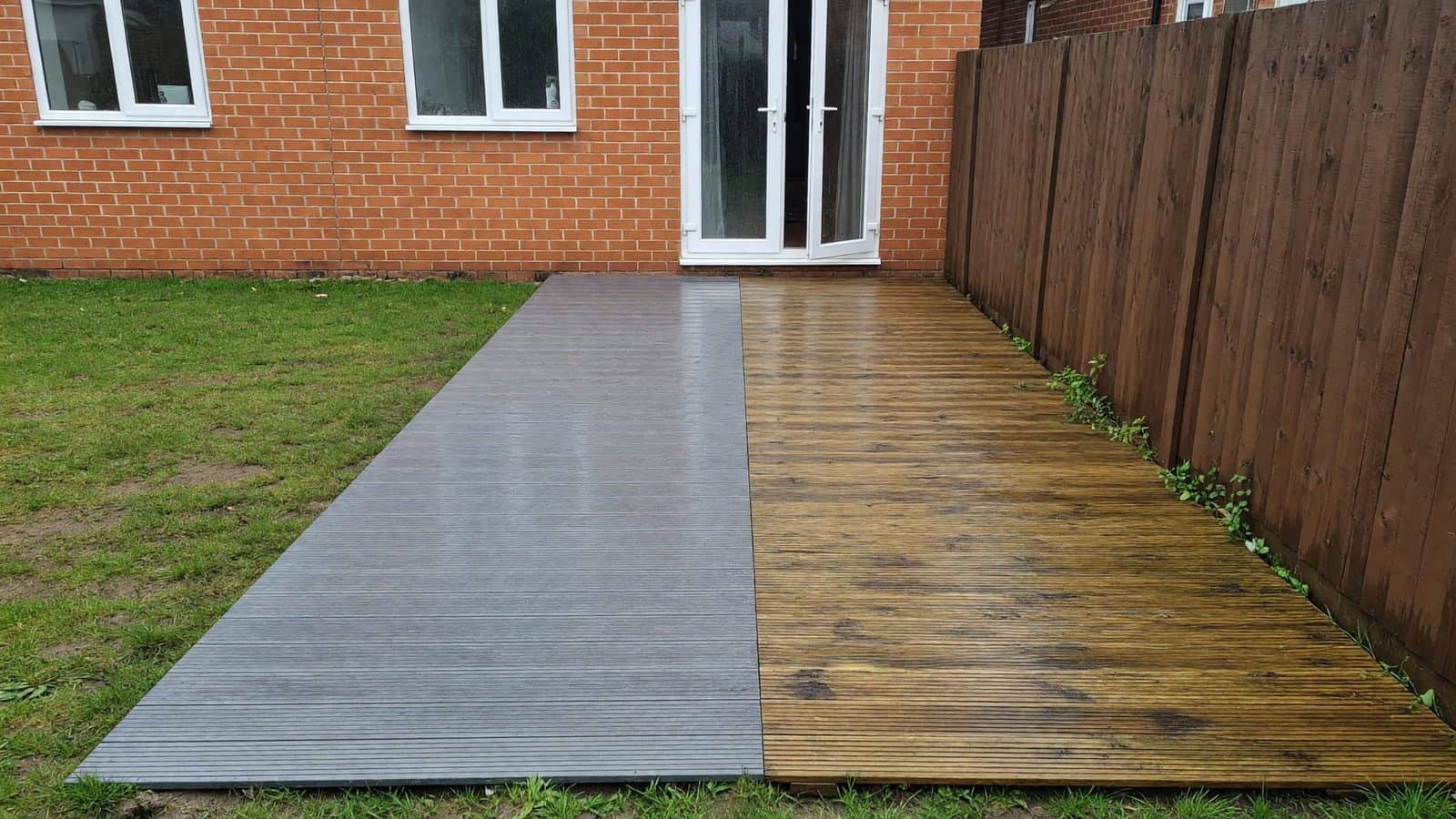
- Upfront material cost — Usually higher per m² — Often lower per m²
- Maintenance — Low (clean, occasional care) — Regular treatment / staining
- Splinters & fade — Fewer splinters; colour systems vary — Can splinter; greys without care
- Lifespan (with good frame) — Long service life when specified well — Good if maintained; shorter if neglected
- Look — Consistent modern boards — Natural grain; traditional appeal
- Best for — Busy families, low upkeep, pets — Traditional schemes, some budgets
Neither is “always cheaper.” Composite can win on lifetime cost if you would otherwise pay for annual timber care. Timber can win on day-one budget for a simple low deck. We advise based on shade, trees (sap/debris), pets, and how much weekend maintenance you want.
Cost drivers (more important than brand slogans)
1. Area and shape
Larger decks cost more overall but often less per m² once setup is covered. Complex shapes, cut-outs around trees, and multi-level designs add labour.
2. Height and ground condition
Post-supported decks on slopes need more structural work than a low platform on firm ground. Soft clay, roots and poor access increase prep time—common around Lancashire suburban plots.
3. Board specification
Entry composite differs from premium capped boards. Hidden fixing systems, matching fascias and quality joist tape add cost and longevity.
4. Steps, balustrades and screening
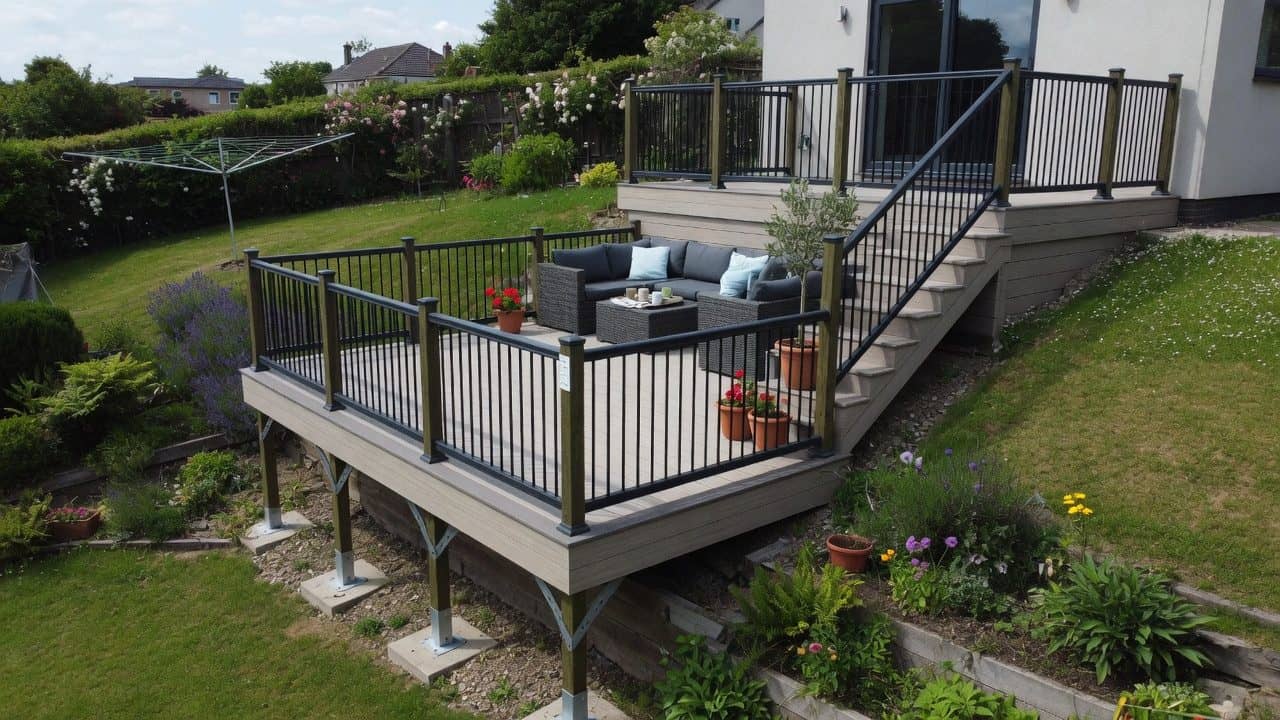
Anything above modest height may need guarding. Glass, metal and timber balustrades are different price bands. Privacy screening (as on many family garden schemes) is a design feature with real material and labour cost—not a free add-on.
5. Access and waste
Narrow side access means hand-carrying. Skip hire, parking permits and disposal of old decking or concrete all appear on serious quotes.
6. Integration with other works
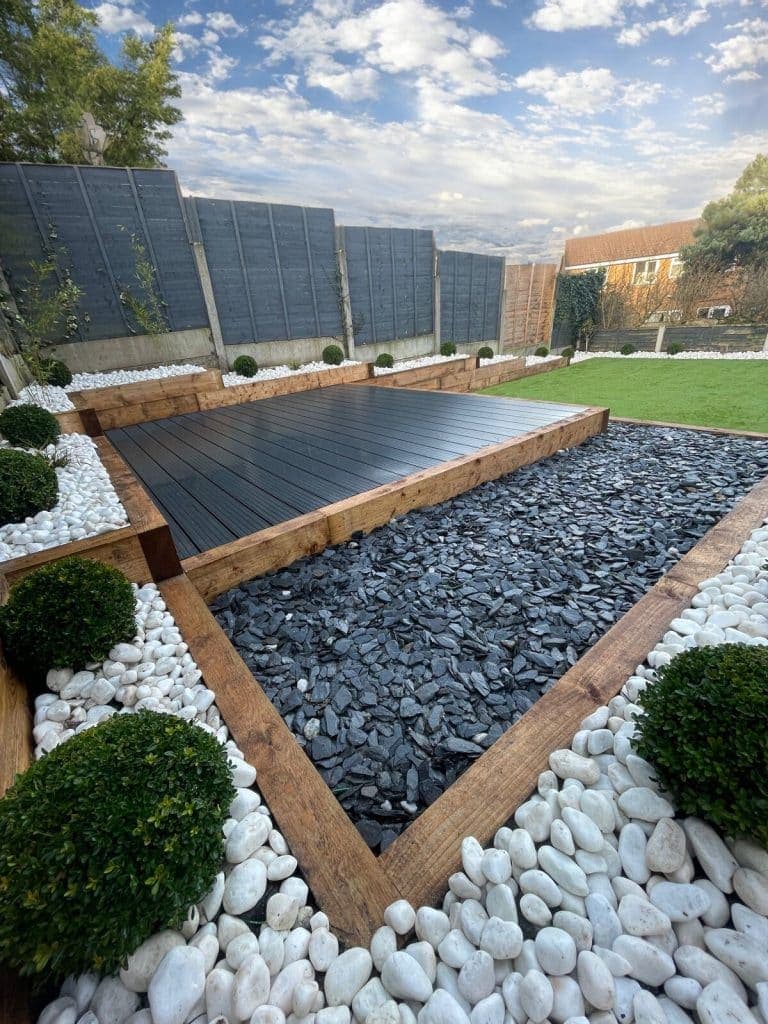
Decks built with patio and paving, fencing or full garden landscaping can share plant and programme—but the package total is not the same as a standalone deck line.
Rough budgeting bands (guidance only)
Use these as conversation starters for professional supply-and-fit in the UK regions we work—not online marketplace board-only prices:
- Small low platform (compact seating pad): lower total; higher cost per m²
- Typical family dining deck (common suburban size): the volume most homeowners compare
- Large multi-level or heavily detailed deck (steps, glass, screening, lighting prep): higher total; more design time
If the base needs major excavation or retaining, treat that as a separate step-up from a simple frame on good ground. Ultra-low quotes that skip posts, waste or edge details usually reappear as variations.
Timeline from quote to use
1. Free online estimate from photos and sizes 2. Site visit when levels or complexity need it 3. Written scope and booking (25% deposit to secure a slot after acceptance is our normal commercial process) 4. Lead time — often weeks to a few months in peak season 5. On-site build — days to a couple of weeks depending on complexity 6. Handover and early-use guidance
Weather affects concrete and safe working days. Winter installs are possible with planning; spring demand books earlier.
Maintenance cost is part of the price
- Composite: periodic cleaning; follow manufacturer guidance; avoid pressure-washer abuse
- Timber: cleaning plus protective coatings on a cycle that matches exposure
A “cheap” timber deck that is never treated becomes a replacement project. Factor ownership, not only install day.
What a written decking quote should show
When you compare contractors, ask for the same breakdown so “cheap” and “complete” are not confused:
1. Board system — brand/type band, thickness, fixing method (hidden or face) 2. Subframe — post approach, timber grade/treatment, joist centres 3. Groundworks — excavation, waste, pads or concrete allowance 4. Steps and landings — number of flights and finishes 5. Edges and fascias — how the perimeter is closed 6. Guarding and privacy — balustrade or screening if height or overlooking requires it 7. Access assumptions — side passage width, parking for deliveries 8. Programme — lead time and expected on-site duration 9. Guarantee — workmanship period and what it covers
If two quotes differ by a wide margin, the gap is usually height, waste, steps or screening—not magic labour rates. Lancashire plots with clay, shared drives and narrow access often sit toward the higher end of national “per m²” internet tables for good reason.
Composite vs timber: decision scenarios
Use lifestyle rather than catalogue photos:
- Minimal weekend chores, kids and pets — Composite — Fewer splinters; no annual oiling cycle for most owners
- Traditional cottage or period house aesthetic — Quality timber — Grain and colour can match existing joinery language
- Shaded, damp rear garden — Composite or well-detailed timber with strong ventilation — Moisture management matters more than brand slogans
- Tight day-one budget, simple low platform — Timber (with honest maintenance plan) — Lower material outlay if you will maintain it
- Elevated lounge with screening — Either, but budget the structure first — Posts, rails and privacy often exceed board cost differences
North West weather does not “forbid” timber; it punishes neglected timber. Composite is not maintenance-free forever—joints, edges and occasional cleaning still need attention—but it usually reduces the annual chore list that competes with real life.
Hidden cost items homeowners forget
- Removal of an old deck or broken patio under the new footprint
- Raising or adjusting thresholds and door bars
- Planning for future electrics (outdoor sockets, step lights)
- Reinstating lawn or paths damaged by access
- Matching fencing once a new elevated deck creates overlooking
- Drainage tweaks if the deck changes how water moves near the house
A free online estimate that starts from photos can flag many of these early. Site measurement locks them down before deposit and booking.
Lancashire notes that affect price bands
Preston, Leyland and similar suburban streets often share:
- Clay and soft spots after wet winters — more post depth or base work
- Estate side returns too narrow for machinery — more hand labour
- Peak-season demand — earlier booking, not necessarily higher quality from rushing
- Pairing with full garden works — shared skips and plant can improve package efficiency even when the deck line itself is itemised clearly
We do not publish fixed national price lists because two 20 m² decks—one low on firm ground, one elevated with glass and screens—are different products. Budget conversations should start from how you will use the space and what the ground is doing, then materials.
Lifespan and replacement thinking
Think in ownership decades, not install weekends:
- A well-built subframe protects whatever board sits on top. Undersized joists fail first.
- Boards can be renewed later if the frame was specified generously; the reverse is rarely true.
- Staining cycles, cleaning products and furniture point-loads all influence real service life.
- Integrating the deck with paving or landscaping edges reduces the “orphan platform” look that dates quickly and gets ripped out early.
FAQs
Is composite worth the extra? Often yes if you want low weekly effort and a consistent look. Compare lifetime care, not only day-one materials.
Can I reuse an old frame? Only if it is sound, level, correctly spaced and compatible with the new board system. Reusing a rotten or undersized frame is a false economy.
Do you only supply labour? We design and install complete decking systems. For shed/pergola kits you buy yourself, see our separate shed and pergola installation service (fit-focused, hourly labour).
How do I get a real number? Request a free online estimate with approximate size, photos of the ground and notes on height, steps and privacy needs.
Will prices change after the estimate? Written scope should state what is included. Variations appear when ground differs from photos, when you add screening or steps mid-design, or when access assumptions change. Clear photos and honest access notes keep surprises down.
Is winter a bad time to install? Work is possible with planning. Shorter days and wet ground can extend programmes; spring demand books earlier. Choose the slot that matches your lead time, not only the brochure season.
Next step
For a decking budget grounded in your garden—not a national average—start with a free online estimate for decking in Preston and the North West. We will outline composite and timber options, structural approach and a clear programme.
Related guides: decking on uneven ground (project walkthrough) and full garden landscaping if the deck is one piece of a wider redesign.
Related services
Prefer a professional install in Preston & the North West? Explore the services that match this guide.
Enjoyed this guide?