Shed Base Options: Concrete, Slabs, Plastic Grid or Timber
If a shed's doors start to stick, the floor feels bouncy, or the bottom rail goes soft, the shed usually isn't the problem. The base underneath it is.
A shed base has three jobs. It holds the shed level, so the frame stays square and the doors keep closing. It spreads the weight evenly, so one corner doesn't sink. And it keeps the floor out of the wet, so the timber doesn't sit in water all winter. That last one matters more than most people think on Lancashire clay.
There are four main kinds of shed base. We build all four, and here's how they compare.
1. Concrete
What it is: a level concrete slab poured on a compacted sub-base.
Best for: larger or heavier sheds, workshops, and anywhere you want a base that stays put for the long term. It's also the one to choose if you'll keep heavy tools or machinery inside.
Good to know: it's the most permanent option, so it's worth getting the size and position right first. It's also a solid floor in its own right if the shed's own floor ever needs replacing.
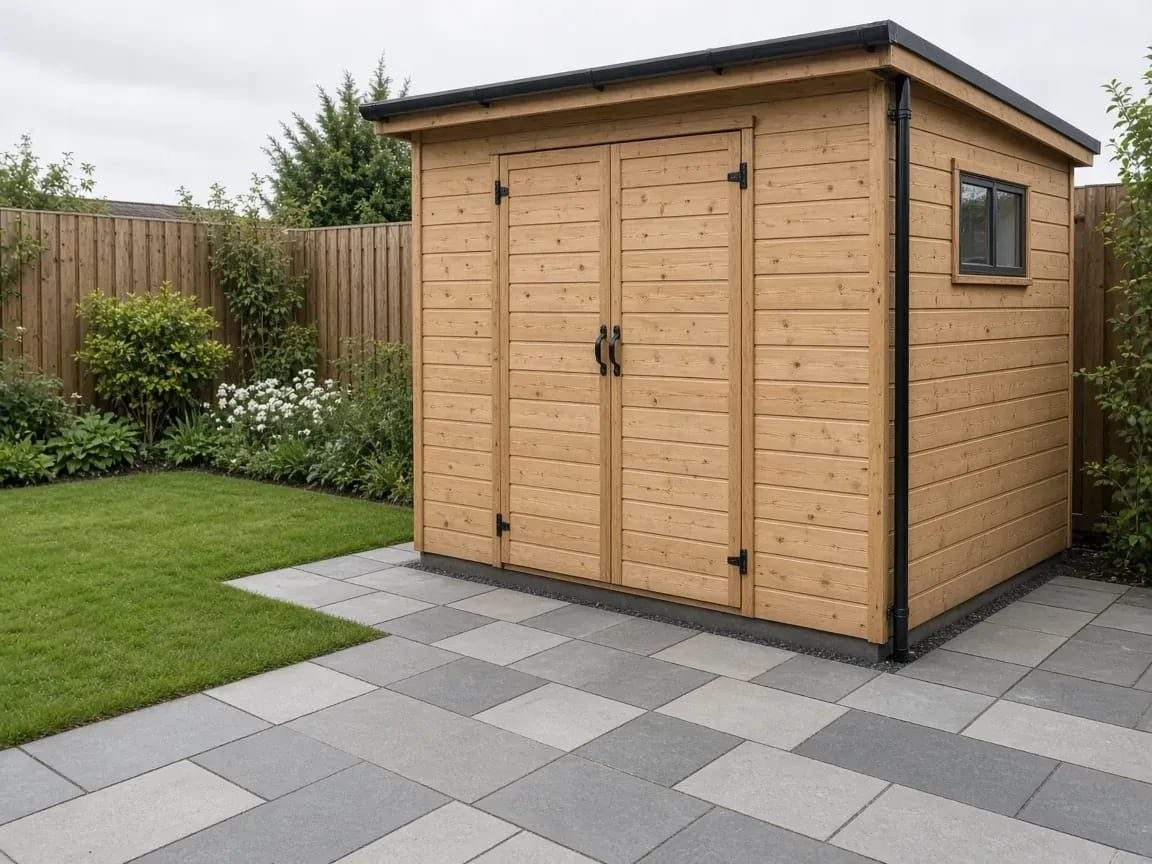
2. Paving slabs
What it is: slabs laid level on a dug-out, compacted sub-base.
Best for: most ordinary garden sheds. It gives a neat, firm base, and the slabs can match a patio or path nearby.
Good to know: a slab base is only as good as what's under it. Slabs laid straight on soil or a thin bed of sand will rock and sink. Done properly, with a compacted sub-base, it's a solid base for most sheds.
3. Plastic grid
What it is: interlocking plastic grid laid on prepared, level ground and filled with gravel.
Best for: lighter sheds on level ground. The gravel lets rain drain straight through, which helps keep the shed floor dry.
Good to know: it's less rigid than concrete or slabs, so it isn't the one for a big, heavy shed or a workshop. The ground underneath still needs clearing and levelling properly first.
4. Timber
What it is: a raised frame of treated timber that the shed sits on.
Best for: uneven or sloping ground, where digging out a large level area would be a big job. Lifting the shed off the ground also keeps air moving underneath.
Good to know: the frame has to be square and level, and the timber needs to be suitable for contact with the ground. It suits smaller and medium sheds best.
Quick guide: which base suits your shed?
- Large or heavy shed, or a workshop — Concrete
- Ordinary timber or metal shed on firm, level ground — Paving slabs
- Light shed on level ground, where you want good drainage — Plastic grid
- Sloping or uneven ground — Timber, or the ground levelled first
These are rules of thumb. The right answer depends on the shed, the ground and how you'll use it, and we'll recommend one when you ask for a quote.
Signs your existing shed base is failing
- Doors that used to close now catch or need lifting.
- A soft or bouncy floor, especially at one corner.
- The shed visibly leaning, or gaps opening at the joints.
- Water pooling round the bottom after rain.
- Rot along the bottom rail or the floor bearers.
If you're seeing these, a new base often sorts it. If the shed itself is past saving, we can take down and remove the old shed, build a new base, and put up the new one you've bought.
Preparation matters more than the base type
Whichever base you choose, the work under the surface is what makes it last:
- dig to firm ground, taking out turf and soft topsoil;
- compact a proper sub-base where the base type needs one;
- build it level and square, slightly bigger than the shed;
- keep water away, so the base sits a little above the ground round it and rain runs off.
Skip those and even a concrete base can let you down.
Shed bases in Preston and Lancashire
We're a family-run team of eight based in Walton-le-Dale. We build shed bases in concrete, paving slabs, plastic grid or timber across Preston and the North West. We can build just the base, ready for your supplier to put the shed up, or install the shed for you as well. You get a written scope and the price before we start.
Send a few photos of the spot and the way in, plus the size of the shed, and we'll get back to you. Get a quote or see more about our garden bases.
Want the shed put up too? See our summer house, shed and pergola installation. For more on planning the install itself, read our shed and pergola installation guide.
Related services
Prefer a professional install in Preston & the North West? Explore the services that match this guide.
Enjoyed this guide?