Resin Bound Driveway vs Block Paving and Tarmac
Choosing a driveway surface is a long-term decision. Around Preston and Leyland the three options homeowners compare most often are resin bound gravel, block paving and tarmac. Each can look excellent when installed properly — and each can disappoint when the base or drainage is wrong. This guide compares them on the criteria that matter day to day.
At a glance
- Resin bound — smooth, seamless, wide colour range, low weed growth in the surface, permeable when correctly specified.
- Block paving — modular, traditional or contemporary patterns, individual blocks can be lifted for repairs, joints need maintenance.
- Tarmac (asphalt) — practical and often cost-effective, classic black finish, fewer colour options, joints and edges still matter.
Appearance and kerb appeal
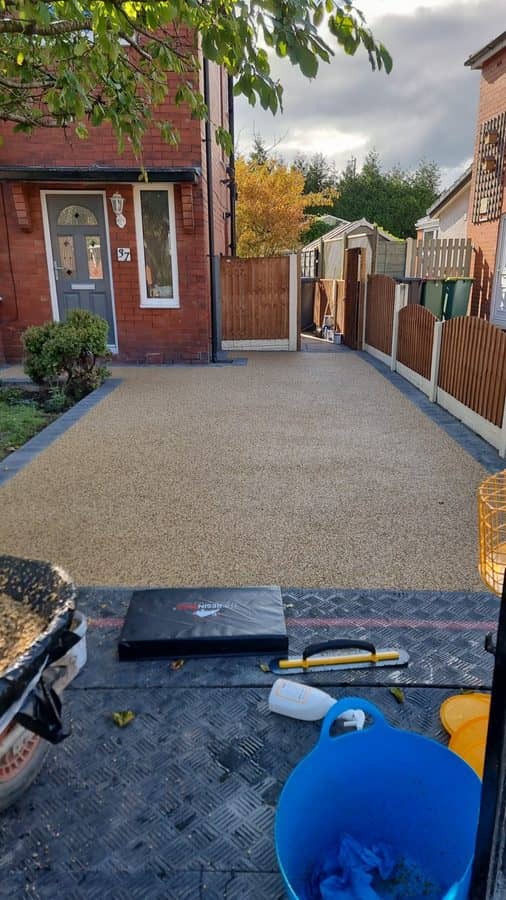
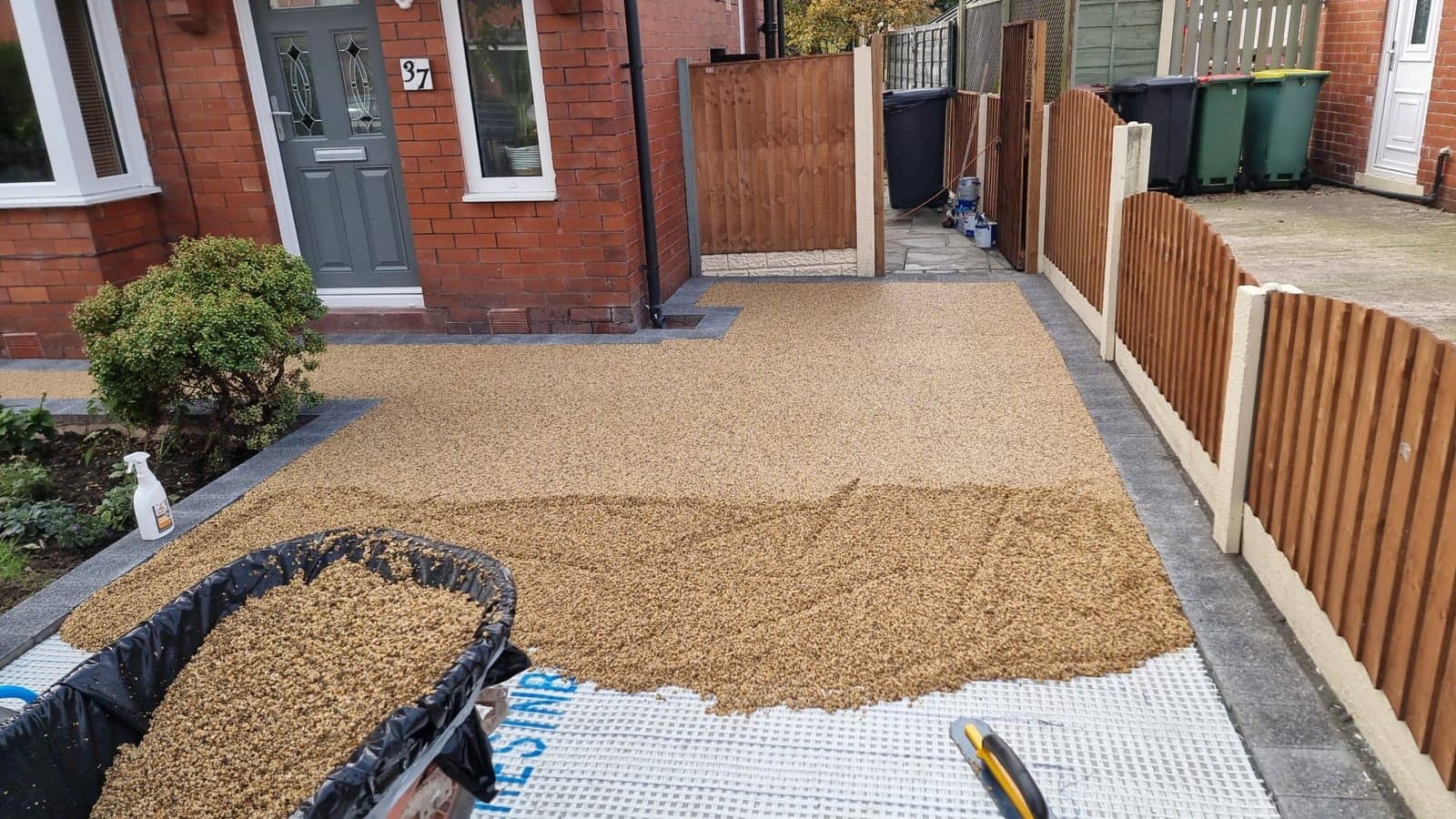
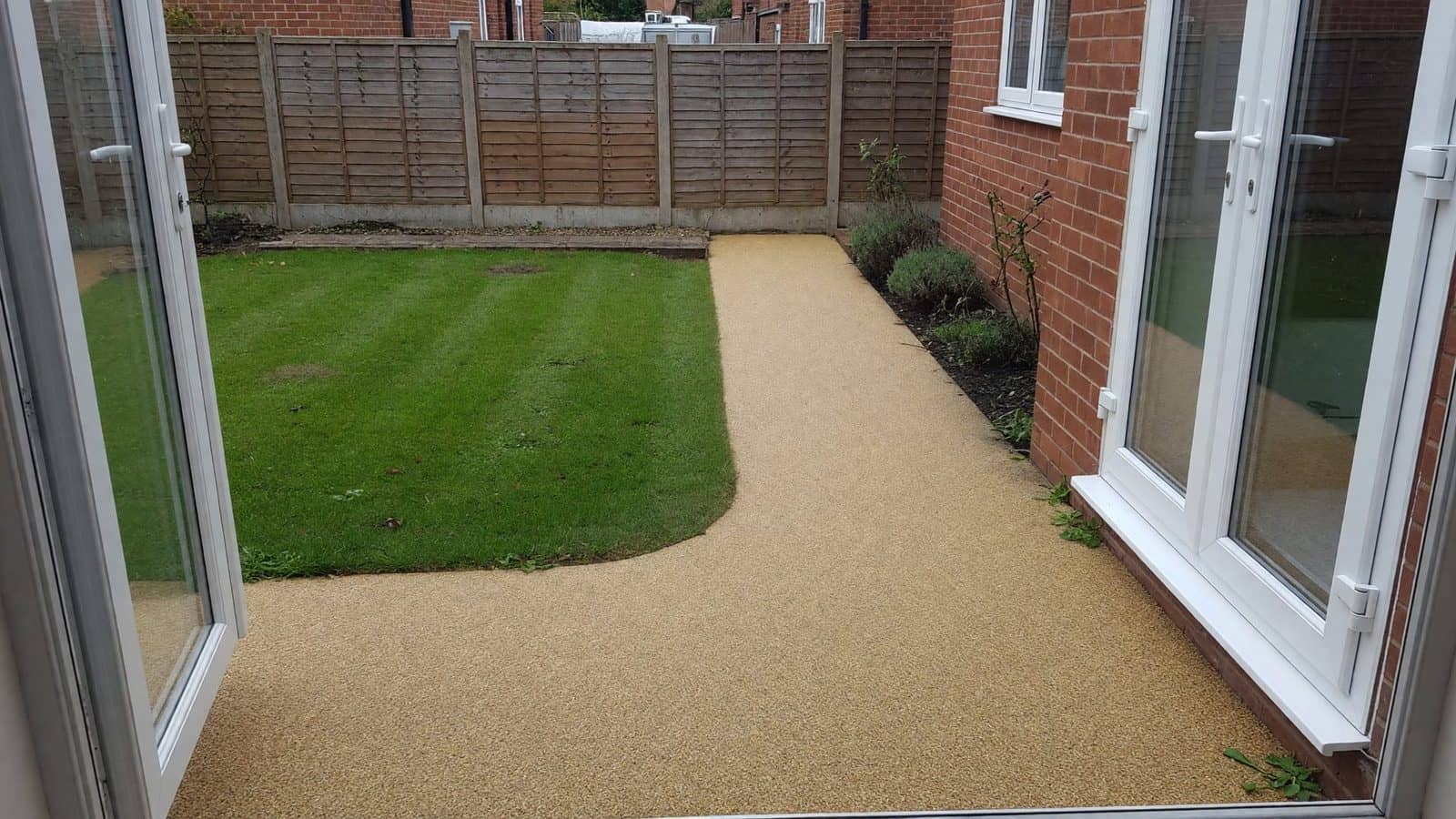
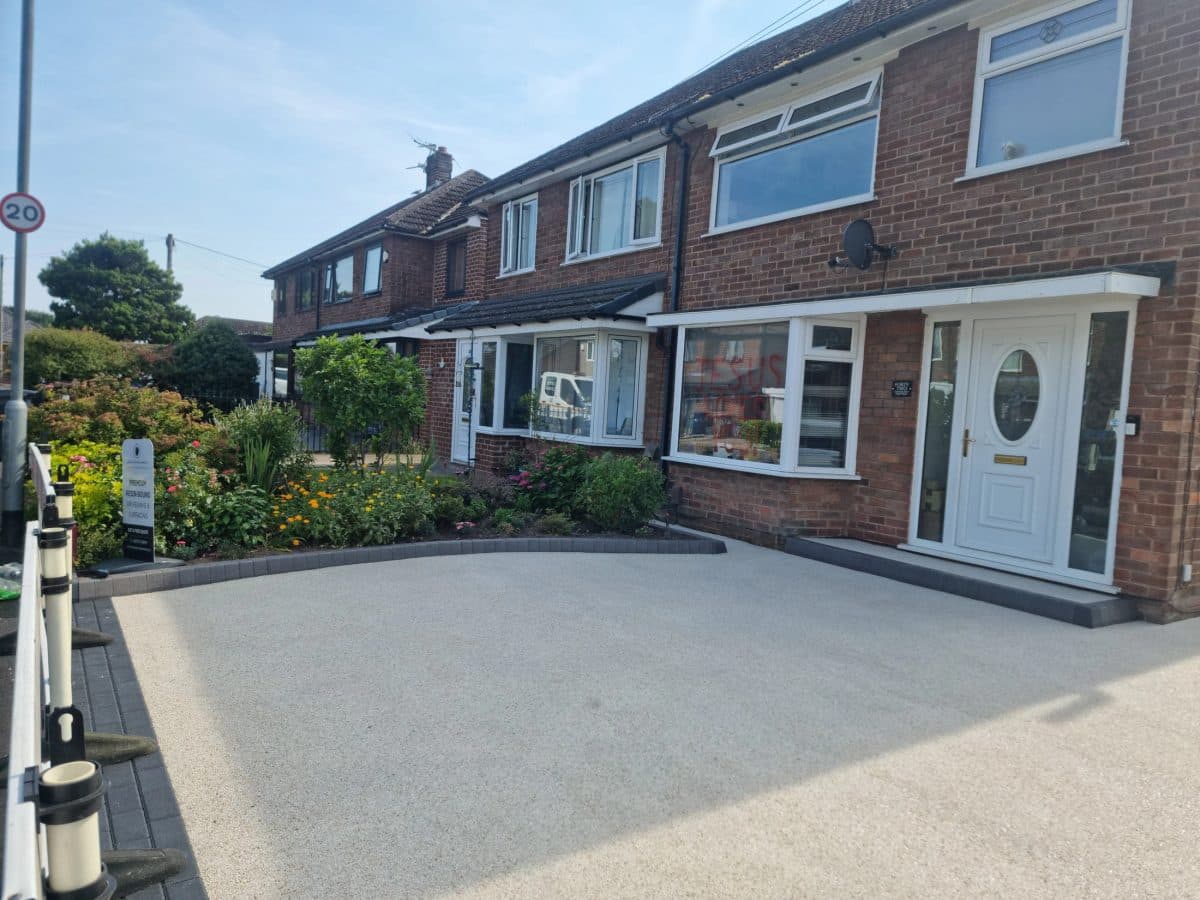
Resin bound gives a modern, continuous look with natural stone aggregate. It suits both new builds and older properties when the colour is chosen carefully. Block paving offers pattern and border designs; it can feel more “traditional” or highly formal depending on the block. Tarmac is the understated workhorse — smart when edged well, less of a design feature in itself.
If your priority is a seamless, premium finish that photographs well from the road, resin bound usually leads. If you want a patterned courtyard feel, blocks often win.
Maintenance
Resin bound surfaces need occasional cleaning and sensible use (avoid harsh solvents; follow curing advice). There are no sand joints for weeds to colonise the way they do in block paving — though edges and borders still need looking after.
Block paving requires jointing sand top-ups, occasional weed control in joints, and can settle if the base moves. Individual blocks can be replaced after utility work, which is a genuine advantage.
Tarmac needs less fuss than blocks for weeds, but can scuff, softens in extreme heat, and repairs are more visible.
Drainage and standing water
A correctly installed resin bound system is fully bound (stones locked in resin) and designed to be permeable through the surface. Water still needs a path away — permeable base layers, free outlets, or positive drainage. “Permeable” does not mean you can ignore reverse falls toward the house.
Block paving can be permeable (open-joint systems over a designed sub-base) or effectively impermeable if sealed and laid to falls into drains. Many older block drives rely on falls into channels.
Tarmac is typically impermeable; water is shed to gullies or edges. That is fine when falls are right and drains are clear.
On Lancashire clay plots, the ground under the drive often matters more than the wearing course. Standing water is frequently a base and levels problem, not a brand-of-surface problem.
Durability and repairs
All three last well with a proper sub-base and edge restraint. Failures usually trace back to soft ground, tree roots, inadequate depth, or water undermining the edges.
- Resin: tough when thick enough on a stable base; repairs are possible but colour-matching a patch takes skill.
- Blocks: excellent for localised repair after digging; whole areas can rut if the base fails.
- Tarmac: strong for vehicle use; trenches and patches tend to show.
Cost comparison (how to think about money)
Day-one cost depends heavily on whether the base is reused or rebuilt. Tarmac is often competitive for pure practicality. Block and resin can land in similar bands for a full rebuild once drainage and edging are included. Running cost over ten years should include your time (or paid maintenance) for weed joints, cleaning and any early failure.
Ask every quote to state: dig-out depth, sub-base specification, edge type, drainage items, and waste disposal. That is how you compare like with like.
When we recommend resin bound
Resin bound is a strong choice when you want:
- A seamless, high-end appearance
- Low day-to-day surface maintenance
- A permeable wearing course as part of a drainage-aware design
- Colour that complements brick or render without a busy pattern
It is less ideal if you expect frequent trench work under the drive, or if the budget only allows a thin decorative coat over a failing base — that combination is a false economy.
When blocks or tarmac may suit better
Choose block paving when pattern, borders or future lift-and-relay access matter most. Choose tarmac when you want a robust, no-nonsense surface at a controlled budget and are happy with a classic black finish.
Next step
Still unsure? Send photos of your existing drive, approximate width and length, and any ponding spots. We can recommend resin, blocks or a hybrid approach (for example resin parking with paved paths) and provide a free online estimate for work around Preston, Leyland and the North West.
Explore our resin bound driveway service for install detail, or get in touch if you want a straight comparison for your property.
Related services
Prefer a professional install in Preston & the North West? Explore the services that match this guide.
Enjoyed this guide?