When a Driveway Sits Too High Against the DPC
A driveway can look fine from the road and still be wrong at the house. If the finished surface has crept up towards the damp-proof course — or gone past it — rainwater has a bridge into the brickwork. We get this on older block drives that have been overlaid, and on new surfaces laid to meet a threshold that was never designed for a thick build-up.
The fix is a levels job, not a colour choice. Resin or blocks can both sit too high.
The 150mm gap, in plain terms
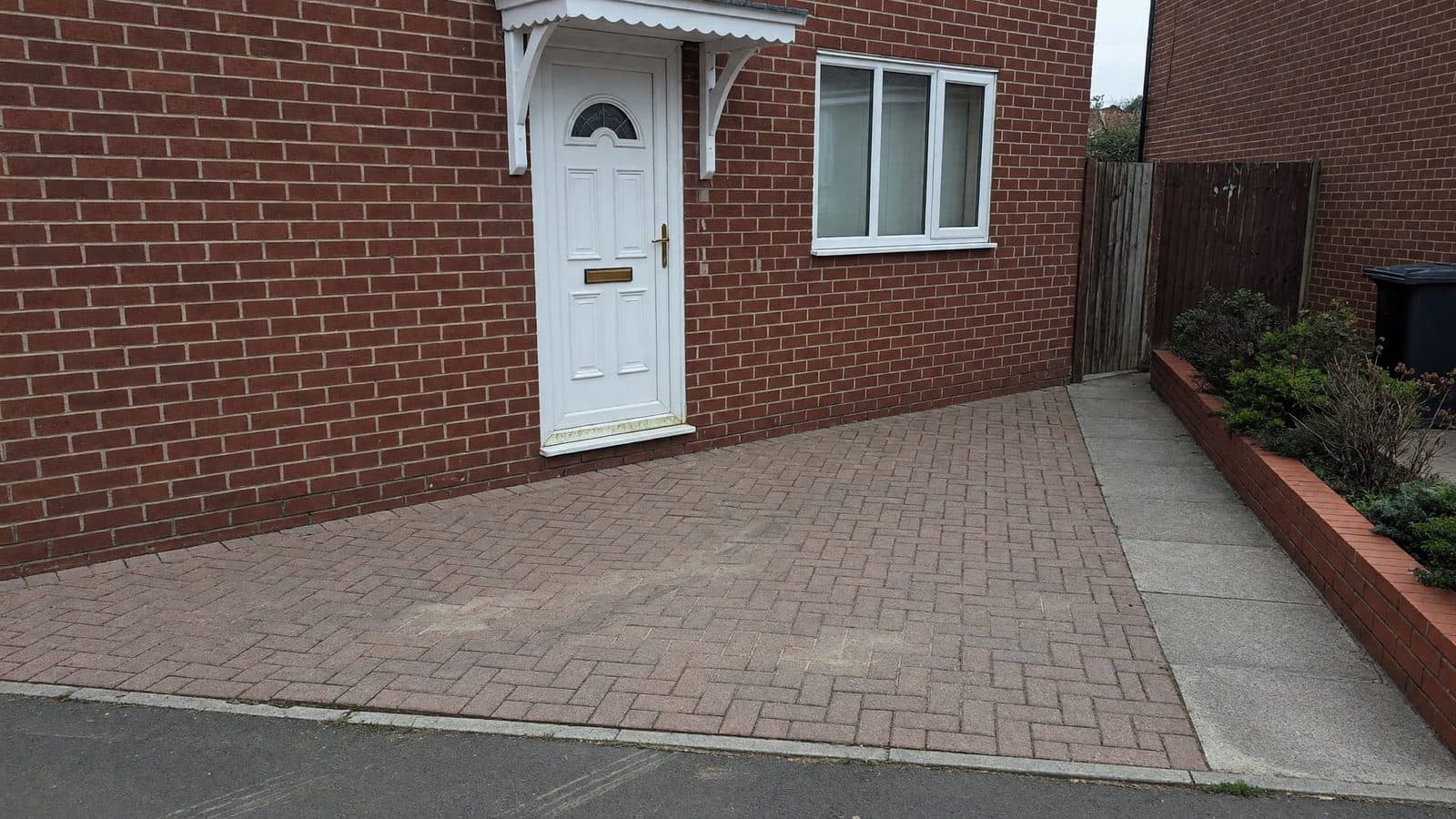
Building practice in England wants finished paving about 150mm below the DPC — two brick courses on a typical house. That gap stops splash and bridging. On a private drive people sometimes live with less, but once the surface is within a few centimetres of the DPC, or touching it, you are asking the wall to take water it was not built to take.
Find the DPC line in the mortar. Measure down to the paving next to the wall, not in the middle of the drive. If you have less than a course and a half, treat it as a defect, not a trim issue.
Signs inside the house — tide marks, blown plaster on the corresponding wall — are why this is worth doing before you pick a new colour of resin.
Why drives creep up
Common patterns on Preston and Blackburn plots:
- An extra overlay on tired tarmac or blocks, each layer stealing the gap
- A new surface matched to a raised threshold or a ramp for a car
- Flower beds and gravel built up against the wall after the drive was laid
- A fall that was set to the garage, not to the DPC
Dropping the whole drive by 100mm is a rebuild: excavate, new base, new surface. That is the clean answer when the whole sheet is high and the blocks are already rocking. It is also the moment many people switch from blocks to resin bound, because they are opening the job anyway.
When you do not have to drop the whole drive
If only the strip against the house is tight, a wall channel — a rebate next to the brickwork with the paving held down at that edge — can keep 150mm at the wall while the rest of the drive stays nearer the old level. A linear drain in that rebate takes the splash. This only works if the rest of the drive still falls the right way and does not dump water at the door.
A gully at the threshold is useful on level-access doors. It is not a licence to pave over the DPC.
Resin does not get you out of the rule
Permeable resin helps rain go down instead of across, which is why it is a good SuDS-minded driveway. It does not let you finish the sheet level with the DPC. The bound layer still has thickness. The base still has thickness. Measure the finished height before the pour, not after.
If the brief is “drop it 100mm and keep the blocks” versus “drop it and resin”, the first option only works when the existing blocks are worth saving and the reduced build-up still leaves a proper base. Thinning a drive by stealing the sub-base is how you get a pretty surface that dishes in the first winter.
Falls still have to leave the house
Lowering the drive is wasted if the new sheet still falls toward the wall. We set a fall away from the brickwork, or to a channel that can discharge to a soakaway or an existing surface-water drain. On clay that outfall needs thinking about, same as any other drainage job.
What to send for an estimate
A photo of the DPC and the paving against the wall, a photo of the full drive, and whether you want to keep the existing blocks. That is enough for a first free online estimate. WhatsApp 01772 213019.
We will not guess the drop from satellite view. The tape on the brickwork is the measurement that matters.
Related services
Prefer a professional install in Preston & the North West? Explore the services that match this guide.
Enjoyed this guide?