Is Hoggin Good for Driveways?
Hoggin (or self-binding gravel) can make an attractive, low-cost, permeable surface for light-use rural drives and paths. On a typical wet Lancashire plot with daily family cars it frequently softens, ruts or needs regular maintenance. This guide explains exactly when it works, when it doesn’t, and when resin bound or tarmac is the smarter long-term choice.
Key takeaways
- True clay-bound hoggin is more common in the south and east; in the North West you are usually offered a local self-binding gravel (gritstone or limestone fines).
- Suitable only for light traffic, gentle gradients and owners happy to maintain it.
- On clay soils that stay wet for months it can become sticky or dusty and does not match resin bound or good tarmac for daily family use.
- Proper sub-base, edges and drainage matter far more than the surface label.
- Resin bound is the usual upgrade when people want the natural stone look without the drawbacks.
What hoggin actually is
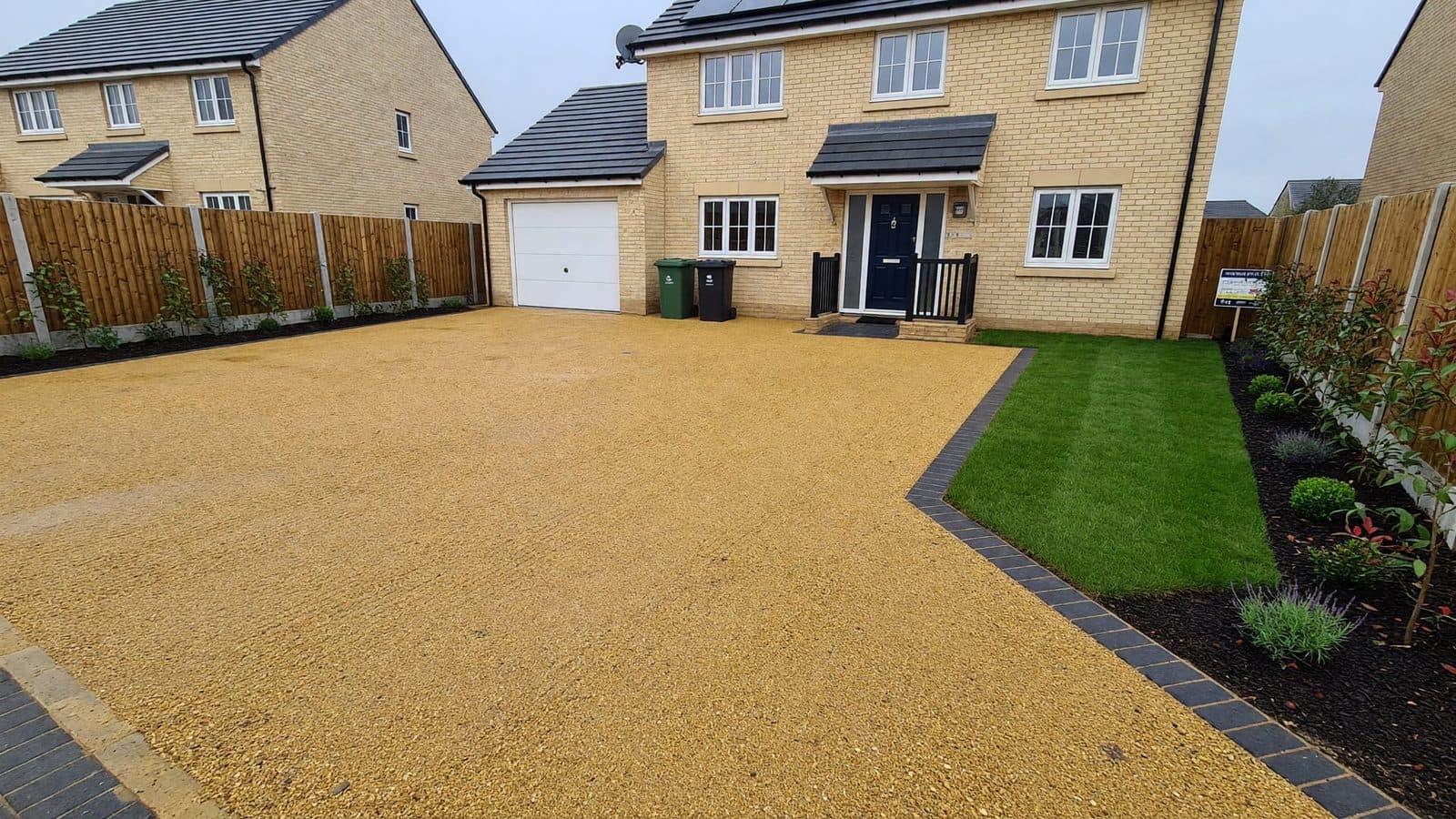
Hoggin is a mix of clays, sands and small gravels that compacts into a stable, usually buff surface. The clay acts as the binder. It has long been used on National Trust paths, parkland routes and heritage sites in the south and east of England.
In the North West the term is often used loosely for any self-binding gravel — crushed local gritstone or limestone with a high fines content (including branded products similar to Breedon-type golden amber gravel). These materials behave in a similar way: firmer than loose decorative chippings, much weaker than tarmac, block paving or resin.
If a quote in Preston or the surrounding area simply says “hoggin”, ask whether they mean true clay-bound hoggin or a local self-binding stone. The construction (sub-base, edges, depth) matters more than the name.
Where hoggin (or self-binding gravel) is a good driveway
It can suit a drive when:
- Traffic is light (cottage, occasional cars, not two SUVs every day)
- You want a rural, pale, informal look
- You will maintain it (weeds, occasional scarifying or rolling, top-ups)
- The plot is not steep (self-binding surfaces struggle beyond roughly 1:12)
- You accept some dust in dry weather and some softness after prolonged rain
- A proper crushed-stone sub-base and edge restraints are included in the price
A long, lightly used private drive or parkland-style approach can look excellent when built correctly.
Where it is a poor driveway
Skip it as the main parking surface when:
- The drive is the daily run for a family on clay that stays wet for months
- You need a smooth route for bins, pushchairs or wheelchairs
- You want to wash the car on the drive (fines move and the surface can clag)
- Planning or neighbours expect a tidy, non-migrating frontage
- You expected “fit and forget” performance like resin or good tarmac
Clay-bound hoggin can become sticky when saturated. Self-binding limestone can eventually polish or shed dust. Neither matches a properly installed resin-bound sheet for day-to-day suburban use on Lancashire ground.
Drainage: permeable is not the same as “fine on clay”
Hoggin is often sold as a sustainable, draining surface. Compacted fines can start permeable and become much less so under tyre tracks. Ponding is then fixed by loosening and re-rolling — ongoing maintenance, not a one-off feature.
On Lancashire clay:
- A thick Type 1 (or similar) sub-base is still required
- Soft spots must be dug out
- Edge drainage or a camber helps
- Standing water beside the drive still needs a land drain or soakaway
Hoggin will not rescue a waterlogged front garden by itself. Price garden drainage in the same conversation as the surface.
Construction, not bags on soil
A competent hoggin or self-binding drive still needs:
- Excavation to a designed depth
- Optional geotextile on soft clay
- Compacted sub-base (thicker for vans)
- Edge restraints (or a planned soft verge you will live with)
- 40–50 mm (or more for vehicles) of self-binding material, laid damp and rolled
- A threshold detail so material does not spill into the road
Skip those layers and hoggin becomes the same failure as cheap gravel, with extra mud from the clay binder.
FAQ
Is hoggin cheaper than resin?
Usually on materials, yes. Once you build a proper base the gap narrows, and resin or tarmac often wins on five-year maintenance for a busy family drive.
Does hoggin need planning permission?
Front-garden surfacing can have drainage rules whether you use hoggin, gravel or tarmac. Permeable or properly drained systems are the safe assumption — check your plot and local authority guidance.
Can I put resin on top of hoggin later?
Not as a simple overlay. Hoggin is not a suitable resin base. You would excavate or rebuild to a specified binder course.
Is hoggin good in frost?
A well-built, well-drained build-up copes with UK frost. A thin, saturated layer on clay will move and pothole.
How does self-binding gravel compare to true hoggin in the North West?
Local self-binding gravels (gritstone or limestone fines) are the practical equivalent most contractors offer. Performance and limitations are very similar.
If you like the buff, informal look but need a drive that takes daily cars on a wet Preston or Lancashire plot, ask for a resin-bound or tarmac comparison on the same footprint. Request a free online estimate for resin bound driveways and include photos of the existing surface and any ponding. Hoggin remains a fair choice for the right, lightly used drive — it is not a universal cheap substitute for a bound pavement.
Related services
Prefer a professional install in Preston & the North West? Explore the services that match this guide.
Enjoyed this guide?