Fence Company vs DIY Panels: When to Hire a Contractor
Garden centres make fence panels look easy: dig a hole, drop a post, slot a panel, done. Some short, level runs truly are that simple. Many Preston and Lancashire boundaries are not. This guide helps you decide when a fencing contractor is the right call and when DIY panels are still sensible—so you filter pure DIY search traffic toward a clear hire decision.
What DIY panels do well
DIY is reasonable when all of the following are true:
- The run is short and easy to access
- Ground is firm and level
- You are replacing like-for-like panels between sound existing posts
- Height is modest and wind exposure is low
- You have the tools, time and a helper
- Neighbour agreement is already clear
In those cases labour saving can outweigh contractor day rates, especially for a single panel repair.
Where DIY panels commonly fail
- Leaning posts after one winter — Shallow holes, weak mix, or posts in pure clay soup
- Wavy lines — No string line discipline; posts not plumbed
- Rotten bases — Wrong post grade; water sitting at the collar
- Panels blowing out — Undersized posts for height/wind; weak fixings
- Boundary disputes — Built off the true line “by eye”
- Gates that bind — Posts moved; slope ignored
- Hidden costs — Skips, broken tools, second attempt materials
Lancashire clay and weather accelerate every one of those issues.
What a fencing company actually sells
You are not only buying panels. A competent contractor supplies:
- Accurate measure and style advice (closeboard, slatted, panels, gates)
- Posts and foundations suited to soil and exposure
- Straight, plumb lines over the full run
- Removal of failed fencing and waste handling
- Matching gates and ironmongery
- Programme and insurance for working near boundaries
- A tidy finish that lifts kerb appeal rather than looking temporary
Many homeowners also want fencing sequenced with landscaping—patio edges, artificial grass or deck privacy—so one team owns the interface.
Cost comparison (honest framing)
DIY “cheap” = panels + posts + concrete + skip + your weekend(s) + risk of redo. Contractor = materials + skilled labour + waste + guarantee on workmanship + opportunity cost of your time.
If DIY fails in year one, the contractor quote for a full replacement often exceeds what hiring first would have cost. Compare five-year cost, not Saturday morning till receipt.
Decision checklist: hire if…
Hire a contractor when any of these apply:
1. Full rear or side boundary replacement 2. Slope, retaining step or very soft ground 3. High wind exposure or tall privacy fencing 4. New gates on a drive or shared access 5. You need the fence to match a wider garden redesign 6. Neighbour-sensitive lines or covenant height limits 7. You lack time, tools or safe lifting help 8. Previous DIY posts are already moving
Stay DIY when you are confident, the job is tiny, and posts are proven sound.
Repair vs replace
Replacing a single damaged panel between good posts can be DIY or a small contractor call-out. If posts rock, gravel boards have gone, or the whole run is a patchwork of eras, full replacement usually looks better and lasts longer. We assess matching materials where a partial repair still makes sense.
How Acorn approaches fencing jobs
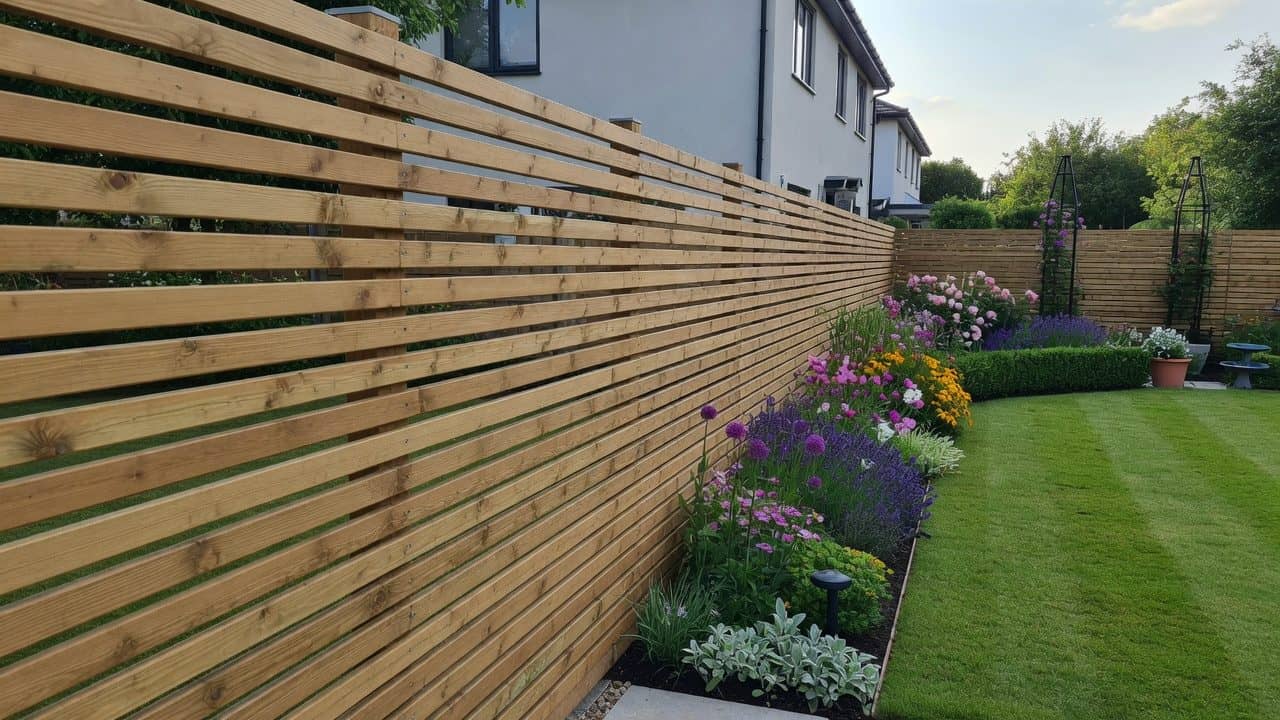
We supply and fit the styles local homeowners ask for most—closeboard, modern slatted screens, panel systems and gates—with posts set for local ground. Fencing can be quoted alone or inside full garden landscaping. Start with a free online estimate; we confirm scope in writing before work begins.
Time, tools and true DIY cost
A realistic DIY weekend for a short panel run still needs:
- Post-hole tools suitable for clay (not only a borderline spade)
- Spirit levels, string lines and enough concrete
- Safe lifting for panels and gates (two-person minimum for many products)
- Skip or disposal plan for old timber and broken concrete
- Weather contingency—Lancashire rain does not respect bank holidays
If you already own tools and enjoy the work, those costs are sunk. If you must hire tools, buy extra materials for mistakes and take multiple weekends off family life, the spreadsheet changes. Contractor day rates look different next to redo risk after the first winter storm.
Neighbour and boundary realities
Many DIY failures are social, not structural:
- Building slightly off the legal line “to make it easier”
- Changing height without checking covenants or neighbour agreements
- Leaving the boundary open overnight without warning
- Using the neighbour’s side as a working store without consent
A fencing company should discuss access to both sides where needed, waste routes and how gates swing relative to shared paths. That project management is part of what you hire—especially on semi-detached and new-build plots around Preston where every metre of fence is someone else’s view too.
Safety and structural judgement calls
Hire rather than DIY when you are unsure about:
- Post sizing for taller privacy screens in wind
- Gate posts that carry dynamic loads
- Changes of level that need stepped panels or raked details
- Retaining interactions (fence on top of a low wall or sleeper tier)
- Working near services or under tree canopies
Panels are modular; judgement about foundations is not. Clay that looks firm in a dry week can hold water at post depth after autumn rain. Shallow “postcrete blob” installs are a classic reason fences lean toward the lawn by spring.
Style outcomes: DIY vs contractor finish
DIY can produce a perfectly acceptable utility boundary. Contractor finishes more often deliver:
- Consistent post centres and height
- Clean junctions to house walls and existing fences
- Gates that latch without lifting
- Board or panel lines that still look intentional from the kitchen window
If the fence is the backdrop to a new patio or composite deck, finish quality is part of the outdoor room—not a separate “good enough” project. Sequencing with decking or paving also avoids damaging a brand-new surface while dragging panels through the only side access.
Quick scenario guide
- One damaged panel, sound posts — Yes — Optional call-out
- Full rear boundary replacement — Rarely — Yes
- New gate on a drive — Only if experienced — Yes
- Slope or stepped run — No — Yes
- Fence + garden redesign — No — Yes (package)
- Tiny side screen on perfect base — Yes — Optional
Next step
Unsure which side of the line you are on? Send photos of the boundary, approximate length and height, and note any gates or slopes. Request a free online estimate for fencing in Preston and the North West—if DIY is genuinely enough, an honest contractor will say so.
Related: slatted fencing ideas for Lancashire weather, and what a good fencing quote includes.
Related services
Prefer a professional install in Preston & the North West? Explore the services that match this guide.
Enjoyed this guide?